

If you're having trouble losing weight despite dieting, you might have low levels of the hormone GLP-1. Interestingly, it's been shown that people with higher levels of GLP-1 not only tend to gain weight less easily, but also experience various other benefits, such as suppressing the rise in blood sugar levels after meals.
This article explains the effects and characteristics of GLP-1, often referred to as the "weight-loss hormone."


What is GLP-1, which is currently attracting attention as a measure against obesity?
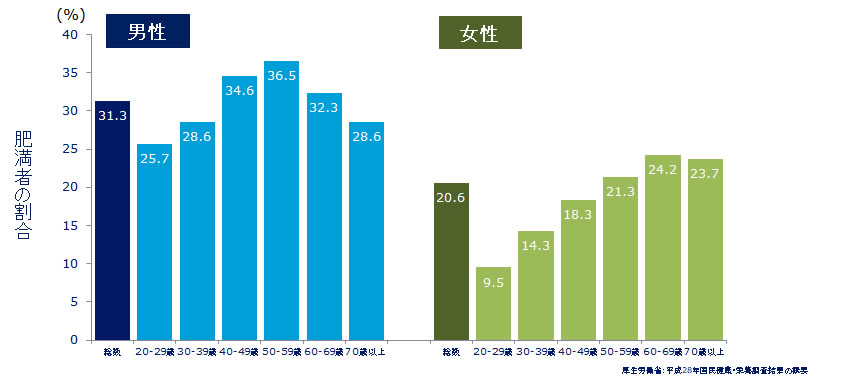
Obesity has become a social problem in modern society. In fact, about 30% of men over 30 and about 20% of women over 40 are obese.
One type of incretin that is attracting attention as a countermeasure against obesity isGLP-1That's the hormone.
「IncretinThis hormone is released from the small intestine when sugars and other substances are absorbed after eating, and it acts on the beta cells of the pancreas.It increases the secretion of insulin.Incretins include two hormones, GLP-1 and GIP, which act on beta cells through their respective mechanisms.
GLP-1 suppresses the rise in blood sugar after meals by inhibiting the secretion of glucagon, a hormone that raises blood sugar, and by slowing down the movement of the stomach.
GLP-1Due to its diverse effects, it is attracting attention as potentially having unprecedented potential as a treatment for type 2 diabetes.GLP-1 has a variety of effects, and it has been shown to act not only directly on the pancreas, but also on various other organs such as the stomach, brain, cardiovascular system, kidneys, immune system, skeletal muscle, brown adipose tissue, white adipose tissue, liver, and intestines.
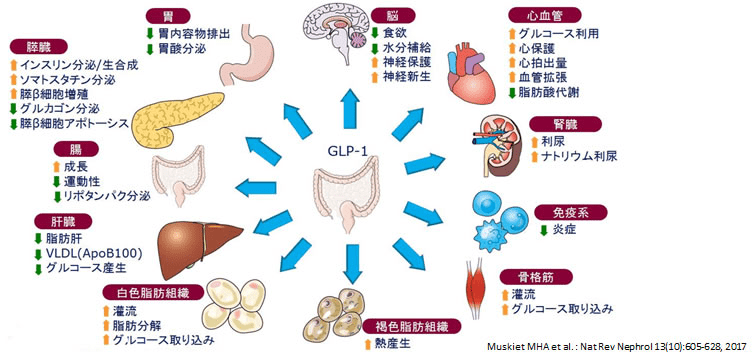
Features of GLP-1
GLP-1 is a type of hormone called an incretin.
IncretinIt is a gastrointestinal hormone secreted from the small intestine when you eat.It stimulates the secretion of insulin, which helps stabilize blood sugar levels.And there are two types of incretins, one of which isGLP-1This is (glucagon-like peptide-1).
*The other one is GIP (glucose-dependent insulinotropic polypeptide).

Diabetes websiteFrequently Asked Questions about GLP-1 Receptor AgonistsQuoted from and modified by the author from "[Title of the book]".
GLP-1 is present in the small intestine after eating.L cellIt is secreted when stimulated. GLP-1 secreted from L cells is released from β cells only when blood glucose levels are high.It stimulates the secretion of insulin.The term "blood glucose-dependent" refers to a substance that acts only when blood glucose levels are high.This is how it is described. For this reason, it is attracting attention as a treatment for type 2 diabetes.
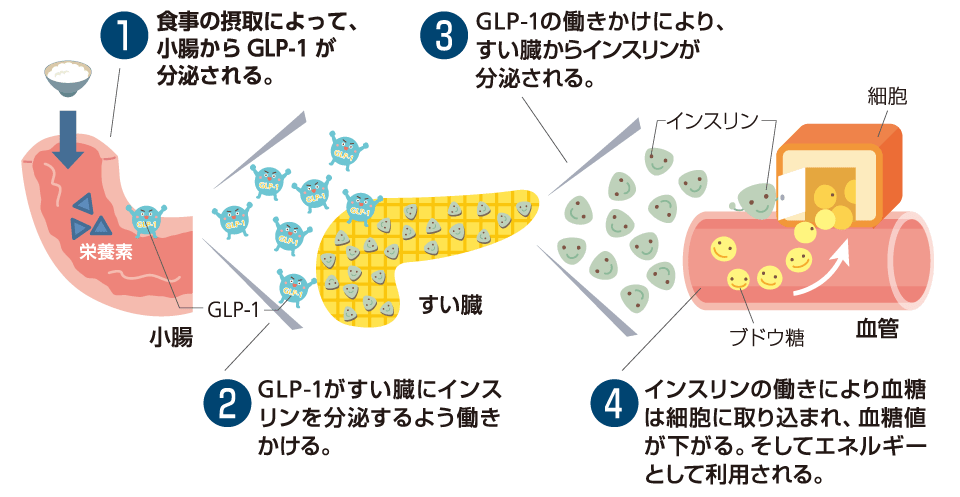
Diabetes websiteFrequently Asked Questions about GLP-1 Receptor AgonistsQuoted from and modified by the author from "[Title of the book]".
Typical effects of GLP-1
GLP-1teeth,Characteristics that affect blood sugar levels when they are high (blood sugar-dependent)It has been attracting attention as a treatment for weight loss and type 2 diabetes. In GLP-1 dieting, GLP-1 is injected directly into the body.
GLP-1 diet injections (also known as appetite-suppressing hormone injections) have the following effects, making it possible to lose weight naturally and without strain.
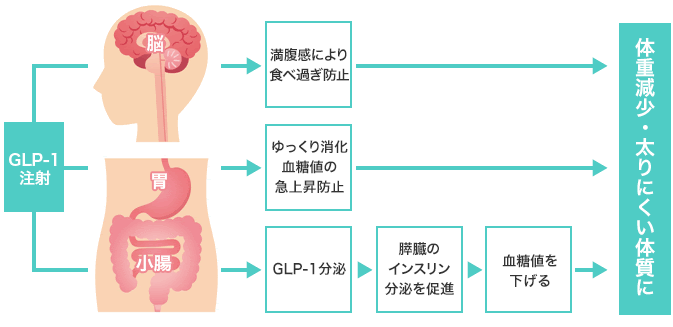
- Insulin secretion promotion (blood glucose-dependent))
- →Insulin has the effect of lowering blood sugar levels.
- Glucagon secretion suppression (blood glucose-dependent)
- → Glucagon has the effect of raising blood sugar levels.
- The function of suppressing stomach movement
- →It is digested slowly, preventing a rapid rise in blood sugar levels.
- appetite suppression
- →This stimulates the brain's central nervous system to induce a feeling of fullness.
- Increased immunity
- Promote lipolysis
- Increased sodium excretion
*GLP-1 injections (GLP-1 receptor agonists) were approved in the United States in December 2014 and in Europe in March 2015 as a treatment for obesity. However, they are not approved for obesity treatment in Japan and are therefore not covered by insurance (they are approved for the treatment of type 2 diabetes).
However, GLP-1 injections are expensive, and it's recommended to increase your body's natural GLP-1 production first, as this is less painful and easier.
Dietary fiber is effective in increasing the secretion of GLP-1 in your body.
GLP-1 prevents hyperglycemia and is effective in treating diabetes.
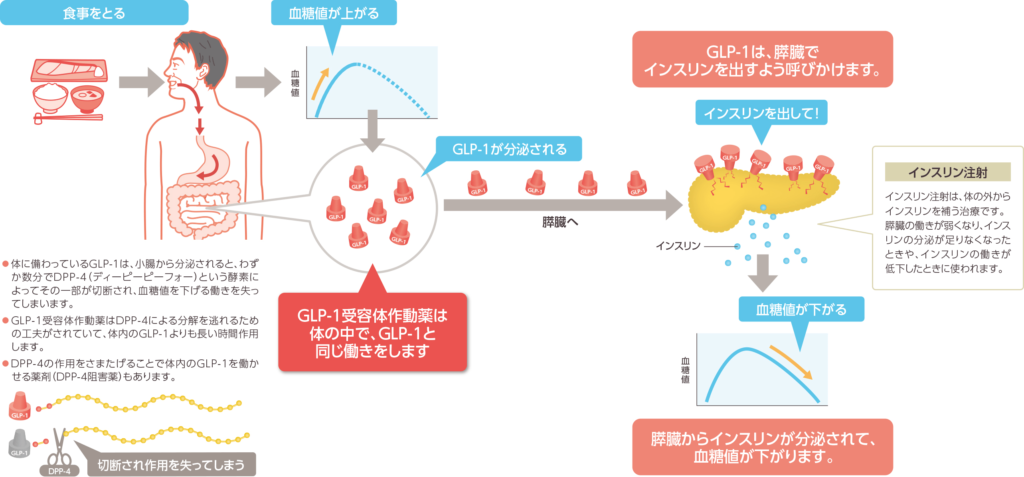
GLP-1 is released when blood sugar levels are high.Promotes insulin secretionLet,Suppresses glucagon secretionTherefore, it has the effect of lowering blood sugar levels.
This is also evident from the graph below.

Sato Juichi ClinicEarly diabetes treatment with GLP-1RAQuoted from and modified by the author from "[Title of the book]".
GLP-1 has a low risk of hypoglycemia.

Administering insulin to treat diabetes carries the risk of hypoglycemia. However, GLP-1 stimulates insulin secretion only when blood glucose levels are high (in a blood glucose-dependent manner), so it is recognized as having a lower risk of hypoglycemia.

comment