
As explained in the following article, it is desirable not to focus too much on strengths (primary function) but to improve weaknesses (fourth function) ↓
- Balance of psychological functions – problems arising from an imbalance in strengths
- A mechanism that only develops strengths = primary functions (main functions).
However, developing the other half of the pair, the fourth function (the inferior function, the "reverse-dominant" function), is actually difficult.That's the point.I have lived my life focusing on my primary function until now.Therefore, that is unavoidable. In the end, it often turns into "Even if you say that..." or "I understand that's what I should do, but..."
For example, for each typeWhat makes it difficult, and why is it difficult?Let's take a look.。


Examples of developing psychological functions
For example, many familiar blog readersINFP (Psychologist type)、ISFP (Artist type)Let's take * as an example.
*Both INFP (psychologist type) and ISFP (artist type) have a dominant function (=strength)Introverted Feeling (Fi)So, the fourth function (=weakness) isExtraverted Thinking (Te)For more details, please click below ↓
List of psychological functions for INFP (Psychologist type)
- Introverted Feeling/Fi
Very good at it /First function: Decide what you believe is right for you, what is morally right within your worldview, and what you should do according to your personal values. - Extroverted Intuition/Ne
I'm a little good at it /second functionIt reveals the negative consequences of current actions, future outcomes, and the intentions behind people's actions. - Introverted Sensing/Si
I'm not very good at it.Third functionThey use past experiences to justify their current attitudes. They may also become risk-averse and unable to leave their comfort zone. - Extraverted Thinking/Te
I'm really bad at it /Fourth functionThey fear and worry about what others think of them. They are unable (or unwilling) to organize their thoughts rationally and logically.
<INFP's Cognitive Framework>
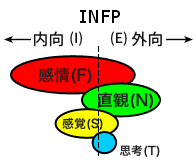
List of psychological functions for ISFP (Artist type)
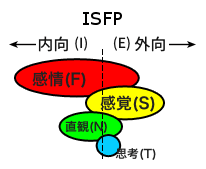
- Introverted Feeling/Fi
Very good at it /First function: Decide what you believe is right for you, what is morally right within your worldview, and what you should do according to your personal values. - Extroverted Sensing/Se
I'm a little good at it /second function: To make good use of physical space and create positive experiences for people, whether material or sensory. - Introverted Sensing/Ni
I'm not very good at it.Third functionBecause they believe they know what is right for them, they can get irritated when told what to do by others. - Extraverted Thinking/Te
I'm really bad at it /Fourth functionThey fear and worry about what others think of them. They are unable (or unwilling) to organize their thoughts rationally and logically.
<ISFP's cognitive framework>
for example,Te (extroverted thinking)When developing it, the overview is written as follows:
- Try not to overthink things subjectively or emotionally.Thinking logicallyLet's do that. (→Even if you say that, I don't even know what it means to think logically in the first place. I know that I'm thinking based on my emotions, though.・・・)
- When making decisions, don't just consider how you feel; write down a list of the pros and cons and compare them objectively. Also, don't make decisions based solely on your subjective feelings or emotions; analyze and critically analyze the situation.Objectively and logicallyLet's try debating with others. (→ Even if you say that, I don't even know what it means to be objective and logical in the first place.)
- LogicallyCause and effect relationships and mechanismsAboutLet's try using words to criticize and explain.. (→ Even if you say that, I have absolutely no idea how to explain it.)
Other examplesINFJ (Empathy Type)、INTJ (Strategist type)* is the fourth functionSe (Extroverted Sensing)I will give it to you.
*INFJ (Empathy Type)、INTJ (Strategist type)For information on the psychological functions (cognitive functions), please click below ↓
List of psychological functions of INFJ (Empathy Type)
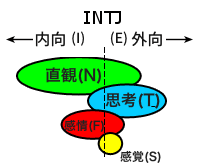
List of psychological functions of the INTJ (Strategist type)
- Introverted Sensing/Ni
Very good at it /First functionThey are skilled at predicting their own future, and they can see the connections between things and events, and how an individual's destiny will unfold. - Extraverted Thinking/Te
I'm a little good at it /second functionObserve and understand current actions from a methodological and systemic perspective to determine whether they are efficient or not. - Introverted Feeling/Fi
I'm not very good at it.Third functionThey believe they possess the most correct ethical values. When challenged, they become stubborn, clinging to their own opinions. - Extroverted Sensing/Se
I'm really bad at it /Fourth functionThey fear and feel anxious about hurting others' feelings. They suffer because they don't know how to cope with or resolve pressure (or they run away without dealing with it).
<The cognitive axis of INTJ>
Ni – SeSeek a future where you can feel joy and peace, and grasp it intuitively.
Te – FiTo strive to be recognized.
- In sports, etc., immediate response and concentrationLet's wear it (→ Even if you say that, I don't know what sport I should play in the first place. For example, are you saying I should play baseball?!)
- When eating, the taste and texture are not just based on imagination.Let's focus on what we can actually perceive with our five senses. (→ So, you're saying I should just savor my food? What difference would that make?)
- Don't overthink the future.I try to make impulse purchases sometimes. (→I understand that's what I should do, but I don't know what to buy. Besides, there's nothing in particular I want.)
- When you go to an art museum and look at each individual artwork,Ask yourself what specific things have caught your eye just now. Take the initiative to focus on sensory information. (→That's true, but what would happen then? What exactly is proactive, intuitive information?)
As another exampleISFJ (Parental Type)、ISTJ (Hardworking Type)The fourth function isNe (Extroverted Intuition)I'll give it to you.
*ISFJ (Parental Type)、ISTJ (Hardworking Type)For information on the psychological functions (cognitive functions), please click below ↓
List of psychological functions of ISFJ (Guardian type)
List of psychological functions of the ISTJ (hard worker type)
- Introverted Sensing/Si
Very good at it /First functionThey are adept at matters of loyalty to others and themselves, and have a precise understanding of their position and civic duties. - Extraverted Thinking/Te
I'm a little good at it /second function: You are responsible for understanding and observing methodologies and systems, and for knowing whether what is currently being done is efficient in completing the action. - Introverted Feeling/Fi
I'm not very good at it.Third functionThey believe they possess the most correct ethical values. When challenged, they become rigid, arrogant, and stubborn. - Extroverted Intuition/Ne
I'm really bad at it /Fourth functionThey feel fear or anxiety towards novelty and unpredictability. They don't know how to take new measures that involve a certain degree of risk (or don't like taking them).
<ISTJ Cognitive Aspects>
Si – Ne: Accumulate sensory information to survive in a chaotic world.
Te – Fi: To show an effort to gain recognition.

- Challenge yourself to something new you've never done before.Let's try it.Actively seek out places and events where you can interact with people you don't know and try to make new connections.. (→Even if you say that, I don't know where to go.)
- Let's consider how the actions of different countries affect the world. (→Even if you say that, I've never thought about it before, so I can't imagine it at all.)
- Express your thoughts without using specific words.Let's try it. (→I have absolutely no idea what to do.)
- To express future outlooks or to express thoughts about the meaning of things.Let's try it (→I don't know what to expect in the future or what the meaning of things is.)
- Let's try changing our approach midway through the process. (→They say it's okay to change the policy midway, but I have no idea when or how to change it.)
Developing the fourth function is difficult.
It turned bright red.
Because this is something we have never done before, even if the methods for developing psychological functions are explained in words, it is difficult to grasp any clues without concrete examples.
Growth involves expanding previously unused psychological functions (cognitive functions), making abstract explanations difficult to grasp even in their general scope.
for example,ISFJ (Parental Type)・ISTJ (Hardworking Type)にChallenge yourself to something new you've never done before.(=Ne/Extroverted IntuitionEven if you say that,I've never thought about something like that before, so I'm completely bewildered.That's right. If you're not careful, your fourth function (inferior function) might go out of control.It's likeIt's like using a knife for the first time when cooking.that's why,is.
For example, an extreme ISFJ might think this way:
・Let's take on a new challenge we've never done before! Let's explore unknown possibilities that we haven't considered before!、、、Okay, I'm going to quit my job tomorrow and become a gold hunter in the Caribbean!、、、No, that's not what I meant.(My child is using a knife for the first time when cooking, and it's incredibly dangerous.)
Other examplesAuthor: NarukinLet's say you asked this question: "What did you think after reading this article?"
An INFP might respond: "It was fun! (Very subjective)」
The author thinks, "Oh dear, oh dear."Try to think logically, rather than focusing too much on subjective or emotional aspects.Where did the advice in the article, which said, go? In other words, it is difficult to break free from subjectivity and think objectively (because we unconsciously use our primary function, Fi).
Moreover,For INFP (ISFP) Te (Extroverted Thinking = Repeatedly improving and expanding efficiently, no matter what it is) = The power to expand and enlarge something ) That is undoubtedly very difficult. For example, running a blog is a good example of that.
Running a blog involves many steps, as follows:
- I'm thinking about what to write.
- Write an article
- Promote
- Replying to and following up with people who are watching
INFPs tend to reduce the entire secret to running a blog to "motivation" and "(subjective) interesting articles."That's right. For INFPs, Te isA child's first experience using a knife while cookingThat's why.
Next, please look at the following image ↓
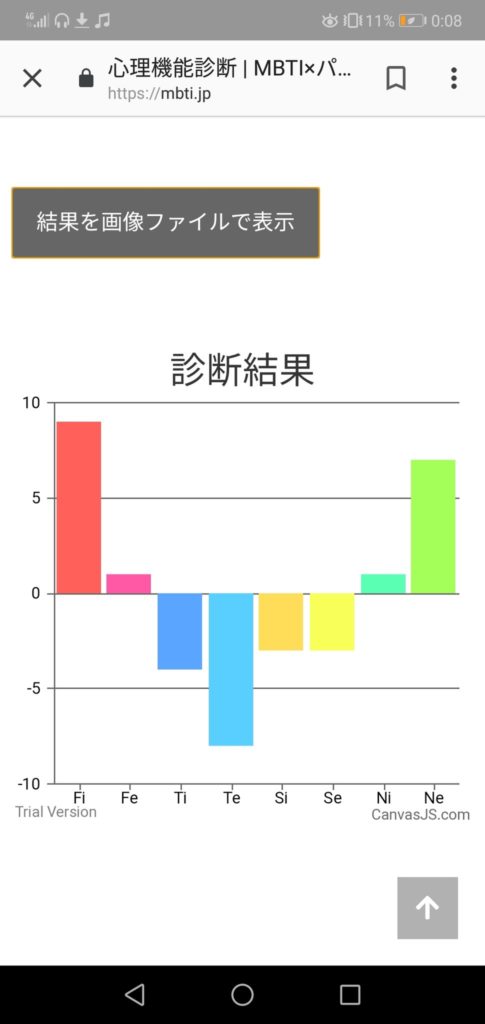
This is a graph showing the degree of development of eight psychological functions. It's the result of a diagnosis given by an INFP.Te (extroverted thinking)That's low. This is only natural, since I've only ever used the primary function of the pair up until now.That is. In other words,Even when told about the fourth function (inferior function) that we need to confront, I don't really understand the basics of psychological functions in the first place.That's right.
Solution
How can this be resolved? There are two simple solutions.
- Try reading books or watching YouTube videos written by people who have the fourth function (inferior function) that you struggle with.
- For ISFJs, learning the way of thinking comes from books written by consultants (ENTPs) such as Isao Hosoya, Kenichi Ohmae, and Yoichi Ochiai.
- Find a suitable profession and then read general books written by people in that profession. For example, ESFPs might read books written by INTJs.
- Learn on the job (through on-the-job training) from types that possess even a small amount of that function.
*It's important not to learn from people who are the complete opposite of you!(Learning from someone with completely opposite psychological functions can cause those functions to clash, preventing you from learning their strengths.)
By the way, this article isAuthor: Narukin(ENTP/Inventor TypeNarkin, who is )Ne (Extroverted Intuition)Then we search for the mechanism andTi (introverted thinking)I've summarized it here.
Psychological functions of the ENTP (Inventor type) (Click to display)
- Extroverted Intuition/Ne
Very good at it /First functionThey possess a superior ability to see the entire future and foresee various possibilities and destinies. - Introverted Thinking/Ti
I'm a little good at it /second function: They are responsible for verifying the facts, determining whether statements and findings make logical sense, and what is true or false. - Extraverted Feeling/Fe
I'm not very good at it.Third functionThey want to make people happy and feel positive. When that's not the case, it tends to turn into insults, sarcasm, and imposing a sense of superiority. - Introverted Sensing/Si
I'm really bad at it /Fourth functionThey feel anxiety and fear about trying new things and failing. They dislike or are unable to do routine work (simple, repetitive tasks).
<ENTP cognitive axes>
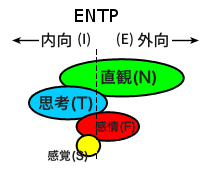
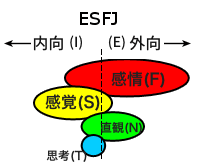
just,ENTP (Inventor Type)That isAuthor: Narukinteeth,Si (Introverted Sensing)= autonomous powerBecause I lacked a clear focus, my thoughts often wandered here and there.Si (Introverted Sensing)I am relatively good atESFJ (Sociable Type)I was able to learn about self-reliance and perseverance from that experience.
Psychological functions of the ESFJ (Sociable Type) (Click to display)
- Extraverted Feeling/Fe
Very good at it /First functionFollow what you deem right for everyone, what is good for the group. - Introverted Sensing/Si
I'm a little good at it /second function: To bear the responsibility for social obligations and responsibilities, discipline, loyalty, and honor. - Extroverted Intuition/Ne
I'm not very good at it.Third functionThey aim for their actions and procedures to be effective in the future, but they can become neurotic if things don't go their way. - Introverted Thinking/Ti
I'm really bad at it /Fourth functionThey fear and are anxious about things that are not logically correct. They don't know how to thoroughly analyze available information (or are unwilling to do so).
<ESFJ Cognitive Axis>

comment
I'm not sure what my thoughts on this blog would be like if I were to consider them from a Fe perspective.
Would you recommend it to others or not?
Isn't that good? (I feel like Fe tends to use this phrase) or something like that?
Is it easy to understand or difficult to understand? (This seems like a T-type thing.)
Did this expression hurt you? (This sounds like something Fi would say)