

How are carbohydrates, such as those found in rice, bread, and sweets, digested and absorbed?


Classification of carbohydrates
Carbohydrates are broadly classified into dietary fiber, which humans cannot digest, and sugars, which humans can digest. This article will explain the process by which sugars are digested and absorbed.

Digestion begins the moment you put it in your mouth.
In fact, the digestion of carbohydrates (such as starch) begins the moment it enters your mouth. This is because saliva containsα-amylaseThatdigestive enzymesThis is because it contains starch, which initiates decomposition (digestion). The reason why rice tastes sweet when you chew it is because of the starch.MaltoseBecause it is broken down (digested).
Acts on carbohydratesdigestive enzymesThere are several types.
Types of digestive enzymes ↓
Mouth... salivary amylase
Duodenum... Pancreatic amylase
Small intestine: Maltase, sucrase, lactase, alpha-glucosidase, etc.
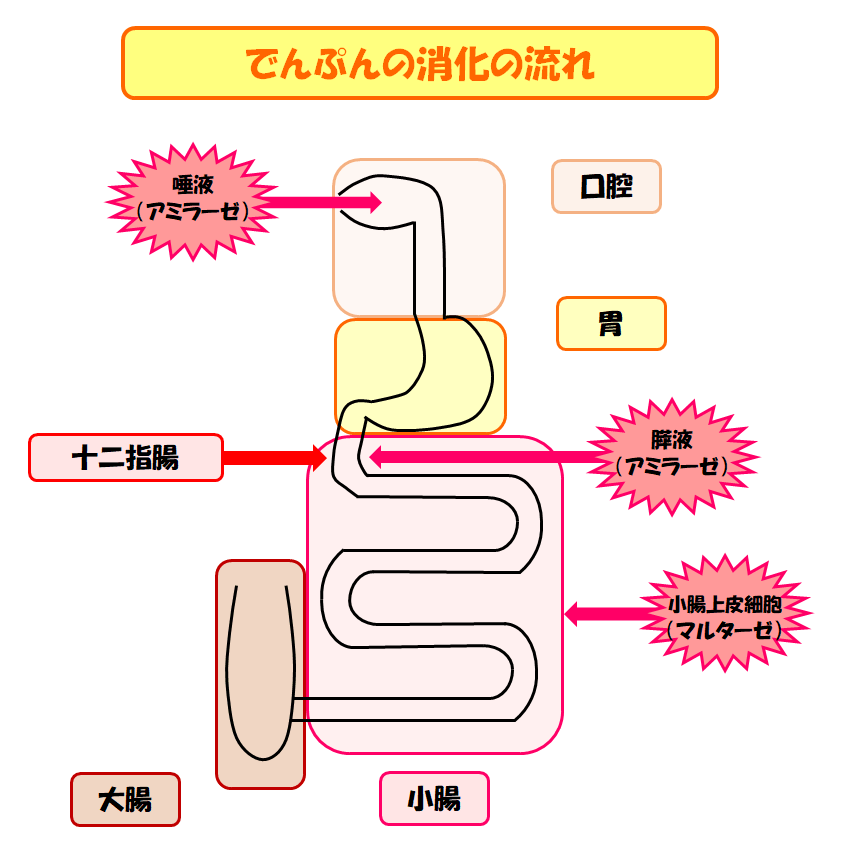
Until carbohydrates are digested
As mentioned earlier, digestive enzymes break down carbohydrates. Different types of digestive enzymes act on different types of carbohydrates.
First, besides starch, the carbohydrates we normally eat mainly consist of the following two types:
- Sucrose (table sugar) - the main component of sugar
- Lactose (milk sugar)... found in large quantities in milk.
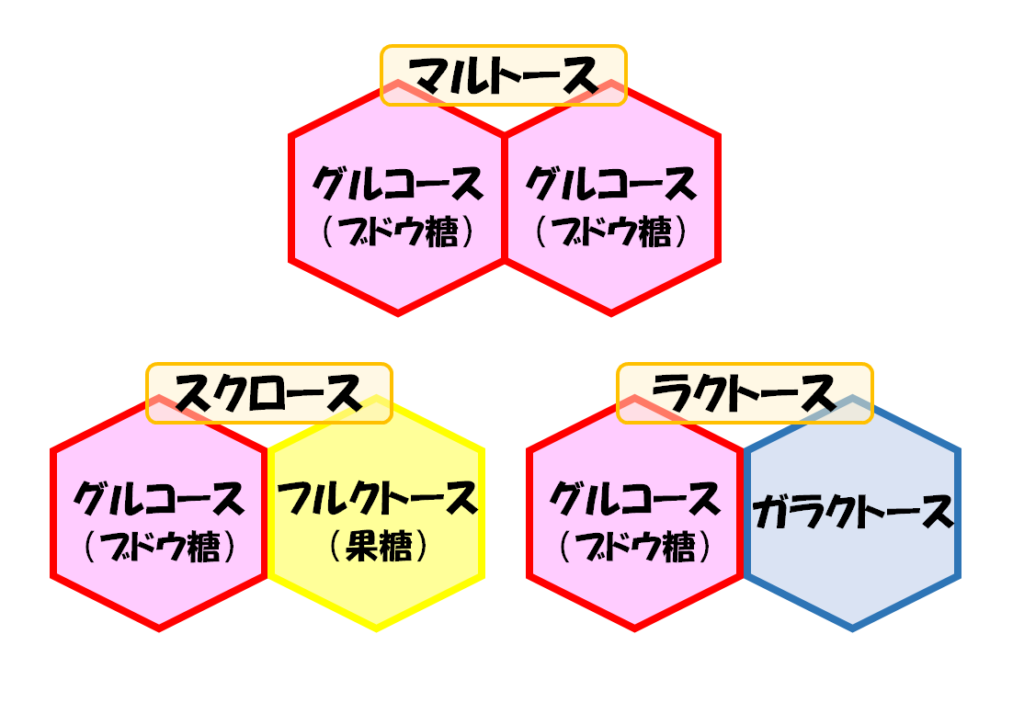
These carbohydrates are broken down by various digestive enzymes and eventually absorbed into the body through the blood vessels of the small intestine.

Although not shown in the diagram above, the small intestine containsα-glucosidaseThere is a digestive enzyme called this, which breaks down sucrose (which is mainly found in sugar) into glucose and fructose.

The above is the process by which carbohydrates are digested and absorbed.


comment