

Everyone has heard it at least once on the news.What Prime Minister Abe is advocating isAbenomics」Everyone,Can you explain what "Abenomics" is?
This article will cover things you might think you know but actually don't.This explanation will focus on the following points regarding Abenomics.Let's go ↓
- What was the purpose behind the creation of Abenomics?
- What specific policies are being proposed?
- Furthermore, is it actually working in the end?


Prime Minister Abe's chosen deflationary measures
The Japanese economy has long beenWe are experiencing deflation (a decrease in the value of goods relative to money).。

The reason is,
- The theory of global standardization (being dragged down by countries with low prices, such as China)
- The wage suppression theory (that companies do not raise workers' wages)
- The theory that the Bank of Japan is not supplying enough money for the private sector to use.
There are various other things as well.It's not clearly understood from an economic perspective.。
Prime Minister Abe and his advisors、The reason the economy isn't developing is because of deflation.That's what I thought.。
3."The theory that the Bank of Japan is not supplying enough money for the private sector to use." Adopt
↓
This will help us escape deflation!
↓
This causes inflation (an increase in the value of goods relative to money).
↓
The economy improves, and workers' wages rise.
That will be the core of Abenomics.A different dimension of monetary easingis.
Now, let's look at the specific policies that were implemented.
* AbenomicsはDecember 2012This term is a portmanteau of "Abe" and "economics," coined to describe the series of economic policies advocated by Prime Minister Abe, which began with the inauguration of the second Abe administration.
Abenomics policy management
AbenomicsThe pillar of policy management is boldmonetary policy, mobilefiscal policy, to stimulate private investmentGrowth StrategyThe "Three Arrows"This is what it will be.
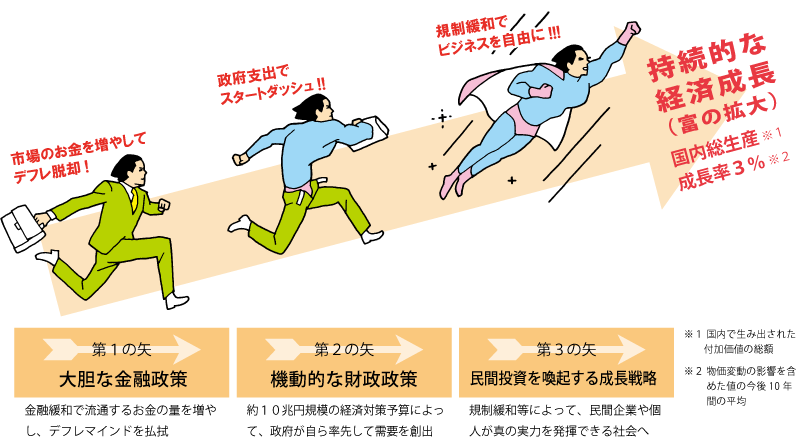
Among them, the one that has been at the heart of Abenomics and has attracted the most attention from economic experts and investors is:The first arrow = bold monetary policyThat was it.That's where people are having online discussions. Let's take a closer look at what those discussions actually entailed.
The first arrow: "Bold monetary policy"
Monetary policy at the heart of Abenomics=reflationary policy
= The Bank of Japan is trying to artificially create inflation.Purchase large quantities of government bonds from private banks.do
(*In addition, the Bank of Japan is in the stock marketI also bought a large quantity of stock certificates.)
↓
Give the money to the bank
= Increase the balance of current accounts (deposit accounts opened by private financial institutions within the Bank of Japan)
=Private financial institutions can increase the amount of money they can use at will.
↓
Private financial institutions do not leave their money in the Bank of Japan's current accounts, which do not yield interest.Encouraging banks to be more proactive in lending to companies and purchasing assets such as bonds.
↓
To stimulate the economy
*The above series of stepsquantitative easingThey call it "the Bank of Japanquantitative easingThis is expressed as "injecting money into the market."I am doing it.
The basis for the Bank of Japan Governor and Prime Minister Abe's claim that Abenomics (reflation) would be successful.
Abenomics = Reflation is working well.The basis for the claims made by the Governor of the Bank of Japan and Prime Minister Abe Here it is ↓
Inflation can raise expectations among people and businesses.Self-fulfilling prophecy(Targeted by a faction of Prime Minister Abe)
↓
Based on that expectation, companies and individuals will take action to prepare for inflation (i.e., Prime Minister Abe's faction predicts that companies will "actively engage in investment activities").
↓
Companies and individuals circulate money (or so they expect).
↓
It is expected to improve the economy.
So, did it actually work out?
Did Abenomics actually help us escape deflation?
・Have we escaped deflation? → Actually, it's quite uncertain.is.
I was aiming for 2 percent, but there was no sign of reaching that goal., rate of inflationThe inflation rate remains low.That's right.
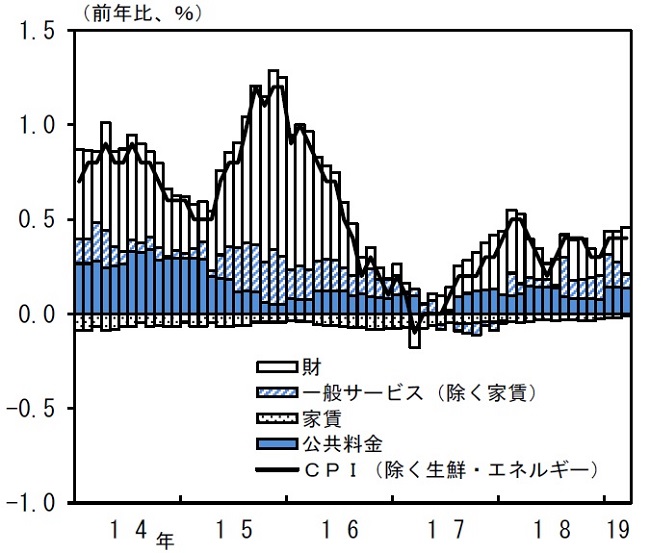
Source: Mitsubishi UFJ Research & Consulting
As a result of Abenomics, what happened to the stocks that the Bank of Japan purchased in large quantities?
- The Bank of Japan purchased a large amount of stock certificatesWhat happened? → Stock prices roseThose who owned stocks became rich.⇔Those who don't have it will remain poor.That's all.People who are poor and don't have money to begin with can't buy stocks, so it's only natural that they remain poor. The gap widens, and it's sad.
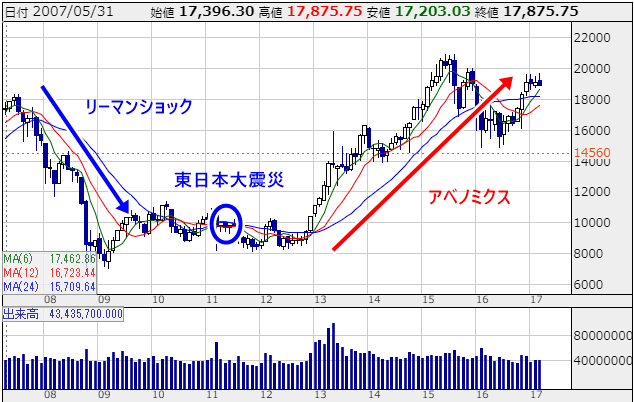
In other words, the results are ambiguous.is.
Ordinary people who originally had no money and did not own stocks,I still have no money.During this COVID-19 pandemic, let's protect ourselves with inexpensive masks like the ones listed below.
To spread this blogPlease click once.↓

This article,Share on social mediado,Let's share the results of Abenomics with our followers!
Click the button below
↓
More detailsThe Mechanism of AbenomicsFor more information, please click here.
↓

comment
Furthermore, the benefits hardly reach rural areas, and there's a feeling that only a select few are getting the rewards, which is partly due to the envy of those from the countryside.
"Deflation (a decrease in the value of goods relative to money)"
"Inflation (a decrease in the value of goods relative to money)"
The explanations for inflation and deflation are being given the same thing.
I'm the administrator.
Thank you very much for pointing that out.
Also, I apologize for posting incorrect information.
"Inflation (when the value of goods decreases relative to money)"
I have corrected it to "inflation (when the value of goods rises relative to money)."
The triangular pyramid has now reached a point where its reverse is also possible, regardless of infrastructure or deflation; the key to success lies in whether or not a balance of profit and loss can be maintained at that boundary.
I believe that the MSA should be reviewed, and the divergence point that signifies the complementarity of the FRB, NSS, and IMF should be improved starting now in the new century.
I came here from Twitter. The minimum wage is being raised year after year, so I don't think it's entirely true that workers aren't benefiting from it.
Since the target population is in the tens of millions, it's understandable that the effects aren't immediately apparent.
However, the rapid pace of technological advancement is a cause for concern, as it may lead to an increase in industries where human labor is no longer needed.