

This article explains the "glycemic index (GI)" and "glycemic load (glucose load)," which are important concepts to know when following a "low-carbohydrate diet."


What is the "Glycemic Index (GI)"?
Even if you eat the same amount of carbohydrates, the type of food and the cooking/processing method can make a difference.The way blood sugar levels rise varies. The indicator that shows the rise in blood sugar levels after a meal is called the glycemic index (GI).In other words, even if you eat the same amount of carbohydrates,It is important to eat foods with a low glycemic index (GI).
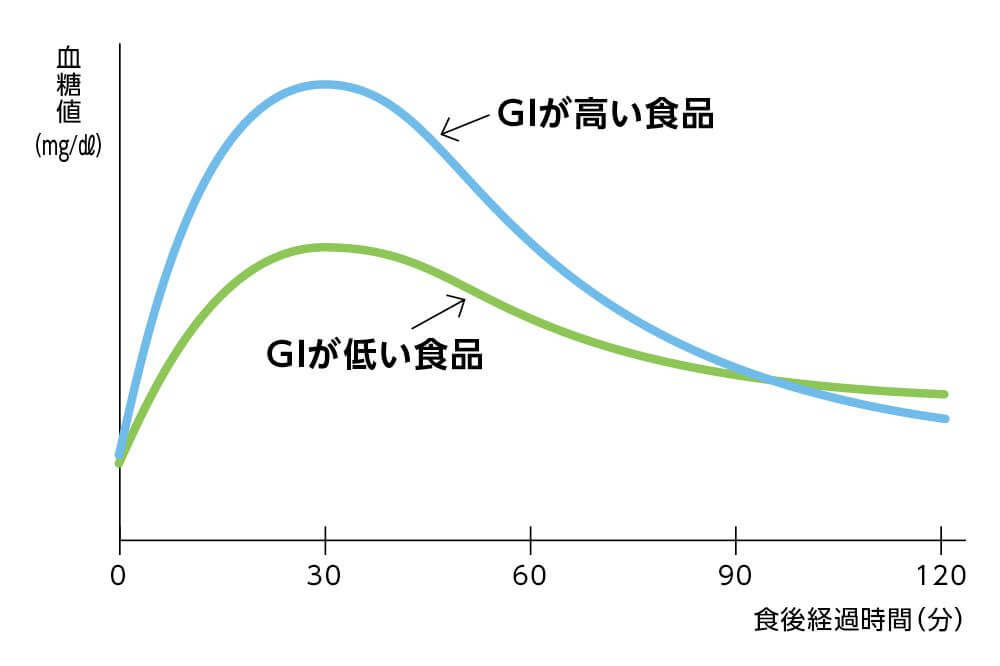
The above diagram shows,Is it too late to ask now? The correct relationship between carbohydrate restriction and GI/GL. (Quoted from)
Furthermore, the glycemic index (GI) represents the "speed" at which carbohydrates in food are digested and converted into glucose, expressed as a relative value with glucose intake set to "100".
The glycemic index (GI) indicates the rate at which carbohydrates in food are absorbed, and is measured by the blood sugar concentration up to two hours after ingestion. At the University of Sydney in Australia, foods with a GI of 70 or higher are defined as high-GI foods, foods between 56 and 69 as medium-GI foods, and foods with a GI of 55 or lower as low-GI foods, using glucose as the baseline.
Otsuka PharmaceuticalLet's learn about GIQuoted from '
What is "Glycemic load (GL value)"?
Also,The product of the "GI value" and the "amount of carbohydrates" is called the "glycemic load (glucose load)" = GL value.In other words, meals with a high "glycemic load" tend to raise blood sugar levels, and the body secretes more insulin to lower those elevated blood sugar levels.
"Glycemic load (glucose loading)" is,GL value = GI value × amount of carbohydrates (g) in each food ÷ 100 It is expressed as follows: This value indicates "how many grams of glucose are equivalent to the degree of blood sugar increase when 100 grams of a certain food is consumed."
- ~10 or less: safe
- Over 10 to 20: Some caution is advised.
- Over 20: Be careful
Even foods with a low "glycemic index" can increase insulin secretion if consumed in large quantities. Eating large amounts of brown rice, for example, can also increase insulin secretion, so caution is advised.
Table of GI and GL values for foods
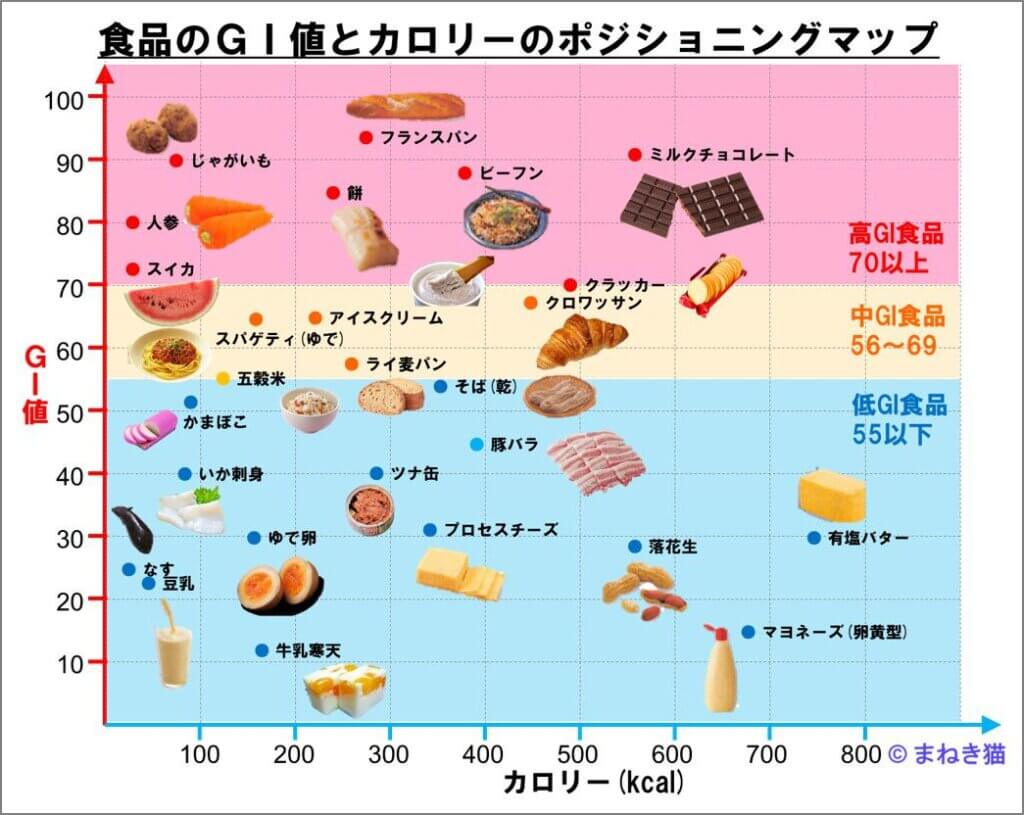
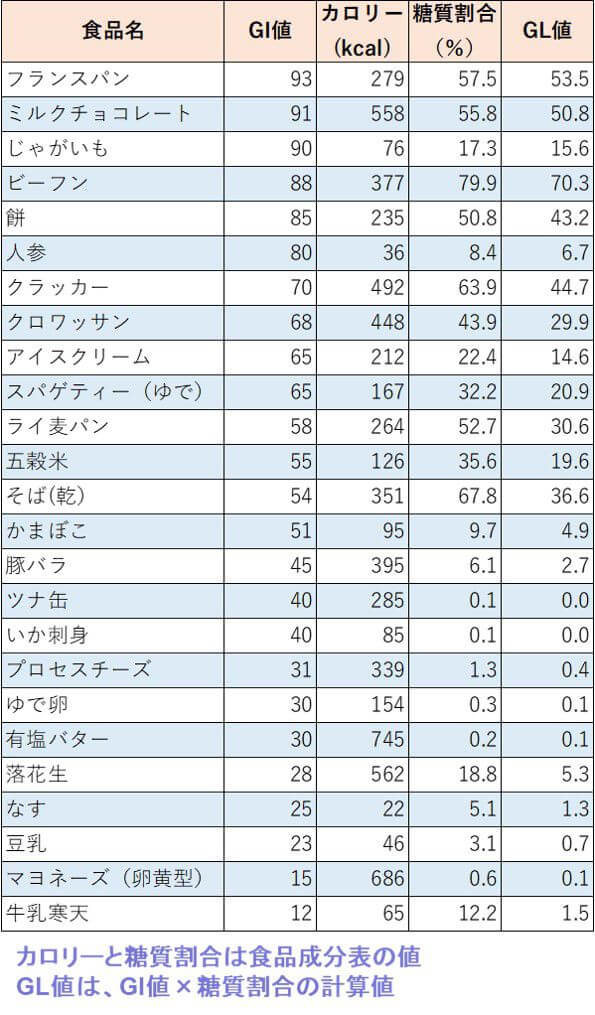
(*The two tables above are,If you're on a low-carb diet, choose low-GI and low-GL foods. (Quoted from)
- What exactly are carbohydrates?
- A collection of data on foods useful for carbohydrate restriction – including data tables on carbohydrates, GL values, and calories.
- Specific methods to combat glycation that you can implement right now
- How to maintain healthy blood sugar levels
- What exactly are AGEs?
- When glucose is depleted due to carbohydrate restriction...
- The body produces sugar
- Produces ketone bodies


comment