

recently,The number of diabetes patients is increasing.It is attracting attention. People with diabetes and those at risk of developing diabetes togetherApproximately 20 million peopleIt is said that they exist.

Let's take another look at the types of diabetes and their mechanisms of onset.


Types of diabetes
Actually, there's a lot of talk about diabetes,Diabetes is classified into type 1 and type 2.Divided into,Type 2 patients are overwhelmingly more numerous (90-95%).That's right.
- type 1 diabetes
- →A disease in which the insulin-producing cells (beta cells) in the pancreas are destroyed.
- type 2 diabetes
- →Disrupted lifestyle habits are the cause.It is caused by
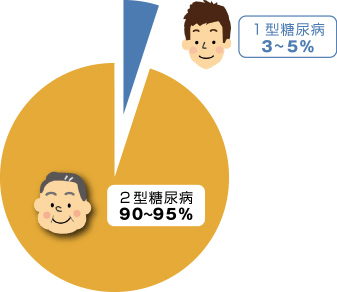
In other words, most peopleWhat you need to be careful about istype 2 diabetesAnd,The cause is lifestyle-related diseasesTherefore, to prevent it from happeningIt is possible to prevent it.is.
Causes and mechanisms of type 2 diabetes
The cause of type 2 diabetes, simply put,CarbohydratesThat's too much.
For information on carbohydrates, please refer to the following link.


Now, let's take a closer look at the detailed mechanism by which type 2 diabetes develops.
What happens to your body when you eat carbohydrates
- Digesting the "carbohydrates" contained in food
- Carbohydrates are broken down into glucose (a small, easily absorbed sugar).
- It is absorbed and transported throughout the body.
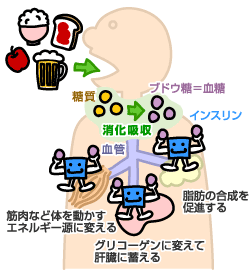
At this timeWhen glucose levels increase、Insulin is produced in the pancreas.Insulin is,The only hormone that has the property of lowering blood sugar levelsis.
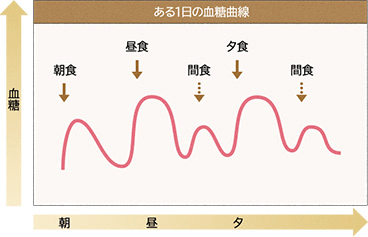
As you can see from the diagram,My blood sugar levels rise after every meal: breakfast, lunch, and dinner.
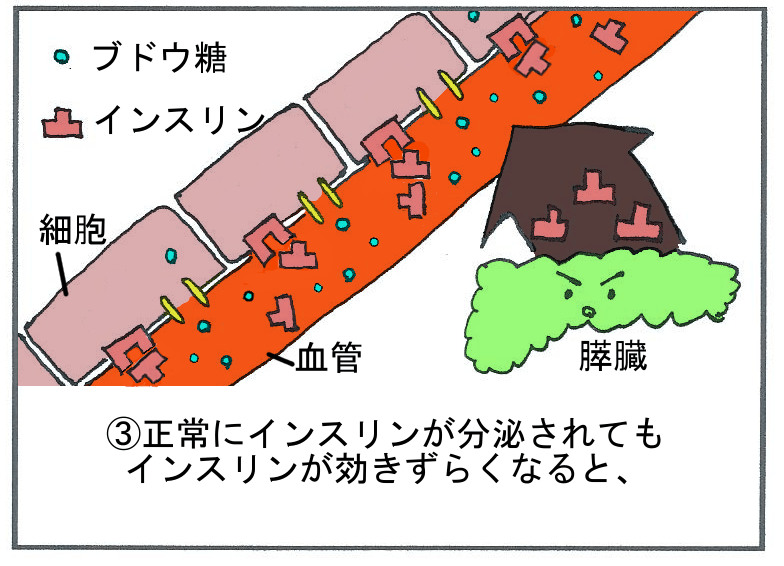
When blood sugar levels rise, if insulin released from the pancreas works properly, it converts the blood sugar into energy and uses it, thus lowering blood sugar levels.
If you consume too much sugar
but,Consuming too much sugar can cause problems.
The pancreas continues to produce large amounts of insulin to lower the significantly elevated blood sugar levels, and eventually becomes exhausted.This can lead to a loss of insulin production.
As a result, sugar accumulates and overflows in the body.Blood sugar levels remain elevated and do not decrease.
This is type 2 diabetes.


Therefore, thinking the other way around,
"Reduce carbohydrate intake (=workload) → Don't raise blood sugar levels too much → Don't make the pancreas produce too much insulin"
The sequence of events wasThis holds the key to health, weight loss, and slowing down aging.
People without diabetes can also experience high blood sugar levels.
Diabetes is often associated with risk factors for arteriosclerosis, such as hypertension and dyslipidemia, which are based on insulin resistance. These metabolic abnormalities work together to accelerate arteriosclerosis.
Even healthy people without diabetes experience elevated blood sugar levels after meals. Then, as mentioned earlier, insulin is secreted, metabolism occurs, and blood sugar levels decrease.
The problem is,SuddenlyThis is when blood sugar levels rise.Then, the excess sugar that cannot be metabolized binds to the body's proteins.It can cause damage to your body.This process is called glycation. Glycation can cause aging and potentially shorten lifespan.
For more information on glycation, please refer to the following article.

Large-scale studies both domestically and internationally have reported that postprandial blood glucose levels are more strongly associated with cardiovascular death and overall mortality than fasting blood glucose levels, and it has become clear that improving postprandial blood glucose levels can suppress the occurrence of cardiovascular events.
Persistent postprandial hyperglycemia can accelerate arteriosclerosis, causing vascular endothelial damage and inflammation, and increasing the risk of stroke and myocardial infarction.Even for those who do not have diabetes, it is important to try to keep post-meal blood sugar levels as low as possible.is.
Furthermore, it has become clear that large fluctuations in blood sugar levels can accelerate arteriosclerosis.
Drug therapy, such as alpha-glucosidase inhibitors*, has proven effective in suppressing "postprandial hyperglycemia." However,First, it is important to suppress the rise in postprandial blood glucose through dietary therapy and to maintain long-term blood glucose control.is.
Glossary
- α-glucosidase inhibitors
There is an enzyme called alpha-glucosidase that helps digest and absorb sugar. People with diabetes want to suppress the digestion and absorption of sugar, so they take alpha-glucosidase inhibitors (alpha-GI drugs) to inhibit the action of alpha-glucosidase and slow down sugar absorption.
(The above paragraph is "The effects of eating vegetables first: the order in which you eat.(This is an excerpt from [the source material], with some modifications by the author.)
For specific ways to prevent high blood sugar, please refer to the following:

comment