
Classifying personalities into 16 types16-Type Personality TestCheck which type you are using the following↓↓

↑16-Type Personality Test↑
↑Diagnose↑
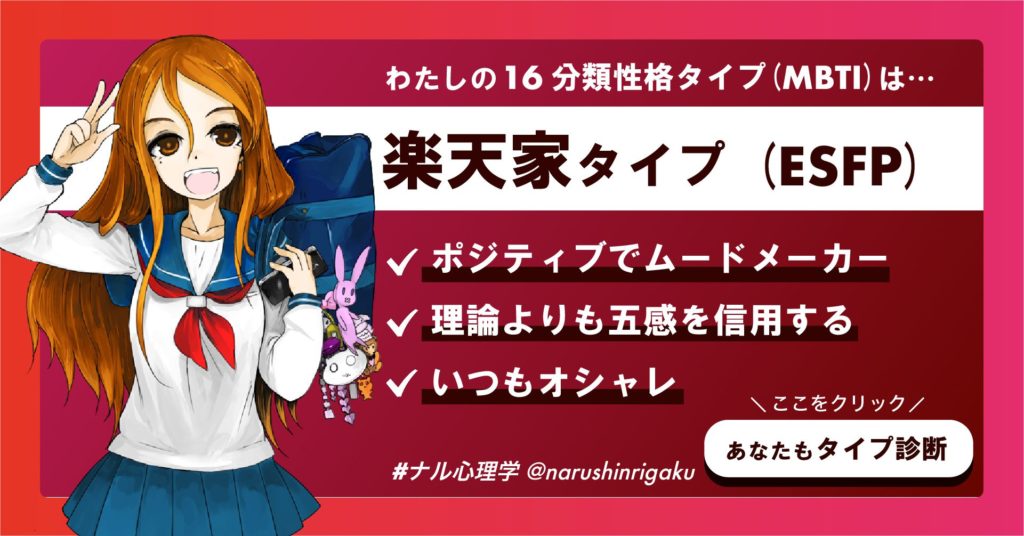
youESFP (Entertainer = Optimistic type)Then
Share it on social media (tweet it) and let your followers know!
↓↓↓Share on social media (tweet)↓↓↓
↑↑↑Share on social media (tweet)↑↑↑


Characteristics of parents of ESFP (Optimistic type) individuals – Fun and enjoyable parents
ESFPThey are outgoing, cheerful, and love having fun, and this usually doesn't change even after becoming parents. However, when it comes to discipline, they may be inconsistent, leading to misunderstandings and confusion for their children. Sometimes they are laid-back and unwilling to discipline, while other times they become irritable and scold their children. Also, their framework for discipline may not be well-established, which can be a source of hardship for their children. As parents, they are loving and often try to express their affection to their children directly. They also love to throw parties and may plan elaborate and lavish events for their children and give them presents.
reference Characteristics of 16 types of parents
ESFP (Parent) / ESFP (Child) Lifestyle
ESFPParents of ESFP types tend to spread themselves too thin, trying to cram their children into a single evening with everything from Little League practice and dance classes to meetings and home-cooked dinners. ESFP parents like to encourage competition among their children. While this can be fun in its own way, it can become overwhelming and scattered, often resulting in things being left unfinished, causing the child to blame themselves. Even if the parents don't intend to spread themselves too thin, children of different personality types can feel that way.
Because they believe it's important to "live in the present," ESFP parents prefer to join in on their children's activities rather than just watching with other parents. As a result, ESFP parents are popular among neighborhood children, but their own children often feel that "Dad (or Mom) neglects me and is always playing with my friends." However, even children who find life with an ESFP parent boring will ultimately appreciate their warm, supportive, and easygoing approach.
One of the downsides of this easygoing personality is that they tend not to impose many restrictions or instructions, and they don't discipline their children. They need to establish clear household rules and regulations.J typeDifferent types like (ISTJやESTJChildren (such as those mentioned above) may become frustrated.
ESFP children often struggle to be understood. They may appear overly energetic and constantly crave praise. They play by pretending to be a different person every day, such as a comedian, dancer, cleaner, or train driver. While their parents may not always approve of this behavior, their ability to entertain themselves is a positive aspect.
For those who want to learn more about ESFP (Optimist type) (compatibility, etc.)
For more information, please see below.Highly recommended (click to open) ↓
Compatibility: You can learn about compatibility and how to interact with other types.
RoadmapYou can learn about personality types and personality theories (MBTI) in a systematic way, from basic to specialized.
Related articlesLearn about the characteristics of each type (take a look at the parts that interest you)
Compatibility between ESFP (Optimistic type) and other types (click to view)
Ideal compatibility type pair
ESFPs are compatible with people who understand their practical perspective, who think simply, have a sense of humor, and focus on taking quick action.
From an ESFP's perspective...
- ENFP (Reformer type):Ne – FiHe has a quick mind, a good sense of humor, and can come up with many ideas.
- ESTP (Adventurer type):Se – TiThey possess practical insight and can act quickly depending on the situation.
- ESFJ (Sociable Type):Fe – SiThey create a good atmosphere and help expand your circle of acquaintances.
- ISTP (Practitioner type):Ti – SeThey have good athletic ability and the ability to apply their knowledge in a realistic and practical way.
Type pairs that are prone to conflict
ESFPs tend to clash with people who are insensitive, critical, and lack a sense of humor.
From an ESFP's perspective...
- INTJ (Strategist type) :Ni – TeA serious person who is overly critical and nitpicky, while doubting other people's opinions.
- INFJ (Empathy Type):Ni – FeThey lack a sense of humor, and despite having overly high ideals, they rarely take action.
- ESTJ (Responsible type):Se – TiThey are excessively strict and conservative, and critical.
Romantic compatibility type pair
ESFPs are most compatible in romantic relationships with charming individuals who don't interfere too much with their lifestyle and make them feel comfortable.
From an ESFP's perspective...
- ESFJ (Sociable Type):Fe – SiYou can quickly make friends and enjoy shared hobbies together.
- ISFJ (Parental Type):Si – Fe, makes you feel comfortable
- ENFP (Reformer type):Ne – FiWe can respect each other's freedom and share our thoughts.
- ISTJ (Hardworking Type):Si – Te, guarantees a stable life
*The pairs that tend to clash and the pairs that have good romantic compatibility may overlap. This is because while people may dislike those who are the complete opposite of themselves due to disagreements, they may also be attracted to those who appear mysterious because they are different. However, it seems that these relationships often end up breaking down.
(Advice for those dating an ESFP)
ESFPs tend to be honest and straightforward in relationships. In romantic relationships, they are warm and passionate, without playing games. It's important to note that ESFPs tend to take criticism personally and dislike conflict. While being straightforward is important in relationships with ESFPs, try to avoid being overly confrontational or harsh.
ESFP (Optimist Type) Roadmap (Click to open)
To truly understand ESFP (Optimist type),Psychological functions (cognitive functions)This is important ↓
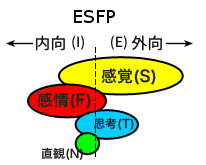
- Extroverted Sensing/Se
Very good at it /First functionThey are familiar with the real physical space ("what is happening right now") and possess high spatial awareness. - Introverted Feeling/Fi
I'm a little good at it /second functionIf your actions are based on moral reasons aligned with your vision, you can take responsibility for how others feel. - Extraverted Thinking/Te
I'm not very good at it.Third functionI prefer an environment where everyone can feel comfortable. Once an environment is disrupted, it cannot be fixed by avoiding responsibility. - Introverted Sensing/Ni
I'm really bad at it /Fourth functionThey feel anxious and fearful because they don't know what will happen in the future. They are unable to (or do not like) making long-term predictions.
<ESFP's cognitive axis>
By reading the roadmap below, you can learn about cognitive functions and gain a systematic understanding of the ESFP (Optimist type) ↓
- Roadmap – ESFP (Optimist type) –
- Introduction – What is MBTI?
- Summary of my personality
- Cognition is
- Type-specific cognitive characteristics
- Four personality indicators (psychological tendency axes)
- Conflicts over personality indicators
- “The meaning of the four letters "ESFP"
- First character:Introvert (type I) or extrovert (type E)
- Second character:Intuitive type (N type) or Sensing type (S type)
- Third character:Feeling type (F type) or thinking type (T type)
- 4th character:Perceiving type (P type) or Judging type (J type)
- About psychological functions (cognitive functions)
- What are psychological functions (cognitive functions)?
- The eight psychological functions (cognitive functions)
- Decision-making (judgment) function
- Information gathering (perceptual) function
- Understanding your own psychological functions (cognitive functions)
- The developmental process of psychological functions (cognitive functions)
- ESFP's psychological functions (cognitive functions)
- First function:Extroverted Sensing (Se)
- Second function:Introverted Feeling (Fi)
- Third function:Extraverted Thinking (Te)
- Fourth function:Introverted Intuition (Ni)
- Making good use of psychological functions (cognitive functions)
- Make the most of your strengths
- Reasons for focusing too much on the advantages
- How to improve your weaknesses
- If you are alone
- In a team setting: Have others compensate for your weaknesses (fourth function).
↑Click to open↑
youESFP (Entertainer = Optimistic type)Then
Share it on social media (tweet it) and let your followers know!
↓↓↓Share on social media (tweet)↓↓↓
↑↑↑Share on social media (tweet)↑↑↑

comment