
INTJ (Strategist type)のdecision making methodI will explain this.
Have you ever felt frustrated with the decision-making methods of your colleagues or friends? Were they illogical or disorganized? If not addressed early, these problems can snowball and cause widespread disruption in the workplace. Decision-making methods vary greatly depending on the individual and their personality. There is no right or wrong way to make decisions. However, there is a decision-making method that is right for you and that works best for you.
However, when people with different decision-making styles work together, tension can rise. Understanding each other is key to maintaining communication and ensuring the success of the project.MBTITaking the time to understand your own personality type can help improve and streamline decision-making for you and your team, and build a deeper mutual understanding in the process.


Decision-making methods of INTJ (Strategist type)
INTJs are strong theorists and enjoy creating concepts and grand themes that guide the decision-making process, but they tend to keep a relative distance from themselves. However, they may find it difficult to figure out how to concretely realize their vision. First,To draw up a theoretical vision(=Introverted Intuition: Ni),nextWe verify the ideal within realistic constraints.(=Extraverted Thinking: Te)。
INTJ types tend to like to investigate and learn as much as possible about all options, and to thoroughly discuss and reflect on the pros and cons of each. This process is thorough, but rather than reflective.Emphasize action(=Extroverted Sensing: SePeople with other personality types may become frustrated, interpreting an INTJ's arguments as overly argumentative or rebellious. In such cases, it's important for other types to remember that decision-making varies from person to person, and for INTJs to consider compromising by finding a better balance between deliberation and action.
When making decisions, INTJs tend to have a long-term, holistic perspective and make decisions only after thorough research. They are also adept at abstract thinking, able to simulate the outcomes of various possibilities in their minds and break down complex execution methods into manageable and measurable steps. However, they may find it difficult to express their ideas in a way that others understand, invest in, or persuade.
INTJs possess a clear and systematic thought process, enabling them to evaluate and reflect on their decisions. They are capable of accepting and giving constructive criticism, but they should also remember to give and receive praise. To achieve this, it is helpful to create checklists that evaluate results based on specific and objective criteria. They also need to make an effort to consider the impact their decisions have on others and how to improve their own and their team's relationships. By taking these simple steps and making an effort to understand the personality types and decision-making tendencies of others, they can become more productive and efficient.
Once you move into the execution phase after making a decision, INTJs need to stay grounded. Instead of being overwhelmed by imagined obstacles and problems in the future, it's good to recognize the positive aspects. Remember that objective evaluations will also include positive points.
Generally, INTJs tend to make decisions without considering the finer details. Often, this type of person will analyze the outcome (logically) using something as simple as a list of "pros and cons."
Let's consider, for example, the process of finding a job or changing careers.
This type uses factors such as which job offers the highest pay, the best benefits, and their preferred type of work as their criteria for making decisions. These are essential decision-making elements for this personality type because many of the reasons INTJs are dissatisfied with their jobs are the lack of promotion opportunities and job security.
On the other hand, people with this personality type may forget to consider smaller values such as work-life balance, workplace culture, location, commute time, and even dress code, but these are all important factors. Focusing only on the logical aspects of a job can lead to poor career choices.
The INTJ personality type's high-priority personal values include health, family, a sense of accomplishment, autonomy, and financial stability. To ensure that INTJs do not ignore these values when making decisions, it may be helpful for them to create a "strengths and weaknesses" list that focuses solely on their personal desires and needs.
For example, choosing a low-paying job to satisfy personal desires might seem foolish to an INTJ, but doing so increases the likelihood of staying in that job for a long time.
Other types of "decision-making methods"If you would like to read more about this,Click here ↓
16 Types of Decision-Making Methods
For those who want to learn more about INTJ (Strategist type) (compatibility, etc.)
For more information, please see below.Highly recommended (click to open) ↓
Compatibility: You can learn about compatibility and how to interact with other types.
RoadmapYou can learn about personality types and personality theories (MBTI) in a systematic way, from basic to specialized.
Related articlesLearn about the characteristics of each type (take a look at the parts that interest you)
INTJ (Strategist type)Compatibility with other types (click to show)
Ideal compatibility type pair
INTJs get along well with people who can structurally explain what the world will be like and how it should be, who have a systematic vision, and with whom they can discuss such prospects.
From an INTJ's perspective...
- INTP (Researcher Type):Ti – Ne, very logicalBecause they think about things in a certain way, it's easy to communicate with them.
Type pairs that are prone to conflict
Those who tend to clash with INTJs are often those who are articulate but don't think logically about things in everyday life.
From an INTJ's perspective...
- ESFJ (Sociable Type):Fe – SiOur communication styles and lifestyles don't match.
- ESTP (Adventurer type):Se – TiOur communication styles and lifestyles don't match.
- ESTJ (Responsible type):Te – SiI don't like the idea of not looking at what the future will be like or how it should be.
- ESFP (Optimist type):Se – Fi, their lifestyles are incompatible
Romantic compatibility type pair
INTJs are most compatible in romantic relationships with people who understand their perspectives and can reassure them about their vulnerabilities.
From an INTJ's perspective...
- ENFP (Reformer type):Ne – FiWe can discuss positive events that are likely to happen in the future in a positive way.
- INFP (Psychologist type):Fi – Ne, our lifestyles match, and we can discuss our ideas and interact with each other.
- ISFP (Artist type):Fi – SeIt creates a practical environment for you.
- ISFJ (Parental Type):Si – FeThey listen to you and offer advice, which gives you peace of mind and helps stabilize your emotions.
*The pairs that tend to clash and the pairs that have good romantic compatibility may overlap. This is because while people may dislike those who are the complete opposite of themselves due to disagreements, they may also be attracted to those who appear mysterious because they are different. However, it seems that these relationships often end up breaking down.
(Advice for those dating an INTJ)
Because INTJs have difficulty forming close relationships, their romantic relationships can sometimes become complicated. If your partner is an INTJ, it's important to know that loyalty and understanding are crucial.
Communication is also crucial. Instead of expecting an INTJ to notice your subtle signals, try being direct and even blunt about what you expect.
INTJ (Strategist type)Roadmap (Click to open)
INTJ (Strategist type)To truly understand this,Psychological functions (cognitive functions)This is important ↓
*Generally in cognitive science,Cognitive functions「The function by which living organisms actively collect external information, perceive and remember it, and then process it by adding reasoning and judgment in order to acquire knowledge about their subject.It is defined as "
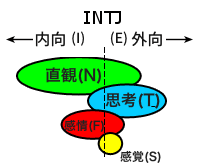
- Introverted Sensing/Ni
Very good at it /First functionThey are skilled at predicting their own future, and they can see the connections between things and events, and how an individual's destiny will unfold. - Extraverted Thinking/Te
I'm a little good at it /second functionObserve and understand current actions from a methodological and systemic perspective to determine whether they are efficient or not. - Introverted Feeling/Fi
I'm not very good at it.Third functionThey believe they possess the most correct ethical values. When challenged, they become stubborn, clinging to their own opinions. - Extroverted Sensing/Se
I'm really bad at it /Fourth functionThey fear and feel anxious about hurting others' feelings. They suffer because they don't know how to cope with or resolve pressure (or they run away without dealing with it).
<The cognitive axis of INTJ>
Ni – SeSeek a future where you can feel joy and peace, and grasp it intuitively.
Te – FiTo strive to be recognized.
By reading the following roadmap, you can learn about cognitive functions.INTJ (Strategist type)You can understand it in an orderly manner ↓
- Roadmap – INTJ (Strategist type) –
- Introduction – What is MBTI?
- Summary of my personality
- Cognition is
- Type-specific cognitive characteristics
- Four personality indicators (psychological tendency axes)
- Conflicts over personality indicators
- “The meaning of the four letters "INTJ"
- First character:Introvert (type I) or extrovert (type E)
- Second character:Intuitive type (N type) or Sensing type (S type)
- Third character:Feeling type (F type) or thinking type (T type)
- 4th character:Perceiving type (P type) or Judging type (J type)
- About psychological functions (cognitive functions)
- What are psychological functions (cognitive functions)?
- The eight psychological functions (cognitive functions)
- Decision-making (judgment) function
- Information gathering (perceptual) function
- Understanding your own psychological functions (cognitive functions)
- The developmental process of psychological functions (cognitive functions)
- INTJ's psychological functions (cognitive functions)
- First function:Introverted Intuition (Ni)
- Second function:Extraverted Thinking (Te)
- Third function:Introverted Feeling (Fi)
- Fourth function:Extroverted Sensing (Se)
- Making good use of psychological functions (cognitive functions)
- Strengths and weaknesses of the INTJ (Strategist type)
- Make the most of your strengths
- Reasons for focusing too much on the advantages
- How to improve your weaknesses
- If you are alone
- In a team setting: Have others compensate for your weaknesses (fourth function).
INTJ (Architect/Strategist Type) – A Comprehensive Guide to Links
- Explanation of INTJ
- INTJ Personality Trait 01
- INTJ Personality Traits 02
- INTJ Personality Traits 03
- INTJ's hobbies
- Strengths and weaknesses of INTJs
- Things that INTJs dislike
- Suitable occupations for INTJs
- INTJ leadership
- Compatibility between INTJs and other personality types
- INTJ Relationships and Romance
- How INTJs set goals and gather information
- INTJ's Decision-Making Methods
- INTJ parent-child relationships
- How INTJs can succeed
- INTJ psychological functions
- “The meaning of the four letters "INTJ"
- INTJ's psychological functions (cognitive functions)
- The difference between extroverted thinking (Te) and introverted feeling (Fi)
- The difference between extroverted thinking (Te) and introverted thinking (Ti)
- The difference between introverted thinking (Ti) and extroverted thinking (Te) [Part 2]
↑Click to open↑

comment