
The Enneagram test results are...
Type 3!
Below are the details of your diagnosis:
Enneagram diagnostic results
Naru Psychology / @narushinrigaku
Diagnosis resultsShare it on social media (tweet it) and let your followers know!
↓↓↓
Enneagram personality testType 3I will explain this.
first,"EnneagramThis is a personality test that divides people into nine personality types.
The Enneagram is a personality type system that describes patterns of how people interpret the world and process emotions. The Enneagram describes nine personality types and explains the relationships between types by mapping each type onto a diagram with nine points.
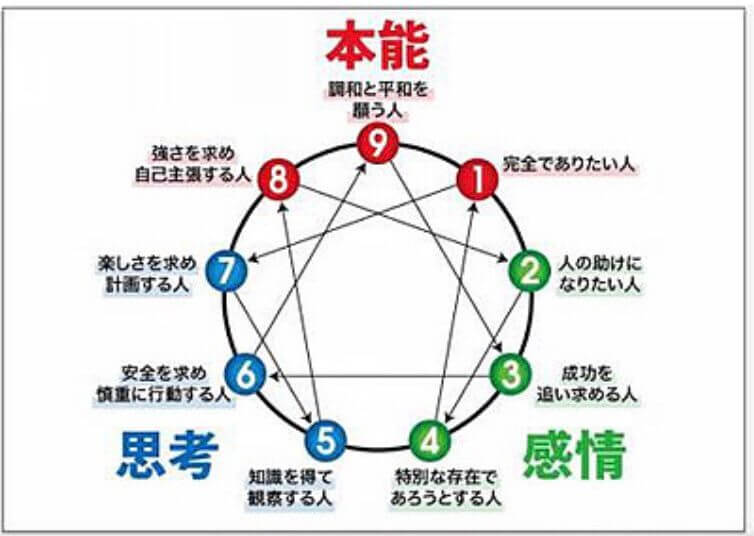
Characteristics and explanations of Enneagram types 1-9! (Quoted from)
↓EnneagramPersonality assessmentLet's try it!! ↓



A brief explanation of Type 3
Type 3 is...
A success-oriented type who prioritizes practicality.
They are adaptable, highly capable, motivated, and value how others perceive them.
- desire"Pursuing results"
- 囚I"If you don't achieve it, you won't be loved by anyone."
Simple explanation
Enneagram Type 3 individuals are confident and charismatic. They are ambitious, capable, and energetic, but can be concerned with status and have a strong desire for advancement. They are outgoing and calm, but can be overly concerned with their image and how others perceive them. Generally, they struggle with issues such as workaholism and competitiveness.
When this type matures, they become a good example of someone who shows their full potential and inspires others.
Type 3 individuals who are stressed are unhealthy.Type 9They suddenly lose motivation and become lethargic. However, when moving in the direction of integration (growth), Type 3s become healthyType 6This increases their cooperativeness and makes them more willing to help others.
Details of Type 3
Enneagram Type 3s have refined hobbies, strive to accomplish more, are sociable and skilled conversationalists, and have a talent for meeting deadlines. This type can make friends with anyone.
If in good health, they could truly accomplish great things in the world. They enjoy counting their achievements, avoid failure, and live with long-term goals. They are charismatic, and people respect this type of person for their integrity and sense of personal accomplishment.
Mentally healthy Type 3s know the satisfaction of personal growth and contributing their abilities to the world, and they enjoy motivating others to achieve personal accomplishments beyond what others expected. They are also highly regarded by those around them, are popular, and are often elected as class president or in similar roles.
This type is often successful and well-liked. This is because, more than any other type, they have the strongest belief in themselves and in developing their talents and abilities. They excel at embodying socially valued qualities and serve as good role models for others.
To others, Type 3s appear confident, ambitious, and goal-oriented. However, and this may surprise others, they lack confidence in their inherent worth and crave validation of their achievements. This type is typically image-driven, and it's crucial for them to be seen as successful "by others."
I want to succeed in my life, but that doesn't come from within me; it's driven by external factors such as family, culture, and social spheres.
For example, success for this type might mean having a lot of money, living in a mansion, owning a new and expensive car, or possessing other status symbols. Others value ideas, and for them, success means making a name for themselves in the academic or scientific world. Still others might see success as becoming famous as an actor, model, or writer, or as a public figure such as a politician.
In any case, they strive to become someone who is noticed within their family and community. Type 3s will not be "nobody."
To achieve this goal, they learn to perform in a way that earns praise and attention. As children, they learn to recognize activities that are valued by their parents and peers, and to focus their energy on achieving excellent results in those activities. They also learn how to cultivate and develop their own charm and potential.
They need to be noticed, encouraged, and have their worth recognized. Type 3s areType 7The enjoyment that comes from the success that one desires,Type 8They desire the attention, fame, and sense of accomplishment that success brings, rather than the power or independence that success brings (like in example 8). This is because they fear that without the increased attention and sense of accomplishment that success brings, they will be nobody and worthless.
The problem is that we become so desperate to achieve anything we believe will increase our self-worth that we lose sight of what we truly want, and what our real feelings and interests are. When we reach this state, we fall into all sorts of self-deception.
What's even more problematic is that while searching for ways to increase your self-worth, you end up drifting further and further away from your true self, which is the core of your true value.
Type 3s, from a young age, become dependent on seeking attention from others and pursuing values that others will appreciate. As a result, their inner core, their "heart's desires," are gradually left behind, and they become unable to recognize them anymore.
Thus, interestingly, Type 3, the primary type of the Feeling Center, is not known as a "feeling" person, but rather as a person of action and achievement. It's as if they "put their emotions in a box" in order to move forward with what they want to achieve.
The three believe that emotions get in the way of performance, so they replace their thoughts and practical actions with emotions.
Self-love and vanity
Type 3 individuals tend to place great importance on themselves, exhibiting a strong sense of self-love and sometimes displaying excessive vanity. Therefore, to "maintain" the image they project to their friends, they may present their best side, or in extreme cases, even lie. Often, Type 3s may not possess the same level of actual ability, as their self-expression can be somewhat exaggerated.
Fear of intimacy
It's not that they don't have friends, but as relationships deepen, they sometimes avoid or run away from them because they're afraid of revealing their true selves. Therefore, Type 3s find it difficult to open up to others and build close, healthy friendships. Type 3s are highly competitive and usually try to behave "greatly" in front of friends, believing they shouldn't do anything "bad," but no one is perfect. They find happiness in life when they let others see them for who they truly are.
Interpersonal relationships
Your strong desire to win is what makes you energetic and always motivated. You love challenges and will connect them to your own value and achievements. You believe that "nothing is impossible," and you are an achievement-oriented type who works wholeheartedly towards your goals. You are highly motivated and often take on leadership roles, guiding others.
Main personality traits
- Charismatic and makes a good first impression.
- I have a strong desire to win.
- I'm afraid to reveal my true feelings and emotions.
- My schedule is packed with meetings.
- A number of impressive achievementsHave a lot
- Workaholic
- Measure your own worth by your results.
- I want to be recognized by others.
- Extremely busy and constantly on the move
- They might be interested in improvisation or acting.
- They value their image and have a refined appearance.
- I often compare myself to others.
values
- They value attention, praise, and status from others.
- Getting things done is more important than wasting time over-planning or daydreaming.
- Act with a goal in mind and have a strong desire for self-improvement.
- Productivity and a sense of accomplishment are core values.
Elements that make up Type 3
Basic fearThe feeling of being worthless.
I am afraid of being insignificant and of failing. To cope with this fear, I seek ways to win in life and convince myself that I am a valuable person.
basic needsI want something that is valuable and rewarding.
Main motivationThey want to be affirmed, to stand out from others, to be noticed, to be praised, and to move others.
My motivation stems from a desire to be noticed and praised. I strive to succeed and become an important person so that I don't feel worthless.
Tips for growth
- Examine your own thoughts and feelings.Sometimes, in our desire for approval, we try too hard to meet others' expectations, losing sight of our own true feelings and emotions. Take some time to ask yourself how you truly feel about something. Do your words and actions align with your true feelings?
- Honesty is essential for true growth.Be honest with yourself and others about your true feelings and desires. Similarly, don't succumb to the temptation to impress others or flaunt your importance. Honesty can move people more deeply than boasting about successes or exaggerating achievements.
- Accept your weaknesses.We grow by learning to accept our weaknesses and acting in a way that is more true to ourselves.
- Let's cherish compassion and cooperation in our relationships.To achieve this, it's important to take time to connect with loved ones amidst your busy day. It doesn't have to be anything extravagant; even a simple word of gratitude is enough. Doing so will make you a more loving and attractive person, and you'll feel better about yourself as well.
- please take it easy.It's easy for Three to overlook things right in front of them or take the present moment for granted when they're so busy. Take some time to relax and appreciate the present moment. (And to do that, it's important to turn off your smartphone.)
- Many Type 3 individuals can grow significantly by participating in projects that are unrelated to their own personal development.Working collaboratively with others towards goals that transcend personal interests is a powerful way to discover your true value and identity.
The "stages" in the Enneagram
* This chapter is,Stages (Enneagram)This is a quote from "[source]".
3 stages
Healthy (Stages 1-3)
- Problems stemming from obsession, primal fears, and desires.The state in which the problem has been resolved.
- In this state,freedomやsense of freedomYou can feel
Normal (Stages 4-6)
- The so-called "normal" state
- Most of us are in this state.
Unhealthy (Stages 7-9)
- Freedom is restricted,A state of suffering both physically and mentally.
- In other words, "sick"
- Stage 9 is no longerterminal stageThat is
- If you become unhealthy, you either fall even further down or have no choice but to call for help.
Stage 3
Click to display ↓
healthy
Stage 1: "An honest person"
- "I want to be recognized by others."That desire disappears, and you can accept yourself as you are.
- A state of introspection and genuinely enjoying personal growth.
- They are genuine and pure like children, and they try to share joy and emotion with others.
- There's no desire to be a "superior person"; it's a state of being "okay just the way I am."
- A state where you can truly love yourself from the bottom of your heart.
- If your aura is contagious, you'll be seen as a sincere person and become a good leader.
Stage 2: "A confident person"
- You will come to want to meet people's expectations.
- While there are some typical Type 3 traits, they are becoming more aware of what others are seeing in them.
- They are considerate of others and do not frequently engage in excessive self-promotion or one-upmanship.decrease
- The sense of competition disappears, and an atmosphere of "You're OK, so am I OK" emerges.(Eric Berne)
- What is Type 3 confidence?"Adult composure"
Stage 3: "Excellent Example"
- Successful people play.I strive stoically to become an excellent person.
- Study hard, train your body, acquire knowledge, and refine your sensibilities.It will become
- They begin to seek growth rather than success.
- Men will likely refrain from socializing with the opposite sex, and women will likely reduce their participation in girls' nights out.
- And when you're truly working on improving yourself, you even lose the feeling that you're doing so.
- They genuinely enjoy growing, not for validation or narcissistic reasons.
- As a result, you will be respected by others.
- Normally, Type 3s are proud and get angry when they are mocked or looked down upon, but in this state, they have the composure to brush it off.
usually
Stage 4: "A competitive desire for a high position"
- Type 3 is the closest to the most common image.
- "I want to stand out! I want to succeed!"Driven by this desire, I'm in a state of full throttle.
- They actively participate in competitions and strive to win at all costs.
- I'm a workaholic, but I'm pumping 120% of adrenaline to achieve the glory in front of me.
- This tendency can occur in any profession.
- Furthermore, even outside of work, when parents try to get their children to study a lot to make them academically successful, this is evidence of this level of Type 3 tendencies.
- "Social success = a valuable self = that's everything."There is such an equation, and we spare no effort in striving for it.
- What's bad about them is that they're perfectly willing to involve others if it means achieving their goals.
- "Success is proof of value and a condition for happiness."They apply this value system to others, but they don't mean any harm.
Stage 5: "A pragmatist with a strong sense of image"
- When something isn't going well, people usually try to solve the problem, but Type 3s at this stage...Shining characterCreate
- They focus their energy on making a good impression on the person in front of them and those around them, prioritizing appearance over substance.
- This is a moment when you want to make a good impression on those around you, and you have to act a certain way.
- Internet businesses are a prime example of this.
- I love branding myself,It even seems suspicious.
- Instead of aiming to be successful, their minds start to focus on acting like successful people.
- As a result, they push themselves to the point where they no longer recognize their own face, but they become addicted to the pleasure of being seen by others, and they lose all restraint.
- Many SNS addicts
- on social media"nice!"In order to receive,Even to the point of going into debtThis includes things like dining at high-end restaurants or buying luxury brand clothing.
- Even though others might find it pathetic, they are deceiving themselves and are unaware of it.
Stage 6: "A self-centered person who tries to sell themselves."
- When the limits of image manipulation in stage 5 are reached, people begin to fear that their previous image will crumble.
- For Type 3s, the image of a successful person is"What you create through investment"That is
- It's painful to think that all the money, time, and effort you've invested up to this point will be wasted.
- For a Type 3, being ridiculed by others is nothing short of humiliating.
- "From luxury brands to door-to-door sales."
- The Type 3, which had previously been a self-proclaimed luxury brand,"look at me!""Evaluate me!"And so he started doing door-to-door sales, without regard for who he was approaching.
- When people see the lack of composure in a Type 3 individual, their reaction can be summed up in one word: "a very pathetic person."
- "Putting others down to elevate oneself"I've come to think that way.
- Fearing that people will think, "That person is all about their looks!" can drive you to a strange sense of competition.
- And they begin to look down on those who don't acknowledge them, and try to elevate themselves by putting others down.
- Anyone driven by jealousy or envy might exhibit this tendency of a Type 3 at this stage, and that's true... but in the case of a Type 3...People are no longer able to find value in anything other than success and fame.This is why this "overly persistent self-promotion" continues for a long time.
unhealthy
Stage 7: "Dishonest opportunist"
- A state of not feeling guilty about deceiving others.
- At this point, there is a lack of moral understanding of good and evil.It's not even ethics.
- Even if it causes guilt or self-loathing, if you determine that you can gain a lot by deceiving others, you should deceive others without hesitation.
- At this stage, Type 3 individuals are clearly not behaving normally and are therefore ignored by everyone.
- This stage of Type 3 would eventually disappear.I will avoid meeting anyone.
- The reason for disappearing is that he doesn't want others to know that he has fallen into depravity.
Stage 8: "The Malicious Deceiver"
- A state in which one is unable to make sound judgments.
- A state of deceiving not only others, but even oneself.
- As a result, they lose all resistance to deceiving others, and in the worst cases, they may even lose the sense that they are deceiving someone.
- It leads to a self-contradictory situation like, "I don't intend to lie, but what if I get caught?"
- Type 3 in this stateNot in a state to adapt to society
- The only way to be honest with yourself is to make time to confront yourself, but that itself is the most difficult thing for a Type 3.
Stage 9: "Vengeful psychotic"
- They begin to exhibit pathological symptoms.
- Self-esteem, pride, and self-awarenessLost everything、A state of difficulty in reintegrating into societyIt becomes
- In my heart"Nothing to lose"With that thought in mind, I began to hate the people who had ruined me.
- Overwhelmed by a desire for revengeIn some cases
When a Type 3 person takes a 16-type personality test...
A Type 1 person,16-Type Personality TestIf you receiveESTJ (Responsible type)、ENTJ (Leader type)This often applies to people of this type. Common characteristics of this type include being attention-seeking, reliable, and proactive.
↓Click here if you want to find out your personality type from the 16 personality types↓

↑Try taking the 16-type personality test↑
Related articles ↓
List of Enneagram types (click to view)
Click here to see other types! ↑

comment