

Dietary fiber is a type of carbohydrate that cannot be digested by human digestive enzymes. Because it is not digested, it does not serve as an energy source. However, subsequent research has shown thatIt has been found to be an important nutrient for health and is sometimes called the sixth nutrient.
This article explains what dietary fiber is and its lesser-known health benefits.


What is dietary fiber?
"01. What are carbohydrates?"As explained above, "carbohydrates" are substances that are digested (broken down) by human digestive enzymes and become an energy source."Dietary fiber" refers to substances that cannot be digested (broken down) by human digestive enzymes.
Types of dietary fiber
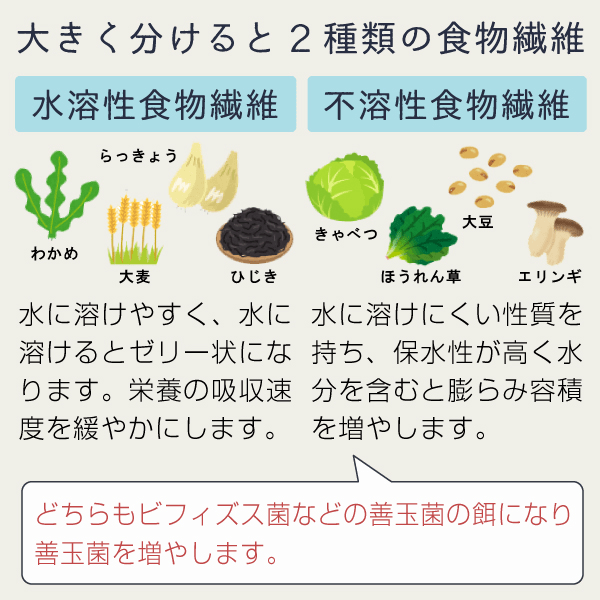
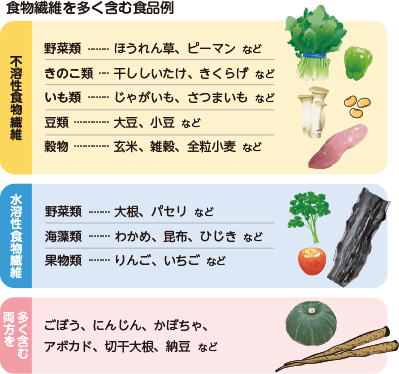
Dietary fiber can be broadly divided into:Water-soluble type (water-soluble dietary fiber)とWater-insoluble type (insoluble dietary fiber)There is.
Indigestible dextrinQuoted and transcribed from "[Title of the book]" with modifications.
Characteristics of insoluble dietary fiber
It absorbs water and swells up, increasing the volume of stool. This stimulates the intestines and activates peristalsis.It promotes bowel movements.However, consuming too much can make your stool too hard, which can actually worsen constipation.
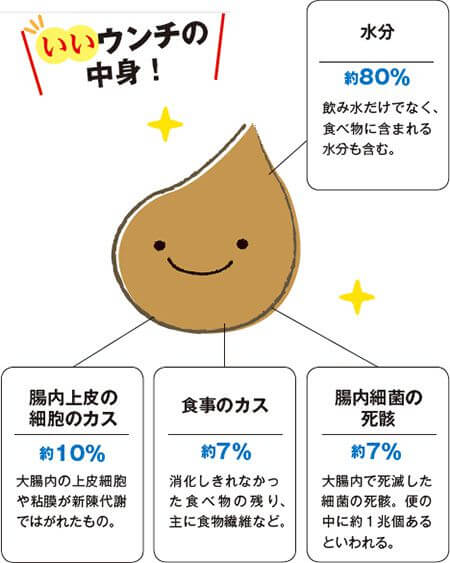
In healthy individuals, stool is approximately 80% water, with the remaining 20% consisting of 1/3 food residue, 1/3 old intestinal lining, and...One-third consists of intestinal bacteria and their remains.is.
「A daily health barometer: I want to encounter a good bowel movement!Quoted from
Feces contain many dead intestinal bacteria, but there are also living intestinal bacteria. Since baby elephants cannot drink breast milk, they eat their mother's fresh feces as soon as they are born. Feces contain live intestinal bacteria and nutrients, so baby elephants that cannot drink breast milk eat their mother's fresh feces to get nutrients and acquire bacteria. In this way, baby elephants are infected with and inherit the bacteria that their mothers have in a healthy manner.
Characteristics of water-soluble dietary fiber
Many water-soluble dietary fibers become viscous when they dissolve in water and swell, making it easier for food to stay in the small intestine. In other words, when dissolved in water, they become sticky and move slowly through the gastrointestinal tract.You'll feel less hungry.Furthermore, it slows down the absorption of carbohydrates,It suppresses the rapid rise in blood sugar levels after meals.
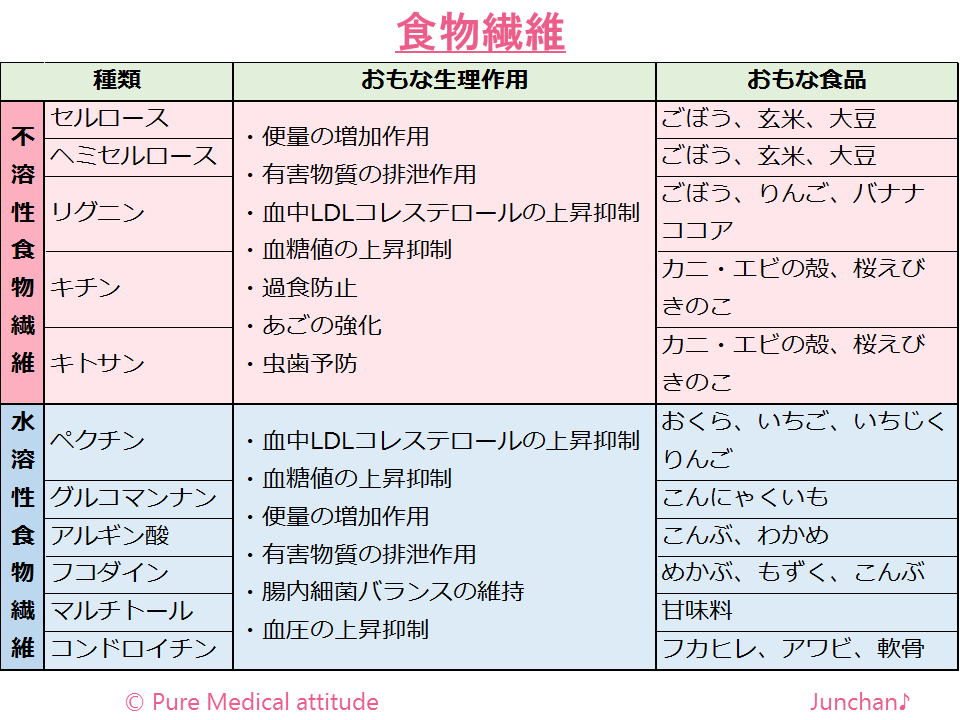
Further classification reveals the following: There are various types of dietary fiber.
The role of dietary fiber
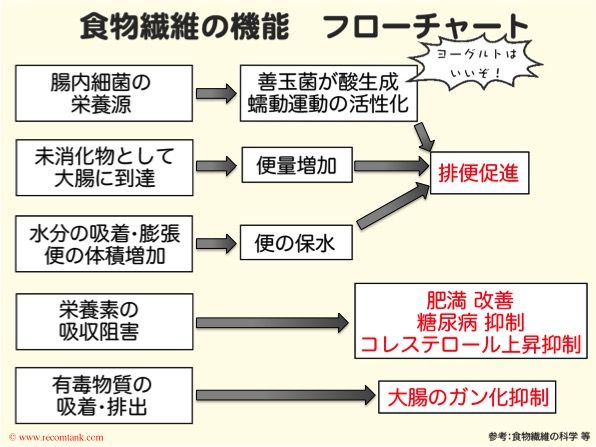
Some well-known effects of dietary fiber include:Promotes constipationIt has several other benefits, including preventing diabetes and colon cancer.
The reason why a lack of dietary fiber can cause constipation is,See this article below ↓Please refer to this.
Also,Consuming dietary fiber produces "short-chain fatty acids" and "hydrogen gas."
Because "dietary fiber" cannot be broken down (digested) by human digestive enzymes, it reaches the large intestine without being digested or absorbed, where it becomes "food for intestinal bacteria." When intestinal bacteria eat and ferment the "dietary fiber," they produce beneficial components such as "short-chain fatty acids," which serve as an "alternative energy source to glucose," and "hydrogen gas (an antioxidant that reduces oxidation in the body)," which are then provided to the human host.
When intestinal bacteria consume and ferment dietary fiber, it becomes an alternative energy source to glucose.Short-chain fatty acidsIn addition to '', vitamins, minerals, amino acids, enzymes and ''Hydrogen gas (an antioxidant that reduces oxidation in the body)It produces various active ingredients such as ''And they provide essential nutrients to their human host. This system in which intestinal bacteria produce nutrients and provide them to the host is calledNutrient production by gut bacteria" he says.
The relationship between dietary fiber and hydrogen gasPlease refer to the following for more information ↓
The reason why herbivores can sustain their massive bodies on a diet consisting solely of grass is because this system of "nutrient production and provision by gut bacteria" is functioning at its maximum potential. By eating a diet consisting solely of grass and providing gut bacteria with "dietary fiber" as food, herbivores can then produce the nutrients necessary for their survival, thus sustaining their lives.
Short-chain fatty acids, produced when intestinal bacteria ferment and break down dietary fiber, are also extremely important components. These short-chain fatty acids support the body as an alternative energy source to glucose. In recent years, they have become increasingly important nutrients in medicine.
Herbivores produce the following intestinal bacteria:Short-chain fatty acidsIt uses ' as an important energy source'.
- Maintains the absorption of water and sodium from the large intestine.
- Maintaining sustained contractions of the large intestine
- Maintaining the proliferation of mucosal cells
- Improvement of gastrointestinal motility
- It stimulates mucus secretion in the large intestine.
- Helps the absorption of calcium and magnesium.
- Helps the secretion of pancreatic juice
- Improving immunity
To increase your fiber intake and produce more short-chain fatty acids, fiber supplements are an efficient way to do so. Below, we've listed some recommended fiber supplements; please refer to them below.

comment