

ISFP (Artist type)のHow to set goals and gather informationI will explain this.


How ISFPs (Artist types) set goals and gather information.
When setting goals, ISFPs naturally seize opportunities that others might overlook. While they set specific goals, they tend to have a lower awareness of long-term objectives. To succeed in the goal-setting process, ISFPs should leverage their personality to create actions and tasks that fulfill their ambitions. They also need to set not only immediate goals but also long-term goals.
When gathering information, ISFPs can begin by consulting online sources before meeting people in person. Learning directly from experts can provide valuable information necessary for making informed decisions.
Details regarding long-term possibilities and realities are also important. ISFPs need to remember not to be overwhelmed when gathering details. Otherwise, this type of person may not be able to recognize the long-term benefits. For example, if they have too much information, when looking for a job, an ISFP might choose a job based only on short-term interests such as salary and hours, and forget their long-term goals at work. While ISFPs make decisions based on facts, they are also multifaceted individuals who consider how their decisions will affect others, such as family and loved ones.
Other types of "goal setting and information gathering methods"If you would like to read more about this,Click here ↓
16Personalities: Goal Setting and Information Gathering Methods by Personality Type
For those who want to learn more about ISFP (Artist type) (compatibility, etc.)
For more information, please see below.Highly recommended (click to open) ↓
Compatibility: You can learn about compatibility and how to interact with other types.
RoadmapYou can learn about personality types and personality theories (MBTI) in a systematic way, from basic to specialized.
Related articlesLearn about the characteristics of each type (take a look at the parts that interest you)
ISFP(Artist type)Compatibility with other types (click to show)
Ideal compatibility type pair
ISFPs are compatible with people who respect each other's freedom and with whom they can have positive experiences.
From an ISFP's perspective...
- INFP (Psychologist type):Fi – NeThey respect freedom and feelings.
- ENFP (Reformer type):Ne – FiThey respect individuality
- ISFJ (Parental Type):Si – FeThey treat you with consideration.
- INTP (Researcher Type):Ti – NeWe can share ideas and exchange information.
Type pairs that are prone to conflict
ISFPs tend to clash with overbearing people who don't respect their individual choices and actions.
From an ISFP's perspective...
- ESTJ (Responsible type):Te – SiThey criticize me and try to control me.
- ENTJ (Leader type):Te – NiHe is very logical, meticulous, and rational, but his demands are intense, making him difficult to be around.
Romantic compatibility type pair
ISFPs are most compatible in romantic relationships with people who offer positive experiences and who can provide reassurance during difficult times.
From an ISFP's perspective...
- ENFJ (Collaborator Type):Fe – NiThey make you feel safe and comfortable.
- INTJ (Strategist type) :Ni – Te, wisely prepare for the future and give you peace of mind
- ENFP (Reformer type):Ne – FiThey create a friendly and comfortable environment and understand your feelings.
- ISTJ (Hardworking Type):Si – TeIt reassures you even in difficult situations.
*The pairs that tend to clash and the pairs that have good romantic compatibility may overlap. This is because while people may dislike those who are the complete opposite of themselves due to disagreements, they may also be attracted to those who appear mysterious because they are different. However, it seems that these relationships often end up breaking down.
(Advice for those dating an ISFP)
ISFPs are very empathetic in relationships and often make concessions to others. Many struggle to express their feelings or assert their demands, so it's important to make an effort to understand them. When making decisions, listen to the ISFP's perspective and respect their feelings equally.
ISFP (Artist type)Roadmap (Click to open)
ISFP (Artist type)To truly understand this,Psychological functions (cognitive functions)* is important ↓
*Generally in cognitive science,Cognitive functions「The function by which living organisms actively collect external information, perceive and remember it, and then process it by adding reasoning and judgment in order to acquire knowledge about their subject.It is defined as "
- Introverted Feeling/Fi
Very good at it /First function: Decide what you believe is right for you, what is morally right within your worldview, and what you should do according to your personal values. - Extroverted Sensing/Se
I'm a little good at it /second function: To make good use of physical space and create positive experiences for people, whether material or sensory. - Introverted Sensing/Ni
I'm not very good at it.Third functionBecause they believe they know what is right for them, they can get irritated when told what to do by others. - Extraverted Thinking/Te
I'm really bad at it /Fourth functionThey fear and worry about what others think of them. They are unable (or unwilling) to organize their thoughts rationally and logically.
<ISFP's cognitive framework>
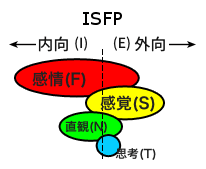
By reading the following roadmap, you can learn about cognitive functions.ISFP (Artist type)You can understand it in an orderly manner ↓
- Roadmap – ISFP (Artist type) –
- Introduction – What is MBTI?
- Summary of my personality
- Cognition is
- Type-specific cognitive characteristics
- Four personality indicators (psychological tendency axes)
- Conflicts over personality indicators
- “The meaning of the four letters "ISFP"
- First character:Introvert (type I) or extrovert (type E)
- Second character:Intuitive type (N type) or Sensing type (S type)
- Third character:Feeling type (F type) or thinking type (T type)
- 4th character:Perceiving type (P type) or Judging type (J type)
- About psychological functions (cognitive functions)
- What are psychological functions (cognitive functions)?
- The eight psychological functions (cognitive functions)
- Decision-making (judgment) function
- Information gathering (perceptual) function
- Understanding your own psychological functions (cognitive functions)
- The developmental process of psychological functions (cognitive functions)
- ISFP's psychological functions (cognitive functions)
- First function:Introverted Feeling (Fi)
- Second function:Extroverted Sensing (Se)
- Third function:Introverted Intuition (Ni)
- Fourth function:Extraverted Thinking (Te)
- Making good use of psychological functions (cognitive functions)
- Strengths and weaknesses of the ISTP (Practitioner type)
- Make the most of your strengths
- Reasons for focusing too much on the advantages
- How to improve your weaknesses
- If you are alone
- In a team setting: Have others compensate for your weaknesses (fourth function).
ISFP (Adventurer/Artist Type) – A Comprehensive Guide with Links
- Explanation of ISFP
- ISFP Personality Traits 01
- ISFP Personality Traits 02
- ISFP hobbies
- Things that ISFPs dislike
- Advantages and disadvantages of ISFP
- Suitable occupations for ISFPs
- ISFP Leadership
- Compatibility of ISFP with other types
- ISFP Relationships and Romance
- How ISFPs Set Goals and Gather Information
- ISFP decision-making methods
- ISFP parent-child relationships
- How ISFPs can succeed
- ISFP psychological functions
- “The meaning of the four letters "ISFP"
- ISFP's psychological functions (cognitive functions)
- Integration of ISFP's second and third functions
- The difference between introverted feeling (Fi) and extroverted feeling (Fe)
- The difference between extroverted thinking (Te) and introverted feeling (Fi)
- To train your extroverted thinking (Te)
↑Click to open↑

comment