
The relationship between the Big Five personality traits* and the 16-type MBTI personality assessment has been investigated, and the table below shows the correlations. By comparing which personality traits and their sub-traits (facets) each type correlates with, you can gain a more detailed understanding of the tendencies of each type.
*Big Five: Considered the most reliable personality analysis in the world, it classifies a person's personality into five factors.
Explanation of the five personality traits (factors) of the Big Five personality model ← Tap
- Neurotic tendencies: A tendency towards emotional instability, such as being prone to depression.。I tend to get into negative moods.
- Relationship with the 16 personality types: This factor is not measured by the 16 personality types.
- High scoreThey are prone to stress, impulsive, and anxious. Keywords: anxiety, irritability, depression, low self-esteem
- Low score: Stress-resistant and emotionally stable
This property (when scoring high)...- Positive aspects: Ability to be cautious and make an effort
- Negative aspects: Increased anxiety and susceptibility to depression
- Biological mechanism: Response to threat (amygdala and limbic system, serotonin)
- Extraversion (E): One's attention and energy are directed towards other people or things.。It's easy to feel positive.
- Relationship with the 16 personality types:A high score indicates an extroverted (Type E) personality.、A low score indicates an introverted (Type I) personality.
- High score (Extroverted/E): Sociable and passionate about things. Keywords: proactive, sociable, active, adventurous, cheerful
- Low score (introvert/I): distant and quiet
This property (when scoring high)...- Positive aspects: High motivation to seek rewards and achieve results, and a willingness to take on challenges.
- Negative aspects: Often puts oneself in danger. Difficult to build stable relationships.
- Biological mechanism: Response to reward (midbrain dopamine reward system)
- Openness (N): Receptiveness to new cultural, aesthetic, and intellectual experiences. Having an open mind.
- Relationship with the 16 personality types:High scores indicate an intuitive (N-type) personality.、A low score indicates a sensory type (S-type).
- High score (Intuition/N): Highly original and creative, unconventional. Wants to encounter, explore, and experience beautiful and intellectual things. Keywords: curiosity, imagination, aesthetic sense, broad interests
- Low score (perception/S): To think realistically, to adhere to tradition
This property (when scoring high)...- Positive aspects: High artistic sensitivity and the ability to think in a divergent manner.
- Negative aspects: Prone to holding abnormal beliefs and having psychotic tendencies.
- Biological mechanisms: The expansion of mental associations
- Cooperativeness (F): Able to act with the needs of others in mind, rather than just oneself.
- Relationship with the 16 personality types:High scores indicate an emotional type (F type).、A low score indicates a thinking type (T-type).
- High score (emotion/F)They are trusting and highly empathetic. Keywords: Compassionate and trusting, altruistic, kind, obedient, modest.
- Low score (Thinking/T)Uncooperative and hostile
This property (when scoring high)...- Positive aspects: It can smooth interpersonal relationships and stabilize society as a whole.
- Negative aspect: (Being too considerate of others) reduces your own profits or share.
- Biological mechanism: Consideration for others (theory of mind, empathy element)
- Conscientiousness (strong judgment function*): Able to plan towards goals, discipline oneself, and work diligently with a sense of responsibility without giving up.
- Relationship with the 16 personality types:A high score indicates strong judgment function.、A low score indicates strong perceptual function.
- High score (strong judgment ability)Competent and self-disciplined. Keywords: self-discipline, perseverance, deliberation, patience, grit, careful consideration, effort to achieve.
- Low score (strong perceptual function)They are often careless and impulsive.
This property (when scoring high)...- Positive aspects: You can make plans, discipline yourself according to them, and easily achieve your goals.
- Negative aspect: Inability to act flexibly according to the situation at hand, lack of flexibility.
- Biological mechanism: Response inhibition (dorsolateral prefrontal cortex)
*A strong judging function means that the primary function is either thinking (T) or feeling (F), while a strong perceptual function means that the primary function is either intuitive (N) or sensing (S).
List of sub-characteristics of the five Big Five personality traits (factors) ← Tap
Neurotic tendencies ↓
| 低 | 高 | |||
| explanation | words | Lower characteristics | words | explanation |
| I don't get angry very often. | mild | anger | passionate | Especially when things don't go as planned, Emotions become intensely heightened. |
| They tend to be calm and confident. | I am confident | anxiety | worrier | things that might happen I tend to worry about a lot of things. |
| I'm generally satisfied with myself. | satisfaction | melancholy | pessimistic | I often think about uninteresting things. |
| My desires aren't particularly strong. You can control your desires. | Self-control | selfish | Hedonism | They feel desires intensely and are easily tempted by them. |
| There is almost no chance of being confused. In most cases, they are full of confidence. | Confident | Overly self-conscious | Self-awareness | They are sensitive to what others think of them. |
| Deal with unexpected situations calmly and effectively. | Strong under pressure | Easily damaged | Low stress tolerance | They are prone to succumbing to stressful situations. |
Extraversion ↓
| 低 | 高 | |||
| explanation | words | Lower characteristics | words | explanation |
| I like a relaxed pace of life. | leisurely | Activity level | energetic | I prefer having a busy schedule filled with many appointments. |
| Especially within a group, I prefer listening to talking. | Modest | self-assertion | Strong self-assertion | Clearly state your opinion and take control of the situation. I find satisfaction in leading the group. |
| He's always serious and doesn't tell many jokes. | steep | clarity | Cheerful | A fun person who shares that fun with others. |
| They prefer quiet, calm, and safe environments. | Seeking peace | stimulation seeking | Seeking stimulation | I get excited about taking risks. I get bored if nothing exciting happens. |
| Introverted and doesn't easily open up to people. | Hesitant | Approachability | extraversion | I make friends easily and feel satisfied when I'm with people. |
| I strongly desire to dedicate time to myself. | Independent | sociability | Good at socializing | Enjoy being with other people. |
Openness↓
| 低 | 高 | |||
| explanation | words | Lower characteristics | words | explanation |
| I feel comfortable with routines I'm familiar with. They don't like to deviate from that. | steady | adventure | adventurous | I am eager for new experiences. |
| Compared to most people, artistic activities and They have little interest in creative activities. | Indifferent to art | Artistic interest | He has an eye for art. | I like beautiful things, I am seeking creative experiences. |
| Thinking about my own feelings, They rarely show their emotions. | Calm | Emotionality | Aware of emotions | Being aware of one's own emotions, They know how to express their emotions. |
| Prioritize facts over imagination. | Grounded | imagination | fanciful | They have a rich imagination. |
| I prefer to see the world as it is. I rarely engage in abstract thinking. | concrete | intelligence | philosophical | Open to new ideas, I am interested and want to know more. |
| Follow tradition and maintain stability. They like to maintain things. | Respect for power | liberalism | Challenging authority | Challenging power and traditional values I want to bring about change. |
Cooperation↓
| 低 | 高 | |||
| explanation | words | Lower characteristics | words | explanation |
| I'd rather do things for myself than spend time on other people. | self-centered | altruism | altruistic | I find fulfillment in helping others. To serve others. |
| Don't shy away from contradicting others. | Stubborn | cooperativeness | tolerance | They actively try to avoid conflict. |
| They respect themselves and are content with themselves. | Arrogance | Humility | Modest | I feel uneasy when I'm the center of attention. |
| I will use any means necessary to achieve my goals. | Unjust and immoral | Morality | indomitable | I believe it is wrong to use people for the sake of career advancement. |
| People generally do not depend on others, I believe it's something I should do myself. | ruthless | Empathy | Kindness | They are sensitive to other people's feelings and have compassion. |
| Be wary of people's intentions and don't trust them easily. | Be wary of people | credibility | Trust people | They believe in people's good intentions and trust people easily. |
Honesty ↓
| 低 | 高 | |||
| explanation | words | Lower characteristics | words | explanation |
| I am satisfied with the level I have achieved. I don't feel the need to set ambitious goals. | satisfaction | effort to achieve | ambitious | Set high goals for yourself, We will work diligently to achieve that. |
| Rather than being cautious and spending time making a decision, I will execute it immediately. | bold | Caution | Careful | Think carefully before making a decision. |
| Ignore rules and obligations, and do what you want to do. | Relaxed | Loyalty | Obedient | Even if rules and obligations are inconvenient, follow them diligently. |
| I don't dedicate a lot of time to the organization in my daily life. | unorganized | orderliness | organized | I strongly feel the need for organizational structure in my daily life. |
| I can't stick with difficult things for a long time. | interruption | self-control | Sustain | I face difficult challenges head-on and never give up. |
| I often doubt my own ability to achieve my goals. | I lack confidence. | Self-efficacy | I am confident | I feel I can succeed at anything I set my mind to. |
The following table shows the correlation between ISTJ and the Big Five personality traits.

ISTJs, in particular, exhibit the Big Five personality traits.Low levels of openness, cooperativeness, and integrity.This is what we can see.


For those who want to learn more about the ISTJ (hard worker type) (including compatibility)
For more information, please see below.Highly recommended (click to open) ↓
Compatibility: You can learn about compatibility and how to interact with other types.
RoadmapYou can learn about personality types and personality theories (MBTI) in a systematic way, from basic to specialized.
Related articlesLearn about the characteristics of each type (take a look at the parts that interest you)
ISTJHardworking type)Compatibility with other types (click to show)
Ideal compatibility type pair
ISTJs are compatible with people who value ethics and diligence, and who are the type to work in an organizational environment.
From an ISTJ's perspective...
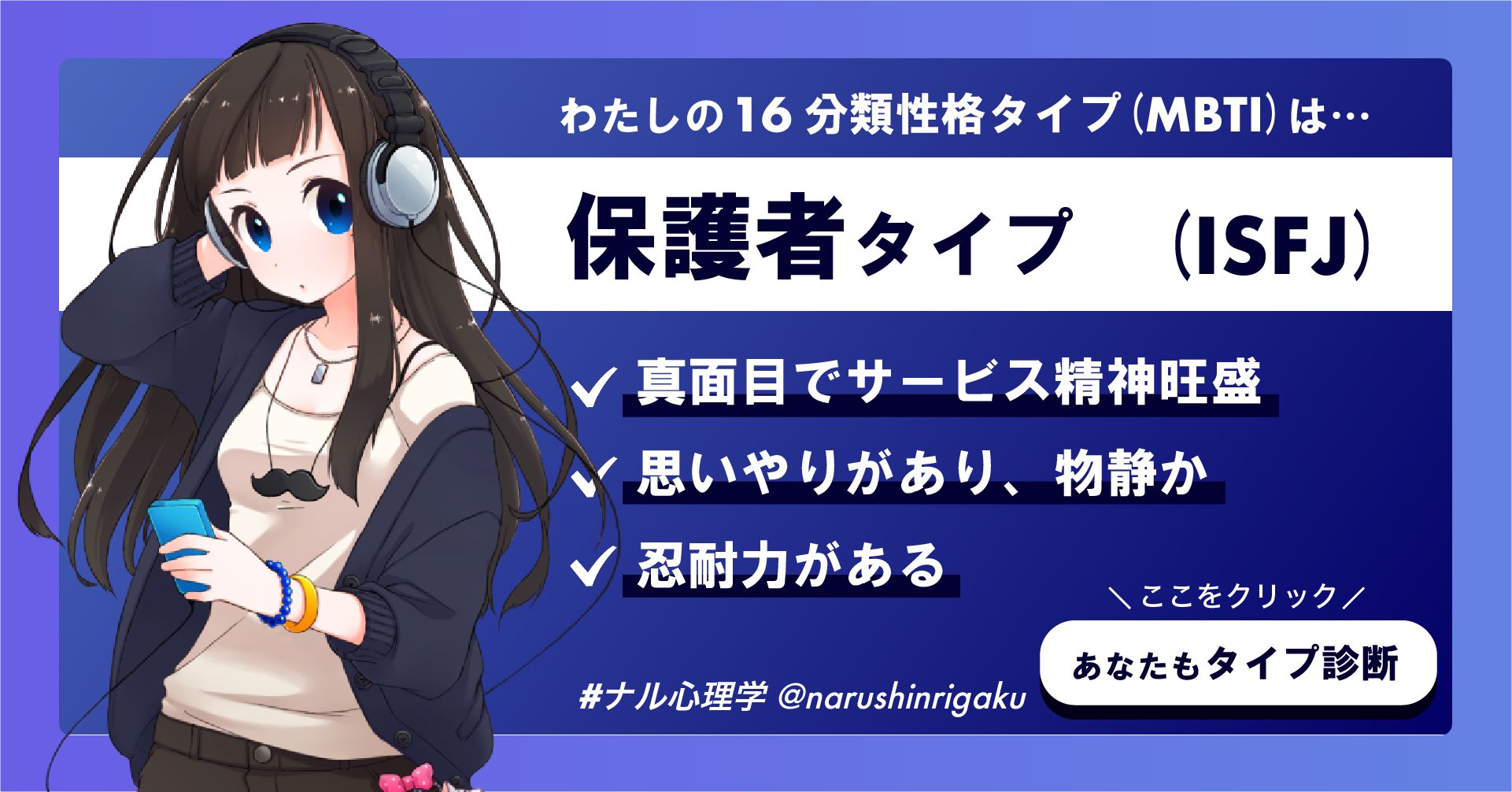
- ISFJ (Parental Type):Si – FeThey have a strong sense of ethics and can follow the organization's rules properly.
- ENTJ (Leader type):Te – NiThey have a clear vision and can lead the organization with strong leadership.
- INFJ (Empathy Type):Ni – FeHe has a strong sense of ethics and is respectable.
Type pairs that are prone to conflict
ISTJs tend to clash with people who challenge existing systems and established methods, and who do not value organizational cohesion or overall unity.
From an ISTJ's perspective...
- ENTP:Ne – TiTheir ideas and ways of thinking are fundamentally different and incompatible.
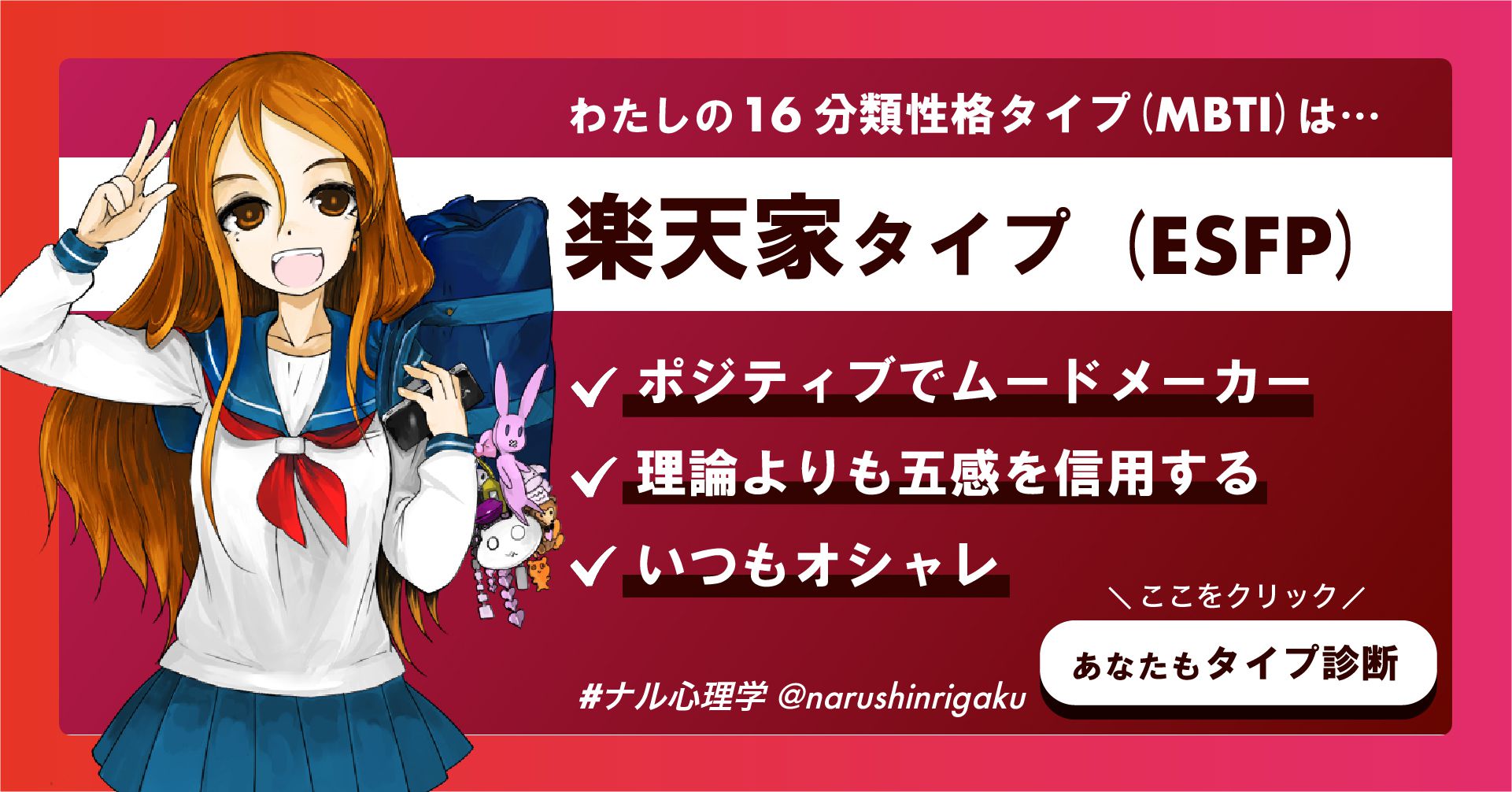
- ESFP (Optimist type):Se – FiThey disregard the organization's needs and schedules.
Romantic compatibility type pair
ISTJs are romantically compatible with people who are planners, stick strictly to schedules, and can provide reassurance even in difficult situations.
From an ISTJ's perspective...
- ENFJ (Collaborator Type):Fe – NiThey have a strong sense of ethics, can think about the big picture, and have excellent communication skills, so they can bring the whole group together effectively.
- ENFP (Reformer type):Ne – FiThey have a strong sense of morality and ethics, and are good at things they are not good at.
- ISFJ (Parental Type):Si – FeThey are more likely to adjust their lifestyles to each other, and they have a strong sense of morality and ethics.
*The pairs that tend to clash and the pairs that have good romantic compatibility may overlap. This is because while people may dislike those who are the complete opposite of themselves due to disagreements, they may also be attracted to those who appear mysterious because they are different. However, it seems that these relationships often end up breaking down.
(Advice for those dating an ISTJ)
ISTJs experience deep emotions, but often struggle to show this side of themselves in romantic relationships. Those in a relationship with an ISTJ can be understanding partners by not expecting the ISTJ to immediately reveal their feelings. Sometimes, an ISTJ may seem oblivious to your feelings, but you can help them understand your perspective by rationally presenting facts and logical explanations.
ISTJ (Hardworking Type)Roadmap (Click to open)
ISTJ (Hardworking Type)To truly understand this,Psychological functions (cognitive functions)* is important ↓
*Generally in cognitive science,Cognitive functions「The function by which living organisms actively collect external information, perceive and remember it, and then process it by adding reasoning and judgment in order to acquire knowledge about their subject.It is defined as "
- Introverted Sensing/Si
Very good at it /First functionThey are adept at matters of loyalty to others and themselves, and have a precise understanding of their position and civic duties. - Extraverted Thinking/Te
I'm a little good at it /second function: You are responsible for understanding and observing methodologies and systems, and for knowing whether what is currently being done is efficient in completing the action. - Introverted Feeling/Fi
I'm not very good at it.Third functionThey believe they possess the most correct ethical values. When challenged, they become rigid, arrogant, and stubborn. - Extroverted Intuition/Ne
I'm really bad at it /Fourth functionThey feel fear or anxiety towards novelty and unpredictability. They don't know how to take new measures that involve a certain degree of risk (or don't like taking them).
<ISTJ Cognitive Aspects>
Si – Ne: Accumulate sensory information to survive in a chaotic world.
Te – Fi: To show an effort to gain recognition.

By reading the following roadmap, you can learn about cognitive functions.ISTJ (Hardworking Type)You can understand it in an orderly manner ↓
- Roadmap – ISTJ (Hard Worker Type) –
- Introduction – What is MBTI?
- Summary of my personality
- Cognition is
- Type-specific cognitive characteristics
- Four personality indicators (psychological tendency axes)
- Conflicts over personality indicators
- “The meaning of the four letters "ISTJ"
- First character:Introvert (type I) or extrovert (type E)
- Second character:Intuitive type (N type) or Sensing type (S type)
- Third character:Feeling type (F type) or thinking type (T type)
- 4th character:Perceiving type (P type) or Judging type (J type)
- About psychological functions (cognitive functions)
- What are psychological functions (cognitive functions)?
- The eight psychological functions (cognitive functions)
- Decision-making (judgment) function
- Information gathering (perceptual) function
- Understanding your own psychological functions (cognitive functions)
- The developmental process of psychological functions (cognitive functions)
- Psychological functions (cognitive functions) of ISTJs
- First function:Introverted Sensing (Si)
- Second function:Extraverted Thinking (Te)
- Third function:Introverted Feeling (Fi)
- Fourth function:Extroverted Intuition (Ne)
- Making good use of psychological functions (cognitive functions)
- Strengths and weaknesses of the ISTJ (hard worker type)
- Make the most of your strengths
- Reasons for focusing too much on the advantages
- How to improve your weaknesses
- If you are alone
- In a team setting: Have others compensate for your weaknesses (fourth function).
ISTJ (Logistician = Hard Worker Type) – A Comprehensive Guide to Understanding This Type
- Explanation of ISTJ
- Psychological functions of ISTJ
- “The meaning of the four letters "ISTJ"
- Psychological functions (cognitive functions) of ISTJs
- Integration of the ISTJ's second and third functions
- The difference between extroverted thinking (Te) and introverted feeling (Fi)
- The difference between extroverted thinking (Te) and introverted thinking (Ti)
- The difference between introverted thinking (Ti) and extroverted thinking (Te) [Part 2]
- SJ type: Parental temperament
↑Click to open↑
youISTJ (Logistician = Hard worker type)Then
Share it on social media (tweet it) and let your followers know!
↓↓↓Share on social media (tweet)↓↓↓
↑↑↑Share on social media (tweet)↑↑↑
comment