
16-Type Personality TestIt is very accurate.Personality testIt is known that each person has their own strengths (things they use often)Psychological functions (cognitive functions)It is believed that there are some. One of them is“Introverted Feeling (Fi)”So, people who are good at this feature,They value their own values and are highly sensitive.。
Introverted Feeling (Fi)The type that is strong is,ISFP (Artist type), INFP (Psychologist type), ESFP (Optimist type), ENFP (Reformer type)such asFPIt's my type.
↓Click here if you want to find out your personality type from the 16 personality types↓

↑Try taking the 16-type personality test↑
16-Type Personality TestIf you are not yet familiar with this topic, please refer to the article below.

Also, in advanceFour psychological tendency axesKnowing the following will also help you understand morePsychological functions (cognitive functions)You can understand this.


Introverted Feeling (Fi) is
Introverted Feeling (Fi) asks, "Is this right for me?" It is Introverted Feeling that guides us when we need to make honest and truthful decisions for ourselves. When we understand how certain actions or words affect a person's subjective experience, or when we gain a sense of conviction or certainty, we are using Introverted Feeling as a criterion for decision-making.
Introverted feeling (Fi) types dislike being confined to rigid ways of thinking like "this is how society does it." They value their individuality and encourage others to live similarly. The following tweet illustrates this well:
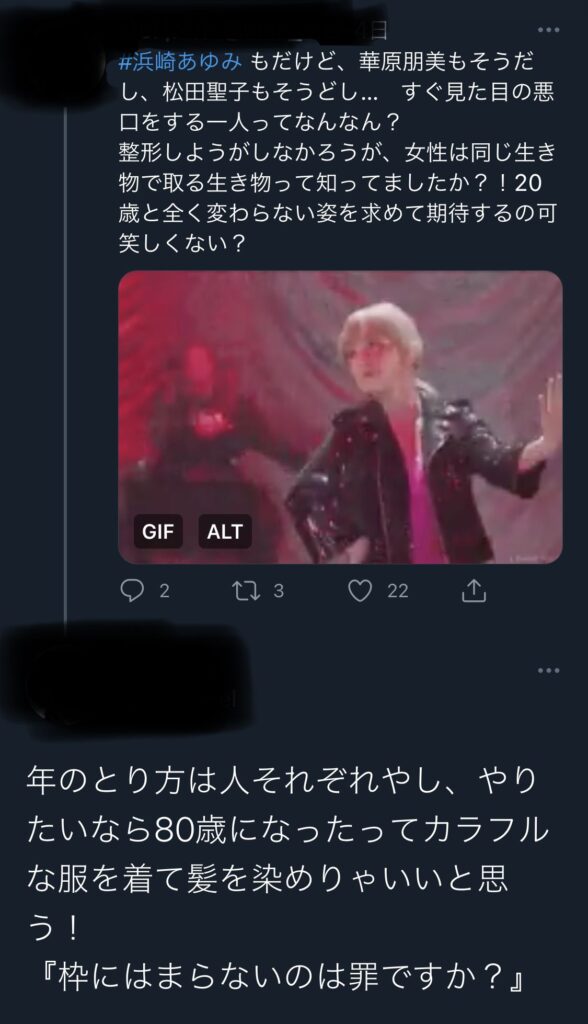
Conversely, being well aware of what is being said in society and trying to conform to it isExtraverted Feeling (Fe)This can be described as a certain way of thinking. However, if you place too much emphasis on introverted feeling (Fi), you may not be understood by others and may become isolated, so caution is necessary.
The function of introverted feeling (Fi) is often exemplified by the unwilling and helpless hero (protagonist). It's about a humble, ordinary person who is thrust into a situation "bigger" than they should be, forced to confront the extraordinary solely on their own responsibility for good, and persevering to the very end, even if they don't return alive. This is well represented by Shinji, the protagonist of Neon Genesis Evangelion.
People with a dominant introverted feeling (Fi) are driven more by personal beliefs than by anything else. In fact, they may find it difficult to be motivated unless they are personally moved or inspired. However, once they make up their minds, they can be incredibly powerful and often unstoppable.
Introverted feeling (Fi) tends to seek order and understanding within oneself rather than outside. For people with a dominant introverted feeling (Fi), this manifests as a desire to know themselves as well as possible and bring order to their inner world, thereby allowing for greater flexibility in their interactions with the outside world.
If you strongly empathize with introverted feeling (Fi), you have likely been very aware of and understood the emotional impact events have on you and how you feel since childhood. As you have gained experience and learned, your introverted feeling (Fi) process has become more refined. Through experiencing various situations and diverse reactions, you have become able to understand the workings and nuances of people's minds better than any other type.
Furthermore, knowing how much interest you have in a particular event or person helps you understand how much priority you should give it and to what extent you can tolerate other things.
People with a dominant introverted feeling (Fi) are acutely aware of the intrinsic value of their desires and aspirations, and the difference between desires and values. In almost all everyday situations, their values take precedence over desires. (For example, if a person with a dominant introverted feeling (Fi) wants Thai food, but their friend wants Indian food, their values system kicks in, and the person with the dominant introverted feeling (Fi) will likely decide to respect their friend and enjoy a nice evening rather than insist on eating their preferred food. However, if, for example, the person with the dominant introverted feeling (Fi) is a vegetarian and the Indian restaurant doesn't accommodate that, they will eat Thai food.) From the outside, these characteristics of a person with a dominant introverted feeling (Fi) appear to make them seem very easygoing, yet their judgments change instantaneously depending on what they value at the time.
The conflicting emotions within a person with a dominant introverted feeling (Fi) represent a range of hopes, fears, desires, and goals. As introverted feeling (Fi) matures, one learns to engage in dialogue with these inner voices, treating them as counselors, primarily the ego. Even when there are opposing inner voices or motivations, one learns to listen to their deepest sense of ethics. By mastering introverted feeling (Fi), one can avoid having their mind taken over by self-serving or demanding inner voices.
People with a dominant introverted feeling (Fi) personality type focus on developing expertise in understanding and discerning emotions, allowing them to make decisions based on what best aligns with their beliefs and values. "What is right" is just as important to them as staying true to their core beliefs.
In the final battle scene of the film "Return of the Jedi," Luke Skywalker (presumably an INFP) must decide which motivation will prevail in a tough and crucial moment. Which voice will he listen to? The voice that wants revenge for his comrades? Will he be swayed by power? Or will he remain true to the Jedi training and the ethics taught to him by his master? Ultimately, Luke follows his highest moral compass, with the other motivations relegated to the background.
People with a dominant introverted feeling (Fi) personality type tend to be reluctant to reveal their emotions to others, often only expressing them when faced with dangerous or challenging situations. They prefer to remain silent for as long as possible, seeking alone time to process their emotions in a safe environment. As a result, they often speak out to protect others rather than themselves.
The strong beliefs and convictions of introverted feeling (Fi) dominant individuals guide them toward their ideals and make them believe they can realize what they feel internally. Others will be amazed when they see an introverted feeling (Fi) dominant individual, who believes they can achieve their dreams, moving mountains to make their ideals a reality. On the other hand, external factors are often less interesting and appealing than internal feelings, so they tend to become detached or indifferent to the criteria for evaluation.
Furthermore, because introverted feeling (Fi) is dominant, people have a detailed understanding of emotions, making them adept at reading others' emotions and sharing their knowledge with others. They can connect the signals others are sending to specific emotions they or someone else has experienced, so as their introverted feeling (Fi) function matures, their insight becomes extremely high.
Those who have mastered the function of introverted feeling (Fi) realize that they can transform the anger, defensiveness, and tendency to respond to aggression in others into compassion, empathy, and even love. They can skillfully manage the emotional energy of others and themselves to create a more positive and optimistic state of mind. And by becoming one with their inner voice and acting with a sense of purpose, they can truly inspire and move people.
Details of Introverted Feeling (Fi)
As an introverted psychological function, awareness is directed inward. As an emotional psychological function, judgments and decisions are based on how one feels.
keyword
Harmony of heart, kindness, gentleness, strength, patience, listening, empathy, compassion, love, loyalty, mercy, assistance, human nature, ethics, morality, judgment of good and evil, value, meaning, judgment of truth and falsehood, justice, aesthetic sense, sense of beauty, sensitivity, emotion, awe, passion, determination, capturing impressions, seeing the essence of the heart, nurturing, protection, advocacy, defense, individuality, vulnerability, sensitivity, sentimentality, resolve, inner experience, independent values, unique standards, skepticism, seeking authenticity, frankness, high ideals, diversity, sincerity, altruism, correction, dignity
For types whose primary psychological function is introverted feeling,ISFP (Artist type), INFP (Psychologist type)is.
For types whose second psychological function is introverted feeling,ESFP (Optimist type), ENFP (Reformer type)is.
I constantly strive to understand myself. I can independently manage my own motivations, values, and sensibilities.
They are always aware of their core values and the emotions they experience, and they cherish inner harmony. They are highly sensitive and understand the nuances of their various emotions, but these are rarely expressed.
Deep emotions are quietly preserved within. They draw attention to what truly matters, striving to reach genuine, unadulterated sensibilities. They become the source of unwavering will and passion, sometimes expressed through words to those close, but more often than not, through actions.
It acts as an internal information filter. It's involved in the mental process of grasping subtle impressions derived from a person's gestures, characteristics of their movements, and tone of voice, but it's difficult to explain in words.
We judge whether a person's words and actions are trustworthy, whether they are genuine or not. Furthermore, when considering a particular matter, we carefully consider what mindset we should adopt, whether we should even be involved in the first place, and whether it is truly necessary.
To reach genuine and profound emotional experiences, one must be honest with oneself. With such an attitude, one continues to pay attention to one's inner self and forms ethical values. This allows one to honestly perceive one's own heart and the hearts of others, and to make morally sound judgments of right and wrong.
They seek inner harmony and strive to act accordingly. They believe it is important that their motives for words and actions are not base and that they are sincere. There is strong passion, conviction, and belief behind them. Therefore, they would never do anything they deem undesirable. Based on the dignity of human existence, they can attain inner inspiration and peace.
They are compassionate, empathetic, and often sympathize.
They are sensitive to injustice and unfairness and want to rectify it. They condemn those who commit wrongdoing and try to defend those who are oppressed.
They are sensitive to the sadness and suffering of others, and their hearts ache as if it were their own. Those with a strong introverted feeling usually keep their strong sense of ethics to themselves and use it as a guide for their own actions, but once they feel they cannot stand by and do nothing, an inner fire ignites, and they work hard and actively reach out to others.
I am deeply moved when I encounter the words and actions of people who possess genuine sincerity. And I wish to be like that myself.
Through continuous exploration of one's inner self, serious emotions and strong values develop, but in most cases, these are not expressed in words.
Even with an expressionless face, they feel strong emotions deep inside, and their inner fire is carefully preserved. This manifests concretely in actions such as helping others, realizing ideas, completing work, and contributing to society. As a result, they can move the hearts of those who witness it.
They value individuality and have a strong sense of their own values, but they are tolerant and kind to others, and do not impose their views on them.
Introverted feeling is a personal set of values and is not always accepted by everyone. Its straightforwardness may sometimes surprise people. However, its profound sensitivity is what actually touches the hearts of many.
You may sometimes take pride in your individuality. On the other hand, when your core values are criticized, you may stubbornly argue back and try to defend them.
Normally, I prefer a quiet environment, and if others are willing, I encourage them to explore their emotions and personal values at their own pace and in their own way.
Introverted, feeling types can become so engrossed in their passions and beliefs that they fail to notice they are neglecting manners towards others or the consequences of common sense. In the worst cases, they can become so stubborn that they refuse to listen to anyone.
Furthermore, external influences tend to be weak. However, in the real world, internal harmony cannot be achieved without external harmony. If one does not realize this, one will not be able to achieve true independence, and one's internal harmony will be threatened without realizing it.
Inner harmony is closely linked to harmony in relationships. We make an effort to be mindful of this, and we develop a desire to accept and love others.
As an introverted psychological function, the people I truly love are limited to a select few. This is natural, as it is based on inner harmony. However, deep down, I want all human beings to realize the value of dignity and love.
I cherish close relationships with family, friends, and my partner. I also value things that hold sentimental value for me and the memories I have.
They strive to discern the true essence of human attitudes and the true value of a project. They are deeply moved by altruistic and sincere words and actions, and aspire to be like them themselves, but they will not condone deception or dishonesty.
I also consider the meaning of the projects I'm involved in and their impact on people. When I determine that being involved in a project allows me to grow, positively impacts others, and is meaningful for the future, I can move forward with strong conviction.
In this way, when we develop an attachment to the weak, animals, best friends, lovers, or family, we truly cherish them. Similarly, it is ideal to have a job that we can be passionate about, and when that is achieved, we will do truly good work. In the market, we try to narrow down the businesses we should be truly involved in and find our niche.
Possessing a deep sensitivity, I am often deeply moved by art. I have a keen aesthetic sense and a desire to express my sensibilities and worldview through art. This might manifest as expressing the beauty of form through beautiful arrangements in paintings and sculptures, or it might involve sharing emotions through music and song. Furthermore, I may express human emotions and the complexities of relationships through writing.
Specific examples of introverted feeling (Fi)
Let me introduce you to a song by Megumi Hayashibara called "Give a Reason."

There's surely an answer somewhere.
Quoted from Megumi Hayashibara's "Give a Reason"
The answer that was born
Everyone desires it.
Unbearable
Pursuing your dreams
Introverted Feeling (Fi) is the function that judges and decides on one's values and ideals, and this is clearly reflected in "Give a Reason." It seeks answers and dreams in life and determines the direction one should take.
Projection of Introverted Feeling (Fi)
Projection arises from anxiety and fear about things you don't want to acknowledge, and conversely, from a desire to acknowledge things you do want to acknowledge.
Everyone has fears. Humans have strived desperately to avoid succumbing to those fears.
Therefore, each psychological function (cognitive function) has its own anxieties (things you don't want to be) and desires (things you want to be) that you unconsciously don't want to admit to yourself.
Your psychological functions improve as you desperately try to overcome the following anxieties. And, after using them for a long time, you'll find yourself using them skillfully and unconsciously without even realizing it.
Examples of projection associated with introverted feeling (Fi) ↓
- My anxieties and worries
- I'm naive and inexperienced in the ways of the world.
- I am selfish and self-centered.
- I am involved in corruption.
- I lack integrity and I am a hypocrite.
- I am a liar, a frivolous person, and I only ever imitate others.
- Hidden desires within myself
- I know what is right for me.
- Deep down, I am an incredibly kind and loving person.
- I don't do things that would trouble my conscience.
- I am doing my best to be a good person.
- I am authentic, honest, creative, and original.
Column: The difference between extroverted feeling (Fe) and introverted feeling (Fi)
reference Extraverted Feeling (Fe)
- Fe:By helping others, one can feel "good" both physically and mentally.
- Fi: If I'm not already in a "good mood," I can't help people physically or mentally.
- People with Fe (Fe) as their cognitive function gain energy by helping others. Conversely, people with Fi (Fi) as their cognitive function expend energy when helping others.
- Fi is not inherently more selfish than Fe. In fact, for people with the Fi psychological function, helping others requires more effort and struggle.
- It's the same principle: extroverts draw energy from people and the outside world, while introverts draw energy from their inner world. Introverts simply need to recharge or distance themselves from people; it's essentially the same thing.
The Big Five personality traits and introverted feeling (Fi)
The Big Five personality model is considered the most reliable personality analysis in the world, and was proposed by Lewis R. Goldberg, an American psychologist and professor emeritus at the University of Oregon. As the name suggests, the Big Five classifies a person's personality into five factors.
Explanation of the five personality traits (factors) of the Big Five personality model ← Tap
- Neurotic tendencies: A tendency towards emotional instability, such as being prone to depression.。I tend to get into negative moods.
- Relationship with the 16 personality types: This factor is not measured by the 16 personality types.
- High scoreThey are prone to stress, impulsive, and anxious. Keywords: anxiety, irritability, depression, low self-esteem
- Low score: Stress-resistant and emotionally stable
This property (when scoring high)...- Positive aspects: Ability to be cautious and make an effort
- Negative aspects: Increased anxiety and susceptibility to depression
- Biological mechanism: Response to threat (amygdala and limbic system, serotonin)
- Extraversion (E): One's attention and energy are directed towards other people or things.。It's easy to feel positive.
- Relationship with the 16 personality types:A high score indicates an extroverted (Type E) personality.、A low score indicates an introverted (Type I) personality.
- High score (Extroverted/E): Sociable and passionate about things. Keywords: proactive, sociable, active, adventurous, cheerful
- Low score (introvert/I): distant and quiet
This property (when scoring high)...- Positive aspects: High motivation to seek rewards and achieve results, and a willingness to take on challenges.
- Negative aspects: Often puts oneself in danger. Difficult to build stable relationships.
- Biological mechanism: Response to reward (midbrain dopamine reward system)
- Openness (N): Receptiveness to new cultural, aesthetic, and intellectual experiences. Having an open mind.
- Relationship with the 16 personality types:High scores indicate an intuitive (N-type) personality.、A low score indicates a sensory type (S-type).
- High score (Intuition/N): Highly original and creative, unconventional. Wants to encounter, explore, and experience beautiful and intellectual things. Keywords: curiosity, imagination, aesthetic sense, broad interests
- Low score (perception/S): To think realistically, to adhere to tradition
This property (when scoring high)...- Positive aspects: High artistic sensitivity and the ability to think in a divergent manner.
- Negative aspects: Prone to holding abnormal beliefs and having psychotic tendencies.
- Biological mechanisms: The expansion of mental associations
- Cooperativeness (F): Able to act with the needs of others in mind, rather than just oneself.
- Relationship with the 16 personality types:High scores indicate an emotional type (F type).、A low score indicates a thinking type (T-type).
- High score (emotion/F)They are trusting and highly empathetic. Keywords: Compassionate and trusting, altruistic, kind, obedient, modest.
- Low score (Thinking/T)Uncooperative and hostile
This property (when scoring high)...- Positive aspects: It can smooth interpersonal relationships and stabilize society as a whole.
- Negative aspect: (Being too considerate of others) reduces your own profits or share.
- Biological mechanism: Consideration for others (theory of mind, empathy element)
- Conscientiousness (strong judgment function*): Able to plan towards goals, discipline oneself, and work diligently with a sense of responsibility without giving up.
- Relationship with the 16 personality types:A high score indicates strong judgment function.、A low score indicates strong perceptual function.
- High score (strong judgment ability)Competent and self-disciplined. Keywords: self-discipline, perseverance, deliberation, patience, grit, careful consideration, effort to achieve.
- Low score (strong perceptual function)They are often careless and impulsive.
This property (when scoring high)...- Positive aspects: You can make plans, discipline yourself according to them, and easily achieve your goals.
- Negative aspect: Inability to act flexibly according to the situation at hand, lack of flexibility.
- Biological mechanism: Response inhibition (dorsolateral prefrontal cortex)
*A strong judging function means that the primary function is either thinking (T) or feeling (F), while a strong perceptual function means that the primary function is either intuitive (N) or sensing (S).
The relationship between the Big Five personality traits and the 16 personality types has been investigated, and the table below shows the correlations. By comparing which personality traits and their sub-traits (facets) each psychological function correlates with, you can gain a more detailed understanding of the tendencies of each psychological function.

Introverted Feeling (Fi) has three attributes: introversion (I), feeling (F), and judging (T or F). The Big Five personality traits corresponding to each attribute are as follows:
- Introvert (I) → extraversion (low)
- Emotional type (F) → Cooperation (high)
- Judgment function (Fi) → Honesty (High)
Below is a list of high-scoring and low-scoring characteristics for each sub-characteristic ↓
List of sub-characteristics of the five Big Five personality traits (factors) ← Tap
Neurotic tendencies ↓
| 低 | 高 | |||
| explanation | words | Lower characteristics | words | explanation |
| I don't get angry very often. | mild | anger | passionate | Especially when things don't go as planned, Emotions become intensely heightened. |
| They tend to be calm and confident. | I am confident | anxiety | worrier | things that might happen I tend to worry about a lot of things. |
| I'm generally satisfied with myself. | satisfaction | melancholy | pessimistic | I often think about uninteresting things. |
| My desires aren't particularly strong. You can control your desires. | Self-control | selfish | Hedonism | They feel desires intensely and are easily tempted by them. |
| There is almost no chance of being confused. In most cases, they are full of confidence. | Confident | Overly self-conscious | Self-awareness | They are sensitive to what others think of them. |
| Deal with unexpected situations calmly and effectively. | Strong under pressure | Easily damaged | Low stress tolerance | They are prone to succumbing to stressful situations. |
Extraversion ↓
| 低 | 高 | |||
| explanation | words | Lower characteristics | words | explanation |
| I like a relaxed pace of life. | leisurely | Activity level | energetic | I prefer having a busy schedule filled with many appointments. |
| Especially within a group, I prefer listening to talking. | Modest | self-assertion | Strong self-assertion | Clearly state your opinion and take control of the situation. I find satisfaction in leading the group. |
| He's always serious and doesn't tell many jokes. | steep | clarity | Cheerful | A fun person who shares that fun with others. |
| They prefer quiet, calm, and safe environments. | Seeking peace | stimulation seeking | Seeking stimulation | I get excited about taking risks. I get bored if nothing exciting happens. |
| Introverted and doesn't easily open up to people. | Hesitant | Approachability | extraversion | I make friends easily and feel satisfied when I'm with people. |
| I strongly desire to dedicate time to myself. | Independent | sociability | Good at socializing | Enjoy being with other people. |
Openness↓
| 低 | 高 | |||
| explanation | words | Lower characteristics | words | explanation |
| I feel comfortable with routines I'm familiar with. They don't like to deviate from that. | steady | adventure | adventurous | I am eager for new experiences. |
| Compared to most people, artistic activities and They have little interest in creative activities. | Indifferent to art | Artistic interest | He has an eye for art. | I like beautiful things, I am seeking creative experiences. |
| Thinking about my own feelings, They rarely show their emotions. | Calm | Emotionality | Aware of emotions | Being aware of one's own emotions, They know how to express their emotions. |
| Prioritize facts over imagination. | Grounded | imagination | fanciful | They have a rich imagination. |
| I prefer to see the world as it is. I rarely engage in abstract thinking. | concrete | intelligence | philosophical | Open to new ideas, I am interested and want to know more. |
| Follow tradition and maintain stability. They like to maintain things. | Respect for power | liberalism | Challenging authority | Challenging power and traditional values I want to bring about change. |
Cooperation↓
| 低 | 高 | |||
| explanation | words | Lower characteristics | words | explanation |
| I'd rather do things for myself than spend time on other people. | self-centered | altruism | altruistic | I find fulfillment in helping others. To serve others. |
| Don't shy away from contradicting others. | Stubborn | cooperativeness | tolerance | They actively try to avoid conflict. |
| They respect themselves and are content with themselves. | Arrogance | Humility | Modest | I feel uneasy when I'm the center of attention. |
| I will use any means necessary to achieve my goals. | Unjust and immoral | Morality | indomitable | I believe it is wrong to use people for the sake of career advancement. |
| People generally do not depend on others, I believe it's something I should do myself. | ruthless | Empathy | Kindness | They are sensitive to other people's feelings and have compassion. |
| Be wary of people's intentions and don't trust them easily. | Be wary of people | credibility | Trust people | They believe in people's good intentions and trust people easily. |
Honesty ↓
| 低 | 高 | |||
| explanation | words | Lower characteristics | words | explanation |
| I am satisfied with the level I have achieved. I don't feel the need to set ambitious goals. | satisfaction | effort to achieve | ambitious | Set high goals for yourself, We will work diligently to achieve that. |
| Rather than being cautious and spending time making a decision, I will execute it immediately. | bold | Caution | Careful | Think carefully before making a decision. |
| Ignore rules and obligations, and do what you want to do. | Relaxed | Loyalty | Obedient | Even if rules and obligations are inconvenient, follow them diligently. |
| I don't dedicate a lot of time to the organization in my daily life. | unorganized | orderliness | organized | I strongly feel the need for organizational structure in my daily life. |
| I can't stick with difficult things for a long time. | interruption | self-control | Sustain | I face difficult challenges head-on and never give up. |
| I often doubt my own ability to achieve my goals. | I lack confidence. | Self-efficacy | I am confident | I feel I can succeed at anything I set my mind to. |
Introverted feeling (Fi) individuals act according to their own values and ethics, and are highly sensitive.
In the Big Five personality traits, cooperativeness refers to empathy and other qualities, while conscientiousness refers to self-discipline, such as following rules.
This aligns with the meanings of the Big Five traits: extraversion, agreeableness, and conscientiousness, and is actually reflected in the numbers.
comment