
The following is a quote (with some modifications) from "Let's Look at the World from the Perspective of MBTI Personality Type Theory" (website no longer exists).
Introverted sensing and extroverted intuition work together, supporting each other. Their collaborative efforts lead to a unified perception.
Introverted sensing allows us to easily recall knowledge and data obtained from various sources, things we've heard from others, and our own experiences. We are interested in and can remember the tone of voice and facial expressions of others, as well as the details of graphs, tables, maps, the quality of things, and work procedures. The vast amount of detailed data that we remember is compared and examined with our current experiences, which refines our perception of the world and improves our coping abilities.
On the other hand, extroverted intuition allows us to recognize the forces and patterns at work behind individual events. Specific, detailed information is pushed aside, and we adopt an abstract, holistic perspective.
Simply possessing a vast memory isn't enough; while it can handle situations with precedent, it won't allow you to effectively deal with unprecedented circumstances. In such situations, you absolutely must come up with quick and resourceful solutions. Extroverted intuition allows you to quickly grasp the essence of a situation and respond flexibly. It's by recognizing patterns and understanding the underlying forces that you can adapt to new situations.
Innovation can occur by combining existing knowledge. This is the result of looking at existing knowledge from multiple perspectives and discovering its potential. A certain amount of knowledge pool is necessary to create new methods. Memories that surface into consciousness through introverted sensing are interpreted by extroverted intuition. Even with limited memories and knowledge, by grasping the underlying meaning and adopting a multifaceted perspective, new possibilities can be discovered. If a new method proves effective, it will become habitually used in daily life. Habitualized practices need to be used carefully and in a way that avoids mistakes.
Creative work requires a broad pool of knowledge. While extroverted intuition often triggers flashes of insight from what's happening in front of you at that moment, it's actually the result of constantly being interested in various things, accumulating knowledge within yourself, and thoroughly exploring your memory pool. In this way, seemingly unrelated pieces of knowledge can unexpectedly connect. While education that overemphasizes memorization is often criticized, the importance of accumulating broad knowledge cannot be denied. If both introverted sensing and extroverted intuition work effectively together, you'll be able to be interested in many things, remember a lot, and interpret that information as it comes, developing a keen intuition.
End of quote from "Let's Look at the World from the Perspective of MBTI Personality Type Theory" (website no longer exists) (partially modified)


cognitive axis
Extroverted Intuition (Ne)・Introverted Sensing (Si) These are opposing psychological functions that complement each other. Furthermore, the characteristics of each function differ depending on which function is dominant.
In the following, the psychological functions mentioned earlier will be referred to and explained as the primary function (dominant function).
*In the following explanation, the first function (dominant function) and the fourth function (inferior function) are described as a pair, but the second function (auxiliary function) and the third function (alternative function) are also complementary pairs.
Ne-Si's characteristics and catchphrases
Extroverted Intuition (Ne)A type in which this is well-developed (ENTP、ENFP) has a cognitive axis of Ne-Si.
- Stable base(Si)Find ideas and information to help you find it.(Ne)
- "maybe"(Ne)"If you do..."(Ne)"If you do it like this..."(Ne)」
- "This way, the future will be more appropriate and stable."(Si)"If we don't do this now"(Si)The future will be disastrous.(Ne)」
Si-Ne's characteristics and catchphrases
Introverted Sensing (Si)A type in which this is well-developed (ISTJ、ISFJ) has a cognitive axis of Si-Ne.
- To survive in a chaotic world, we need to accumulate information.(Si)
- "This is how it was."(Si)"Before this happened, it was like this."(Si)"People were like this."(Si)"This is how it was for me."(Si)"I know that's how it is."(Si)」
- "It's always been like this."(Si)But why does it change now or tomorrow?(Ne)"Is that so?" "I've known for a long time"(Si)Things change(Ne)I don't think so."
The synthesis of introverted sensing (Si) and extroverted intuition (Ne).
Mastering both introverted sensing (Si) and extroverted intuition (Ne) requires considerable effort. Generally, people tend to favor one over the other.
So, how can we synthesize introverted sensing (Si) and extroverted intuition (Ne)?
I've explained the method in the following article, so please take a look.
する方法.jpg)
For those who want to learn more about psychological functions
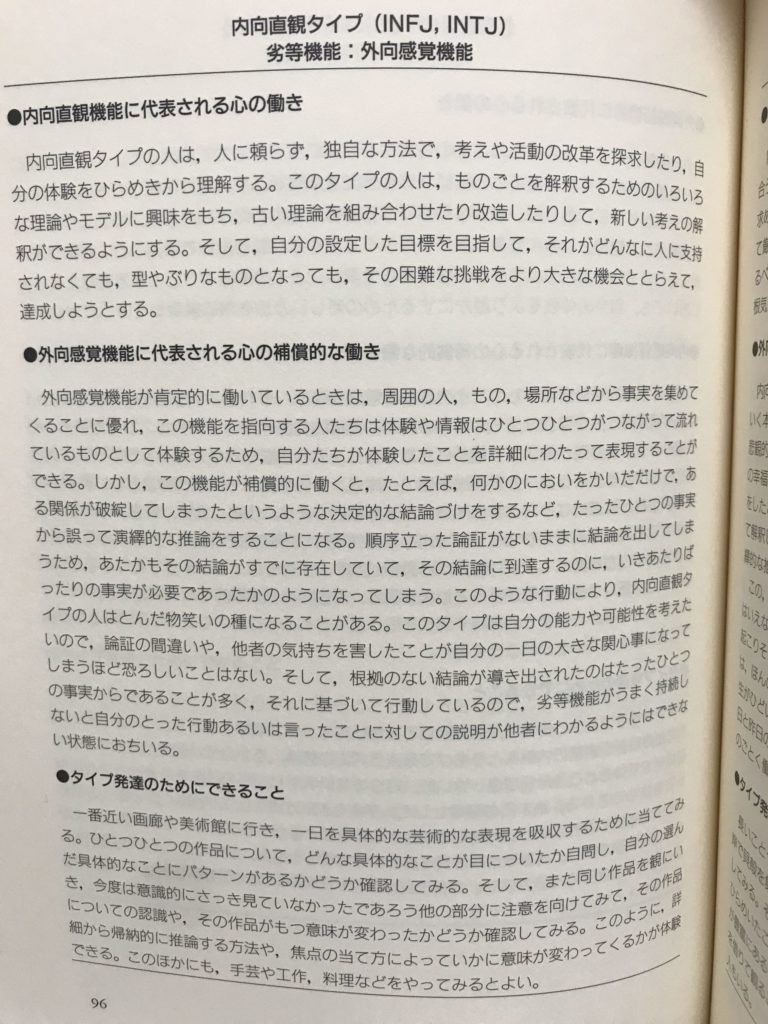
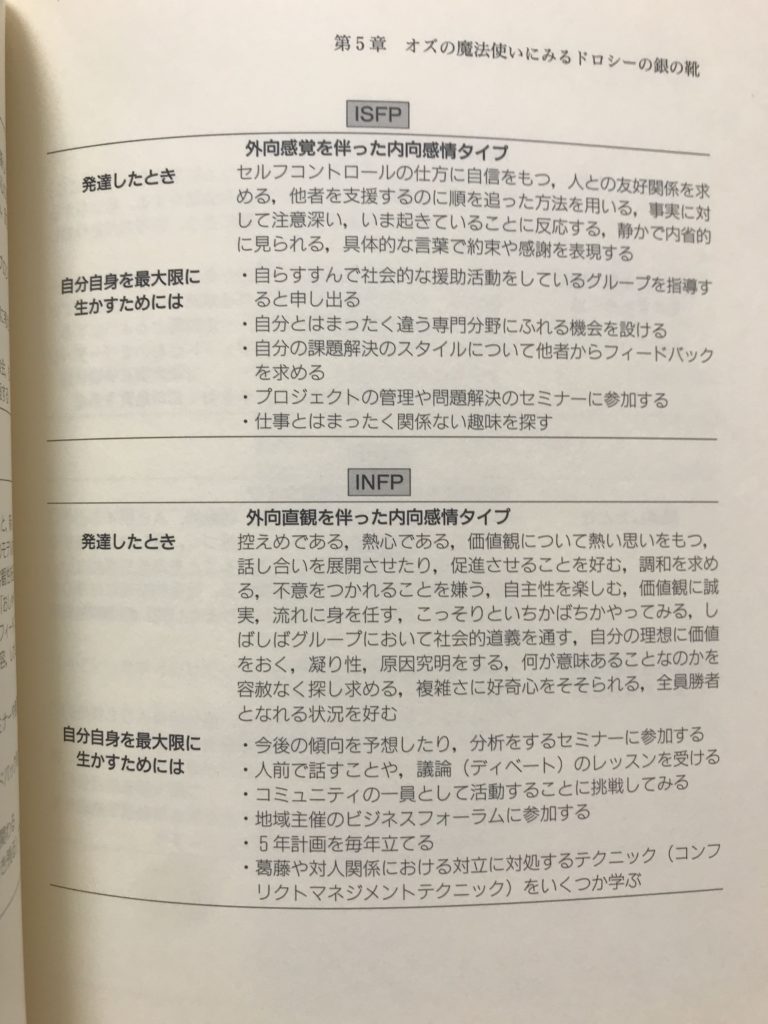
An Introduction to MBTI: Applying Jung's "Theory of Types" to Everyday Life』This book provides a detailed explanation of each psychological function.This book is so excellent that it's no exaggeration to say you'll understand everything about MBTI after reading it.There are many pages,Tables and documents that are not found on the internet or in other books.The data is abundant and very helpful.How to deal with aspects of your personality that you are not good at (=inferior functions)やClassification of ST/NT typesやHow to make the most of your individual typeetc.Tables and documents)

Related articles

.jpg)
comment