

ISTP

16 Personality Types

ISTP (Master/Practical Type) and Romance

This article discusses ISTP (Practical Type) and romance. The following is a quote (with some modifications) from "ISTP and Romance: Let's Look at the World from the Perspective of MBTI Personality Type Theory" (website no longer exists): ISTPs tend to show their affection very directly to the person they like. However, as mentioned above...
16 Personality Types

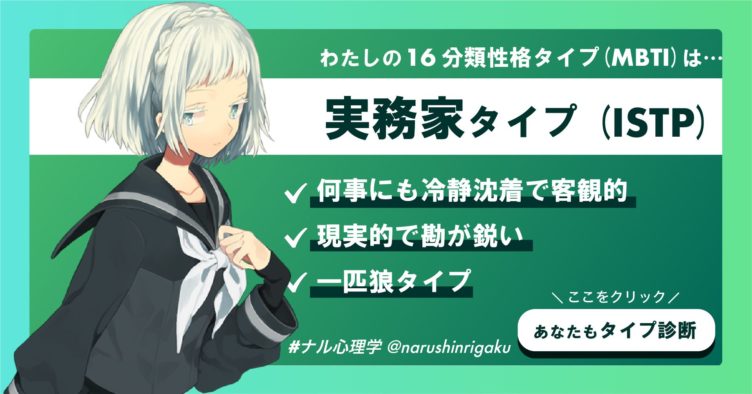
A personality guide for the ISTP (Master/Practitioner type)

The following is a description of the personality traits of the ISTP (Practitioner type), quoted from "Let's Look at the World from the Perspective of MBTI Personality Type Theory" (website no longer exists) (with some modifications): They purely observe reality, making wise choices through comparison and analysis. They pride themselves on their independent thinking, unwavering composure, and calm intellect...
16 Personality Types

The relationship between ISTP (Master/Practitioner type) and the Big Five personality traits

The relationship between the Big Five personality traits* and the 16-type MBTI personality assessment has been investigated, and the table below shows the correlations. By comparing which personality traits and their sub-traits (facets) each type correlates with, we can gain a more detailed understanding of each type's tendencies...
16 Personality Types

How to succeed as an ISTP (Master/Practitioner type)

This article explains success for the ISTP (Practitioner) personality type, one of the 16 personality types. For ISTPs, success is measured by personal goals. They want to be constantly open to new ideas and experiences. For ISTPs...
16 Personality Types

What if your parent or child was an ISTP (a type of master/practitioner)?

Characteristics of ISTP (Practitioner) Parents – Easygoing, laid-back, and carefree parents: ISTP (Practitioner) parents generally don't have a strong desire to become parents themselves. They may tend to leave the creation of the household environment and rules to their spouse or partner...
16 Personality Types

The ISTP (Master/Practitioner type) personality trait: "Try everything at least once."

The ISTP (Practitioner) Personality Trait: "Trying Everything at Least Once" ISTPs (Practitioners) are reserved, reserved, and cautious in interpersonal relationships, yet they are willing to try everything at least once. They are introverted (I), which contributes to their tendency to make objective decisions...
16 Personality Types

The decision-making methods of the ISTP (Master/Practitioner type)

This article explains the decision-making process of ISTP (Practitioner) types. Have you ever felt dissatisfied with the decision-making methods of your colleagues or friends? Are they illogical or lacking in coherent processes? If not addressed early, these problems can snowball...
16 Personality Types

ISTP (Master/Practitioner Type) Leadership

This explains the leadership style of the ISTP (Practitioner) type. (Quoted from "Let's Look at the World from the Perspective of MBTI Personality Types" (website no longer exists) - slightly modified) Regarding things they have deeply mastered technically or in a particular field, they are able to teach others...
16 Personality Types

ISTP (Master/Practitioner Type) and Relationships

This article explains the relationship dynamics of ISTPs (Practitioners). The following is a quote (with some modifications) from "Let's Look at the World from the Perspective of MBTI Personality Types" (website no longer exists): "Without saying anything, they calmly think about something in their minds. However, in most cases, they...".
16 Personality Types

Integration of the second and third functions of the ISTP (Master/Practitioner type)

This explains the integration of the second and third functions of the ISTP (Practitioner type). (Quoted from "Let's Look at the World from the Perspective of MBTI Personality Type Theory" (website no longer exists) - slightly modified) The conflict, compromise, and integration of extroverted sensing (Se) and introverted intuition (Ni); the challenges of ISTPs in adolescence...
Copied title and URL