
MBTI posits that people have eight psychological functions.
| Thinking type (T type) | Emotional type (F type) | Sensory type (S type) | Intuitive type (Type N) | |
| Extrovert type (E type) | Extraverted Thinking (Te) | External emotions (Fe) | Extroverted Sensing (Se) | Extroverted Intuition (Ne) |
| Introvert type (type I) | Introverted Thinking (Ti) | Introverted Feeling (Fi) | Introverted Sensing (Si) | Introverted Intuition (Ni) |
And, depending on the personThe psychological functions you are most familiar with and proficient in (first function and second function)There is that.I'm not good at the opposite psychological functions (third and fourth functions) that are the counterparts to it.It tends to happen.

To give an example,It's the same relationship as your dominant hand and your non-dominant hand.That's right. Your dominant hand, which you use all the time, becomes even more proficient with. On the other hand, your non-dominant hand becomes even less proficient.
The same thing happened to uspsychological functionIt is also occurring in other areas.


Pairs of psychological functions
The following is a quote (with some modifications) from "Let's Look at the World from the Perspective of MBTI Personality Type Theory" (website no longer exists).
Psychological functions work in pairs.
Extroverted Sensing (Se) - Introverted Intuition (Ni)
Introverted Sensing (Si) - Extroverted Intuition (Ne)
Extraverted Thinking (Te) - Introverted Feeling (Fi)
Introverted Thinking (Ti) - Extraverted Feeling (Fe)
These pairs work together in a cooperative manner, but they possess opposing qualities. However, in most cases, the utilization of one or the other becomes skewed, and this bias characterizes their personality.
The second and third psychological functions are paired together. In youth, the second psychological function has a strong influence, but as you mature, balancing these two functions becomes an important challenge. With more experience, you will naturally be able to achieve this balance.
The first and fourth psychological functions are paired. We tend to rely too much on the first psychological function, while being less adept at effectively utilizing the fourth psychological function, which has the opposite characteristics. However, the first psychological function actually relies on the latent function of the fourth psychological function. In reality, it is desirable for these two psychological functions to work together, but in most cases this is impossible. It is said that if you continue to rely on the first psychological function, a balance will be achieved without you even realizing it.
The primary psychological function of an extroverted type is extroversion. Therefore, the fourth psychological function is introversion. The reason they are active and energetic is not simply because they rely most on their extroverted psychological function, but also because they suppress their introverted psychological function. The fourth psychological function, internal information reception or internal control, becomes a weakness.
The primary psychological function of introverted individuals is introversion. Therefore, their fourth psychological function is extroversion. The reason they tend to be quiet and thoughtful is not simply because they focus most on their introverted psychological function, but also because they suppress their extroverted psychological function. This weakens their ability to receive information from the outside world or to control the outside world, which is their fourth psychological function.
End of quote from "Let's Look at the World from the Perspective of MBTI Personality Type Theory" (website no longer exists) (partially modified)
For those who want to learn more about psychological functions
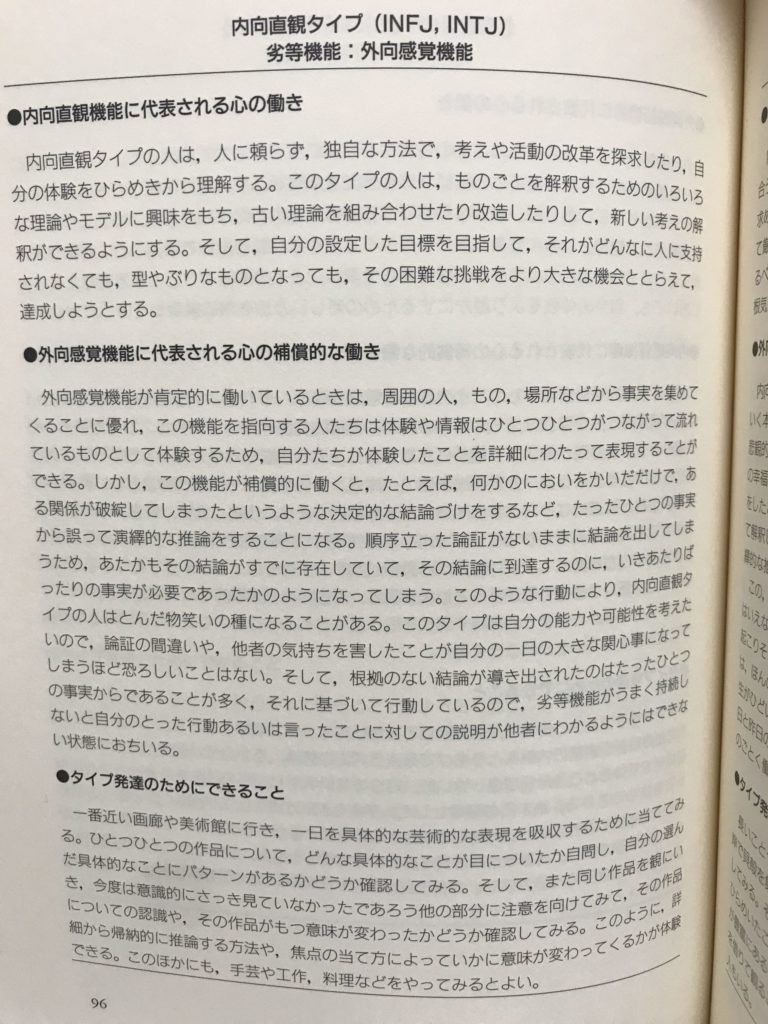
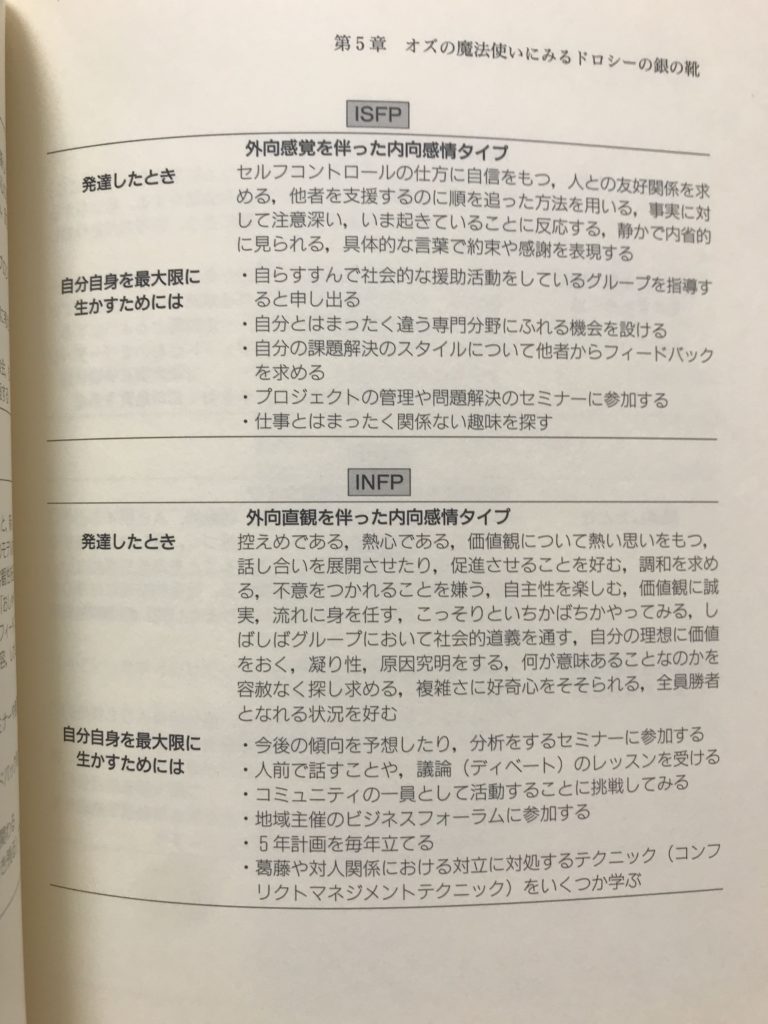
An Introduction to MBTI: Applying Jung's "Theory of Types" to Everyday Life』This book provides a detailed explanation of each psychological function.This book is so excellent that it's no exaggeration to say you'll understand everything about MBTI after reading it.There are many pages,Tables and documents that are not found on the internet or in other books.The data is abundant and very helpful.How to deal with aspects of your personality that you are not good at (=inferior functions)やClassification of ST/NT typesやHow to make the most of your individual typeetc.Tables and documents)

Related articles
.jpg)

comment