
Classifying personalities into 16 types16-Type Personality TestCheck which type you are using the following↓↓

↑16-Type Personality Test↑
↑Diagnose↑
List of 16 Personality Types
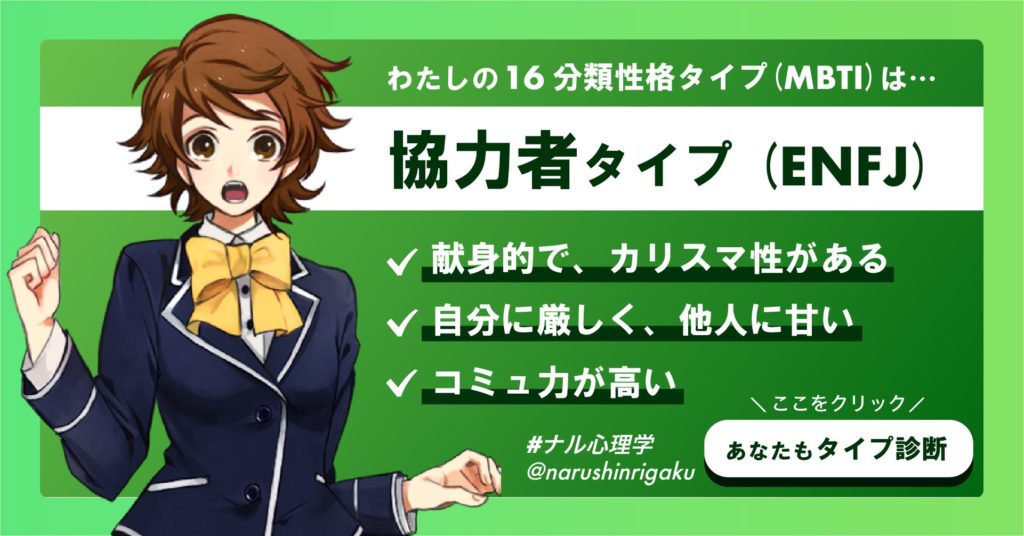
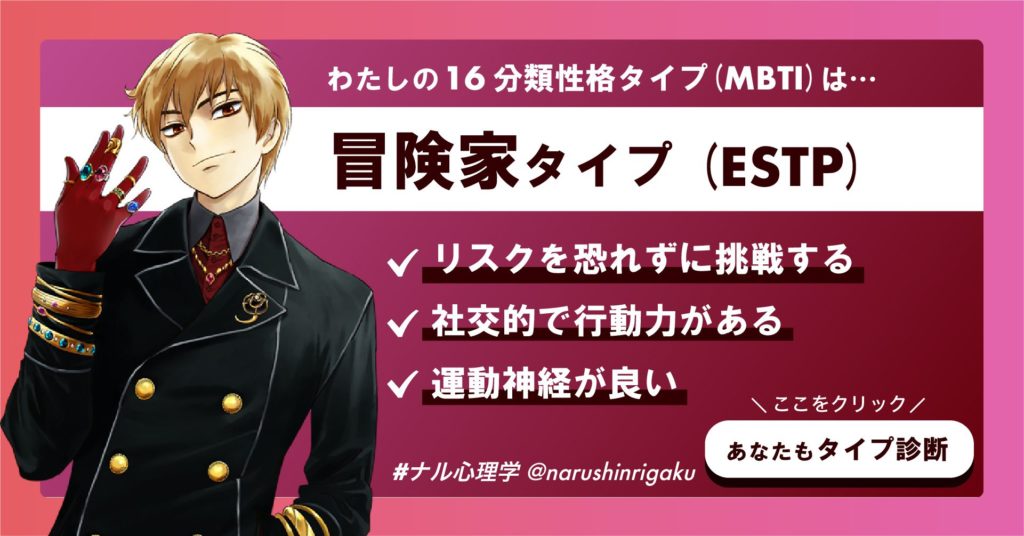
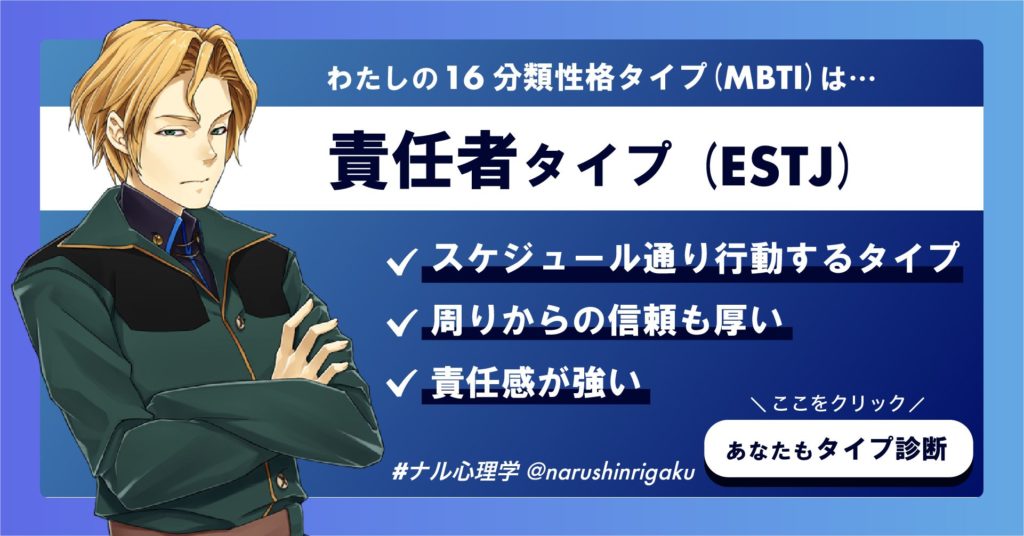
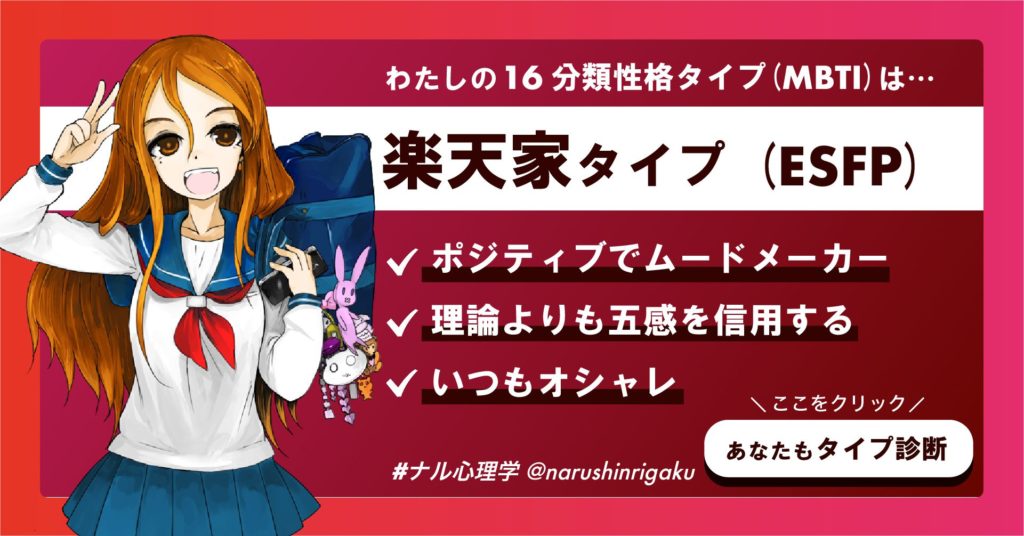
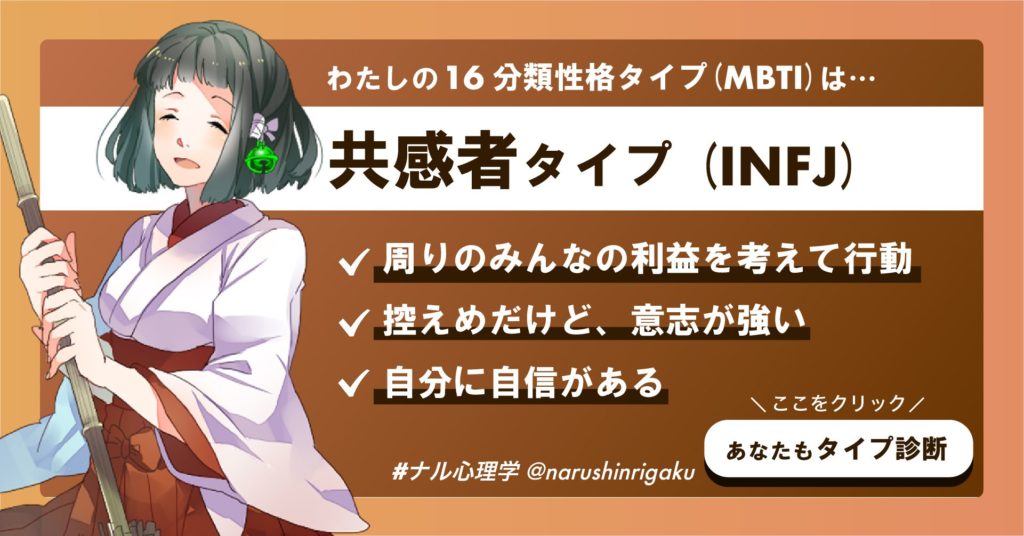
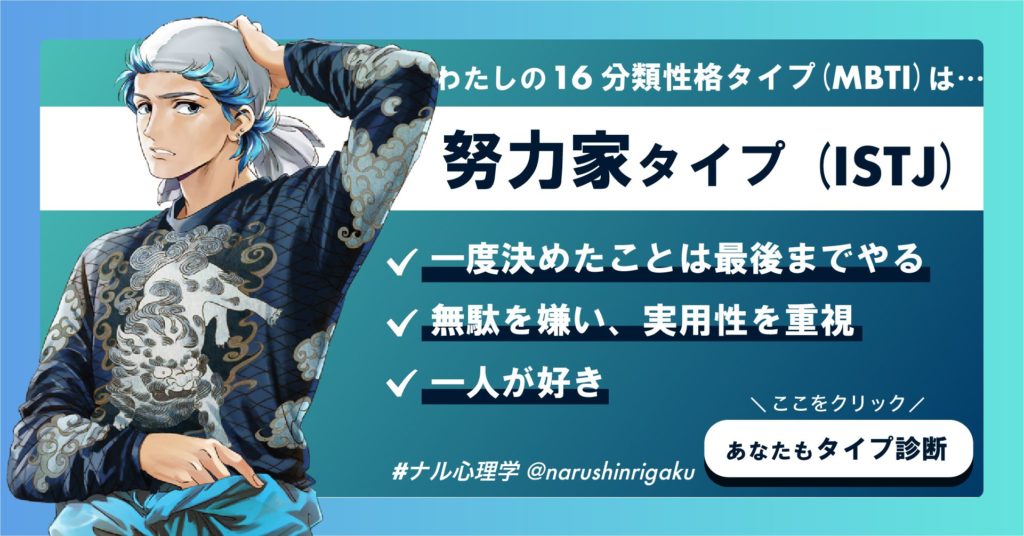
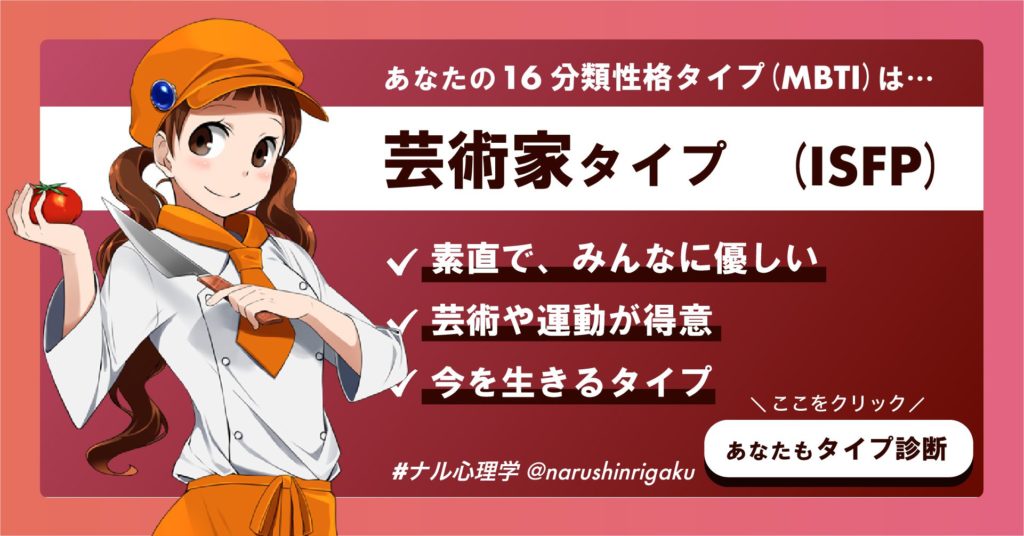
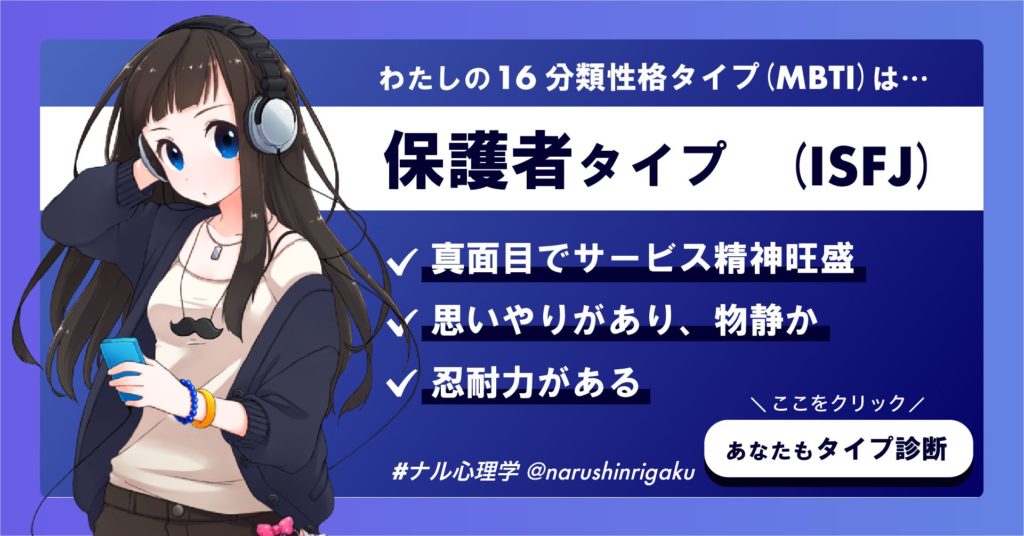
Click the imageAnd here are the main pages for each type.
Button below the imagein,You can share your personality test results on various social media platforms.
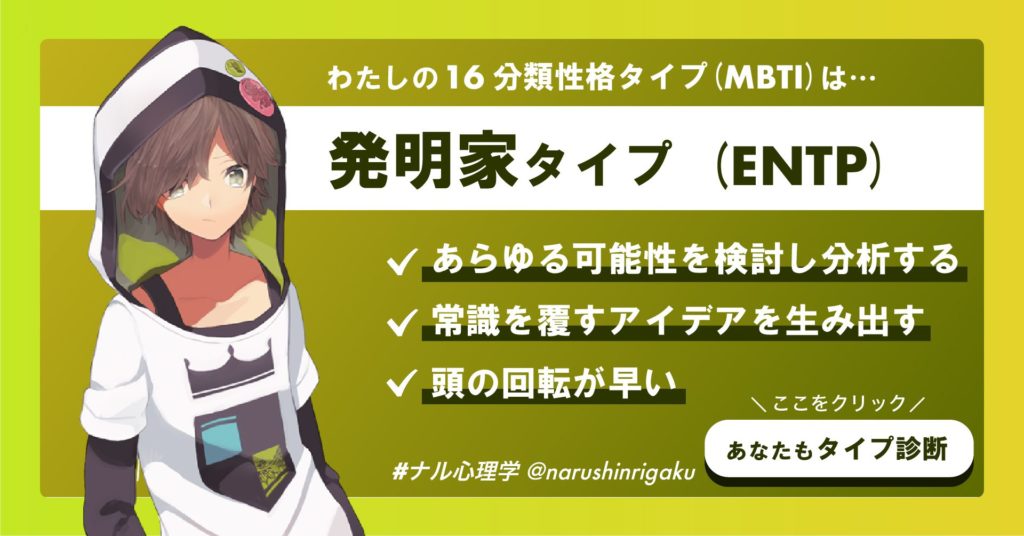
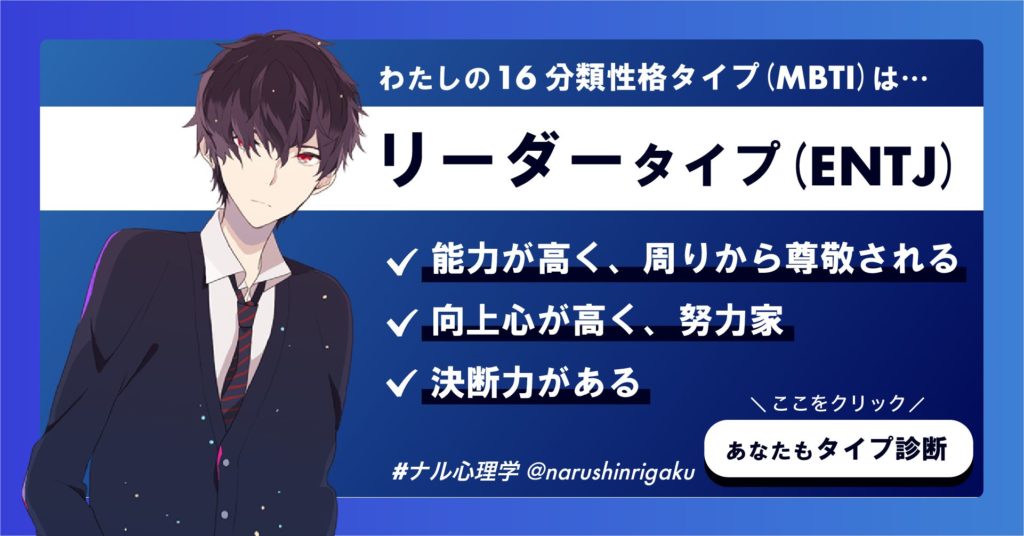
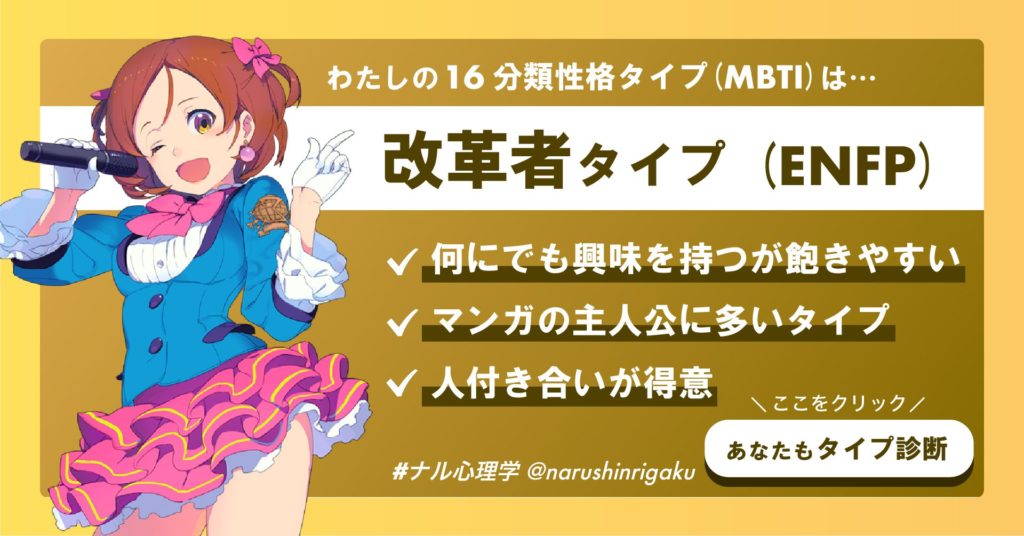
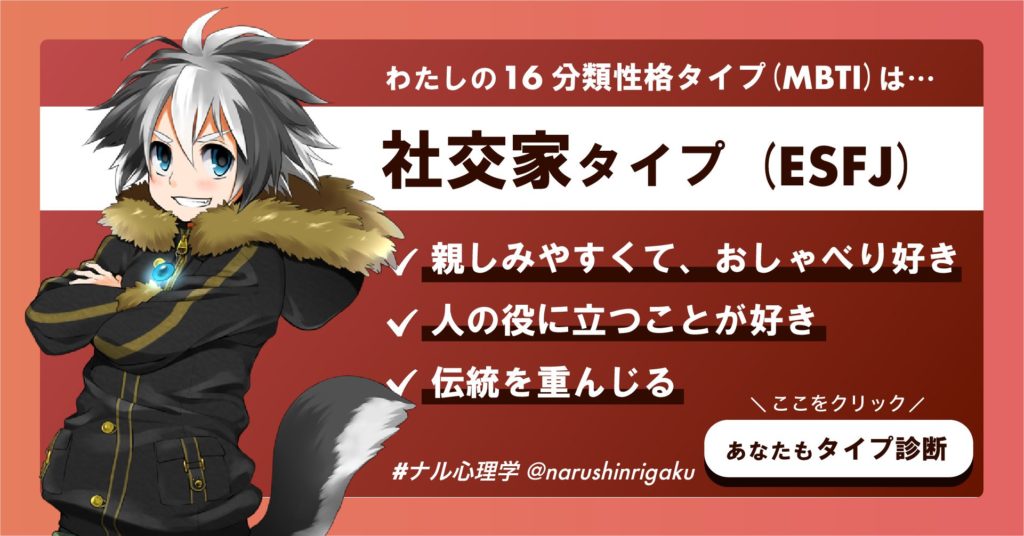
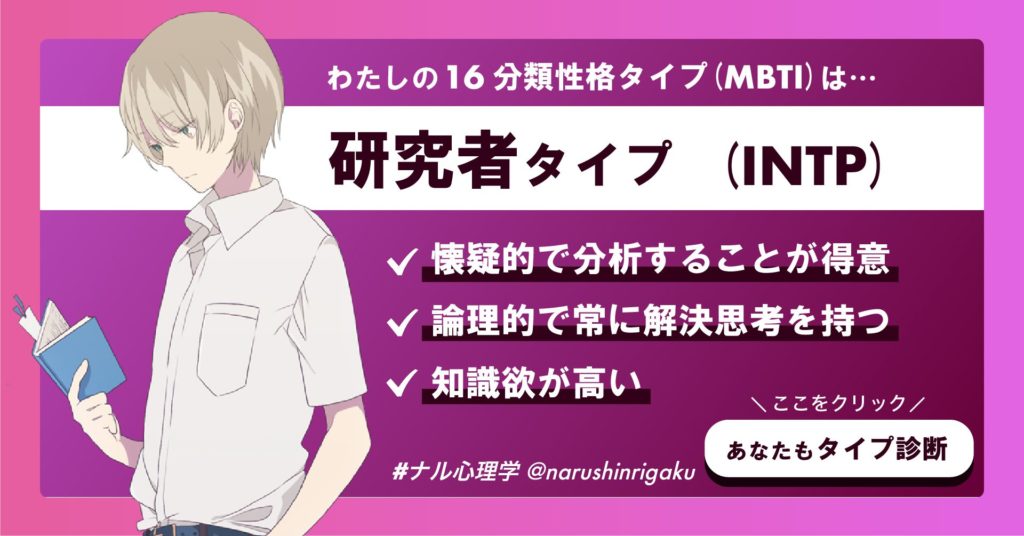
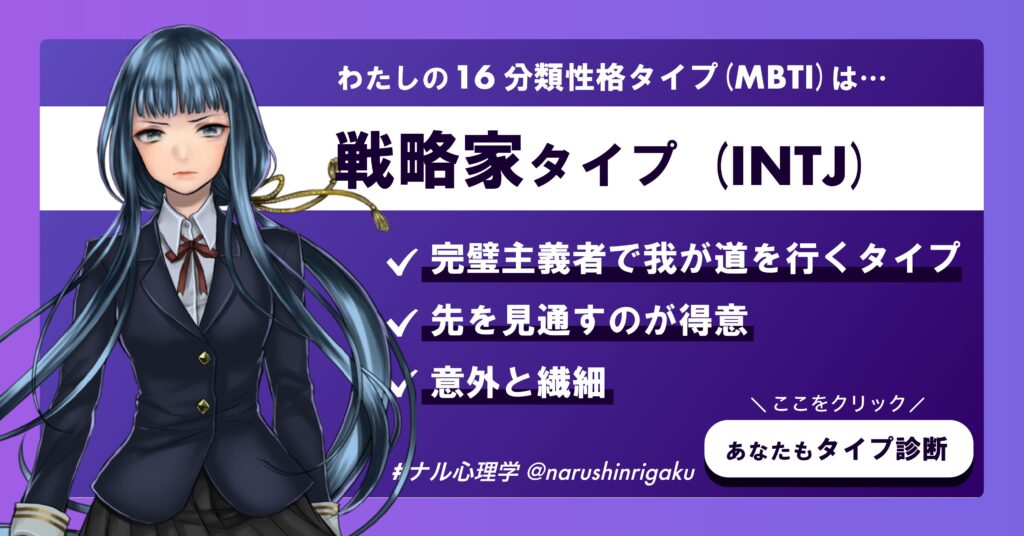
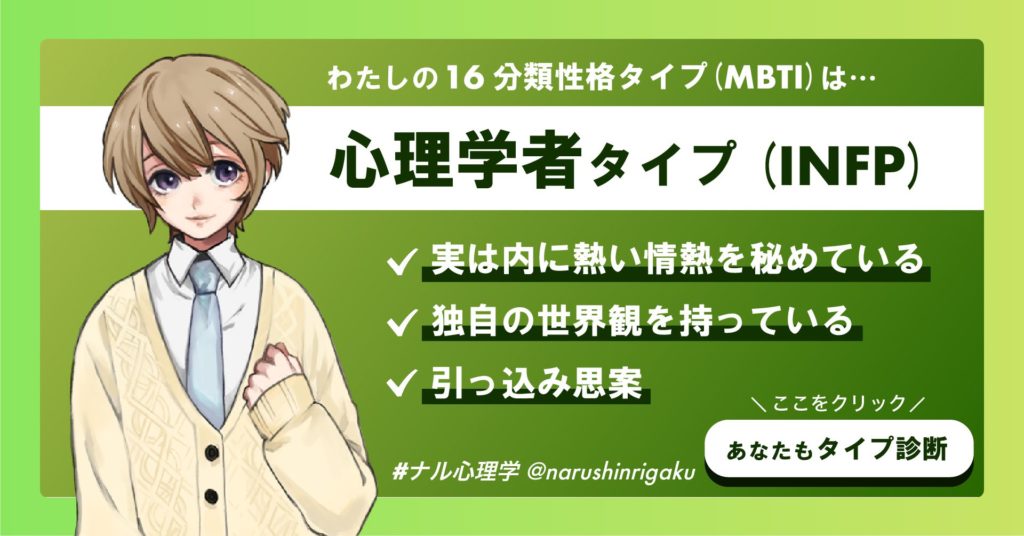

Explanations and links related to the 16 personality types
ENTP (Debater-Inventor Type) – A Comprehensive Guide with Links
- Explanation of ENTP
- What is ENTP? – Main Page –
- "Taking on one challenge after another" - ENTP Does gender difference affect one's life?
- A Guide to the ENTP Personality ~ Let's delve deeper ~
- ENTP hobbies
- Things you dislike about ENTPs
- The advantages and disadvantages of ENTPs
- Suitable occupations for ENTPs
- ENTP leadership
- Compatibility between ENTPs and other types
- ENTPs and social interactions
- ENTPs and romance
- How ENTPs set goals and gather information
- ENTP decision-making methods
- ENTP parent-child relationships
- For ENTPs to succeed
- ENTP psychological functions
- “The meaning of the four letters "ENTP"
- ENTP psychological functions (cognitive functions)
- Integration of ENTP's second and third functions
- The difference between extroverted thinking (Te) and introverted thinking (Ti)
- The difference between introverted thinking (Ti) and extroverted thinking (Te) [Part 2]
- Specific examples of synthesis (in the case of Fi and Te)
- EP Type: A curious challenger
- Comparison with other types
ENTJ (Commander/Leader Type) – A Comprehensive Guide to Understanding This Type
- Explanation of ENTJ
- What is an ENTJ? – Main Page –
- "Natural Leader" ENTJ Does gender difference affect one's life?
- A Personality Guide for ENTJs ~ Let's delve deeper ~
- ENTJ's hobbies
- Things that ENTJs dislike
- Strengths and weaknesses of ENTJs
- Suitable occupations for ENTJs
- ENTJ leadership
- Compatibility between ENTJ and other types
- ENTJ and relationships
- ENTJ and romance
- The spirit of an ENTJ
- How ENTJs set goals and gather information.
- ENTJ's Decision-Making Methods
- ENTJ parent-child relationships
- For ENTJs to succeed
- ENTJ psychological functions
- “The meaning of the four letters "ENTJ"
- ENTJ's psychological functions (cognitive functions)
- Integration of the ENTJ's second and third functions
- The difference between extroverted thinking (Te) and introverted feeling (Fi)
- The difference between extroverted thinking (Te) and introverted thinking (Ti)
- The difference between introverted thinking (Ti) and extroverted thinking (Te) [Part 2]
- Comparison with other types
ENFP (Activist/Reformer Type) – A Comprehensive Guide to Links
- Explanation of ENFP
- ENFP personality
- ENFP Personality Traits 02
- ENFP's hobbies
- Things that ENFPs dislike
- Compatibility between ENFP and other personality types
- ENFP and Relationships
- ENFP and romance
- Strengths and weaknesses of ENFPs
- Suitable occupations for ENFPs
- ENFP leadership
- Compatibility between ENFP and other personality types
- ENFP and Relationships
- ENFP and romance
- How ENFPs set goals and gather information.
- ENFP's Decision-Making Methods
- ENFP parent-child relationships
- For ENFPs to succeed
- ENFP psychological functions
- “The meaning of the four letters "ENFP"
- ENFP's psychological functions (cognitive functions)
- Integration of ENFP's second and third functions
- The difference between extroverted thinking (Te) and introverted feeling (Fi)
- The difference between introverted feeling (Fi) and extroverted feeling (Fe)
- EP Type: A curious challenger
ENFJ (Protagonist-Collaborator Type) – A Comprehensive Guide to Links
- Explanation of ENFJ
- ENFJ personality type (protagonist/collaborator type)
- ENFJ (Collaborator Type) Personality Trait 02
- Hobbies of ENFJ (Collaborator type)
- Things that ENFJs dislike
- The strengths and weaknesses of ENFJs
- Suitable occupations for ENFJs
- ENFJ leadership
- Compatibility between ENFJ and other personality types
- ENFJ Relationships and Romance
- How ENFJs set goals and gather information
- ENFJ's Decision-Making Methods
- ENFJ parent-child relationships
- ENFJ's Talents and How to Utilize Them
- For ENFJs to succeed
- ENFJ psychological functions
ESTP (Entrepreneur-Adventurer Type) - A Comprehensive Guide to Links
- Explanation of ESTP
- ESTP personality
- ESTP Personality Traits 02
- ESTP hobbies
- Things that ESTPs dislike
- Strengths and weaknesses of ESTPs
- Suitable occupations for ESTPs
- ESTP leadership
- Compatibility between ESTP and other types
- ESTP Relationships and Romance
- ESTP's Decision-Making Methods
- How ESTPs set goals and gather information.
- ESTP parent-child relationships
- For ESTPs to succeed
- ESTP psychological functions
- “The meaning of the four letters "ESTP"
- Psychological functions (cognitive functions) of ESTPs
- Integration of the second and third functions of ESTP
- The difference between extroverted thinking (Te) and introverted thinking (Ti)
- The difference between introverted thinking (Ti) and extroverted thinking (Te) [Part 2]
- EP Type: A curious challenger
ESTJ (Executive/Managerial Type) – A Comprehensive Link Guide
- Explanation of ESTJ
- What is ESTJ? – Main Page –
- ESTJ Personality Traits 02
- ESTJ's hobbies
- Things that ESTJs dislike
- Strengths and weaknesses of ESTJs
- Suitable occupations for ESTJs
- ESTJ leadership
- Compatibility between ESTJ and other types
- Interacting with ESTJs
- ESTJ and romance
- How ESTJs set goals and gather information.
- ESTJ parent-child relationships
- For ESTJs to succeed
- ESTJ psychological functions
ESFJ (Consul/Société Type) – A Comprehensive Guide to Findings
- Explanation of ESFJ
- Psychological functions of ESFJs
INTP (Logician/Researcher Type) – A Comprehensive Guide with Links
- INTP explanation
- INTP psychological functions
- “The meaning of the four letters "INTP"
- INTP's psychological functions (cognitive functions)
- Integration of INTP's second and third functions
- The difference between extroverted thinking (Te) and introverted thinking (Ti)
- The difference between introverted thinking (Ti) and extroverted thinking (Te) [Part 2]
- IP Type: People who develop through self-discipline
- Comparison with other types
INTJ (Architect/Strategist Type) – A Comprehensive Guide to Links
- Explanation of INTJ
- INTJ Personality Trait 01
- INTJ Personality Traits 02
- INTJ Personality Traits 03
- INTJ's hobbies
- Strengths and weaknesses of INTJs
- Things that INTJs dislike
- Suitable occupations for INTJs
- INTJ leadership
- Compatibility between INTJs and other personality types
- INTJ Relationships and Romance
- How INTJs set goals and gather information
- INTJ's Decision-Making Methods
- INTJ parent-child relationships
- How INTJs can succeed
- INTJ psychological functions
- “The meaning of the four letters "INTJ"
- INTJ's psychological functions (cognitive functions)
- The difference between extroverted thinking (Te) and introverted feeling (Fi)
- The difference between extroverted thinking (Te) and introverted thinking (Ti)
- The difference between introverted thinking (Ti) and extroverted thinking (Te) [Part 2]
INFP (Mediator = Psychologist Type) – A Comprehensive Link Guide
- INFP Explanation
- INFP Personality Trait 01
- INFP Personality Traits 02
- INFP Personality Trait 03
- INFP's hobbies
- Things that INFPs dislike
- The strengths and weaknesses of INFPs
- Suitable occupations for INFPs
- INFP leadership
- Compatibility between INFP and other personality types
- INFP Relationships and Romance
- How INFPs can grow and achieve their dreams
- How INFPs set goals and gather information
- INFP's Decision-Making Methods
- INFP parent-child relationships
- For INFPs to succeed
- INFP psychological function
- “The meaning of the four letters "INFP"
- The psychological functions (cognitive functions) of INFPs
- The integration of the second and third functions of the INFP (Psychologist type)
- The difference between introverted feeling (Fi) and extroverted feeling (Fe)
- The difference between extroverted thinking (Te) and introverted feeling (Fi)
- IP Type: People who develop through self-discipline
INFJ (Advocate/Empathy Type) – A Comprehensive Guide
- Explanation of INFJ (Advocate/Empathy Type)
- INFJ Personality Trait 01
- INFJ Personality Traits 02
- INFJ hobbies
- Things that INFJs dislike
- Strengths and weaknesses of INFJs
- Suitable occupations for INFJs
- INFJ leadership
- Compatibility between INFJ and other personality types
- INFJ and relationships
- INFJ and romance
- How INFJs Set Goals and Gather Information
- INFJ's Decision-Making Methods
- INFJ parent-child relationships
- How INFJs can succeed
- Psychological Functions of INFJ (Advocate/Empathy Type)
INTJ (Architect/Strategist Type) – A Comprehensive Guide to Links
- Explanation of ISTP
- ISTP (Master/Practitioner Type) Personality Trait 01
- ISTP Personality Traits 02
- ISTP's hobbies
- Things that ISTPs dislike
- Strengths and weaknesses of the ISTP personality type
- Suitable occupations for ISTPs
- ISTP leadership
- Compatibility between ISTP and other types
- ISTP and Relationships
- ISTP and love
- How ISTPs set goals and gather information.
- ISTP's Decision-Making Methods
- ISTP parent-child relationships
- For ISTPs to succeed
- Psychological functions of ISTP
- “The meaning of the four letters "ISTP"
- Psychological functions (cognitive functions) of ISTPs
- Integration of the ISTP's second and third functions
- The difference between extroverted thinking (Te) and introverted thinking (Ti)
- The difference between introverted thinking (Ti) and extroverted thinking (Te) [Part 2]
ISTJ (Logistician = Hard Worker Type) – A Comprehensive Guide to Understanding This Type
- Explanation of ISTJ
- Psychological functions of ISTJ
- “The meaning of the four letters "ISTJ"
- Psychological functions (cognitive functions) of ISTJs
- Integration of the ISTJ's second and third functions
- The difference between extroverted thinking (Te) and introverted feeling (Fi)
- The difference between extroverted thinking (Te) and introverted thinking (Ti)
- The difference between introverted thinking (Ti) and extroverted thinking (Te) [Part 2]
- SJ type: Parental temperament
ISFP (Adventurer/Artist Type) – A Comprehensive Guide with Links
- Explanation of ISFP
- ISFP Personality Traits 01
- ISFP Personality Traits 02
- ISFP hobbies
- Things that ISFPs dislike
- Advantages and disadvantages of ISFP
- Suitable occupations for ISFPs
- ISFP Leadership
- Compatibility of ISFP with other types
- ISFP Relationships and Romance
- How ISFPs Set Goals and Gather Information
- ISFP decision-making methods
- ISFP parent-child relationships
- How ISFPs can succeed
- ISFP psychological functions
- “The meaning of the four letters "ISFP"
- ISFP's psychological functions (cognitive functions)
- Integration of ISFP's second and third functions
- The difference between introverted feeling (Fi) and extroverted feeling (Fe)
- The difference between extroverted thinking (Te) and introverted feeling (Fi)
- To train your extroverted thinking (Te)
ISFJ (Advocate/Guardian Type) – A comprehensive collection of links
- ISFJ explanation
- Psychological functions of ISFJs
A collection of explanations of psychological functions (cognitive functions)
- psychological tendency axis
- psychological function
- Perceptual function
- Judgment function
- A Summary of the 8 Psychological Functions: Basic Knowledge
- Permutations of psychological functions
- Dominant, auxiliary, substitute, and inferior functions
- Pairs of psychological functions
- Methods for integrating (synthesizing) psychological functions
- Specific examples of the integration (synthesis) of psychological functions (in the case of Te and Fi)
- Integrating extroverted sensing (Se) and introverted intuition (Ni)
- Integrating introverted sensing (Si) and extroverted intuition (Ne)
- Integrating introverted thinking (Ti) and extroverted feeling (Fe)
- Integrating extroverted thinking (Te) and introverted feeling (Fi)
- Comparison of psychological functions
- Extroverted Sensing (Se) and Introverted Sensing (Si)
- Extroverted feeling (Fe) and introverted feeling (Fi)
- Healthy and unhealthy introverted feeling (Fi) vs. extroverted feeling (Fe)
- Introverted thinking (Ti) and extroverted thinking (Te)
- Healthy and unhealthy introverted thinking (Ti) vs. extroverted thinking (Te)
- Extroverted Sensing (Se) and Extroverted Intuition (Ne)
- Introverted Sensing (Si) and Introverted Intuition (Ni)
- Extroverted Thinking (Te) and Extroverted Feeling (Fe)
- Introverted Thinking (Ti) and Introverted Feeling (Fi)
- Extroverted Thinking (Te) and Introverted Feeling (Fi)
- others
- The 8 psychological functions: responses to success and failure in developmental tasks
- The psychological functions of Yin and Yang: Functions 1 through 8
- Shadow Process (Shadow Function): Psychological Functions 5-8
- Differences between J-type (judgment type) and P-type (perceptual type) - PJ differences -
- Structure of perceptual function (S/N) and judgment function (T/F)
- Diagram of Ni (Introverted Intuition) and comparison with Si (Introverted Sensing)
- Reasons for the existence of psychological functions (cognitive functions)
- The useful truths (psychological functions) that each individual discovers
- Balance of psychological functions – problems arising from an imbalance in strengths
- The mechanism that only develops strengths = primary functions (main functions)
- Weaknesses = Methods to improve the fourth function (inferior function)
A rough overview of 16 personality types using just two characters.
A Collection of Information on the 16 Personality Types – The Little-Known Truths of Each Type (Summary, Illustrations, and Analysis)
- Summary of 16 Personality Type Test Websites
- List of articles categorized by personality type (16 types)
- Compatibility chart for 16 personality types
- Suitable occupations, ideal jobs, and dream jobs for each of the 16 personality types
- Nicknames (names) for each of the 16 personality types
- What if there were a country with 16 personality types...?
- The relationship between national characteristics around the world and the 16 personality types
- List of 16 Personality Types Based on Famous Characters
- Detective Conan: A Summary of 16 Personality Types for Each Character
- Percentage of 16 personality types
- Reactions of 16 Personality Types – Heaven and Hell
- To describe the 16 personality types in one word:
- 16 Simple Explanations of Personality Types
- 16 Personality Types: Strengths, Weaknesses, and Ways to Improve Weaknesses
- 16 Personality Types: Preferences and Strengths/Weaknesses in Majors and Subjects
- 16 Personality Types: How to Enjoy Life to the Fullest…?
- 16 Personality Types: Inspiring Quotes from Great Figures
- What if each of the 16 personality types were a murderer?
- How to become an attractive husband or wife based on your personality type (16 types)
- What 16 personality types do after a breakup
- Reasons for fighting according to 16 personality types
- Income by 16 Personality Types - Misconceptions and Truths -
- Characteristics of employees based on 16 personality types
- Potential pathological tendencies of 16 personality types
- Psychological Functions of 16 Personality Types Based on Statistics
- Viewing percentage of the detailed personality pages for each of the 16 personality types
- Summary of the characteristics of the 16 personality types
- 8 psychological functions: "What if I did...?"
- Approaches to tasks based on psychological function: Intuitive (N-type) & Sensing (S-type)
- Social interaction explained by psychological functions
- Understanding Your Financial Habits Through Psychological Functions – Are You a Saver or a Spender?
- Humor (sense of humor) as revealed by psychological functions
- How extroverts (Type E) and introverts (Type I) can get along well
- How Sensing types (S type) and Intuitive types (N type) can get along well
- How Thinking (T-type) and Feeling (F-type) People Can Get Along Well
- How to get along well with Judging (J-type) and Perceiving (P-type) types
- Characteristics of parents with 16 personality types
- Parent-child relationships between extroverts (Type E) and introverts (Type I)
- Parent-child relationships between sensing types (S-type) and intuitive types (N-type)
- Parent-child relationships between thinking types (T-type) and feeling types (F-type)
- Parent-child relationships between judging (J-type) and percepting (P-type) types
- How to identify your partner's personality type: [16 Personality Types]
A collection of famous quotes and sayings from great figures and celebrities, categorized by 16 personality types.









Enneagram (9-type personality assessment) and 16-type personality assessment
↓EnneagramPersonality assessmentLet's try it!! ↓
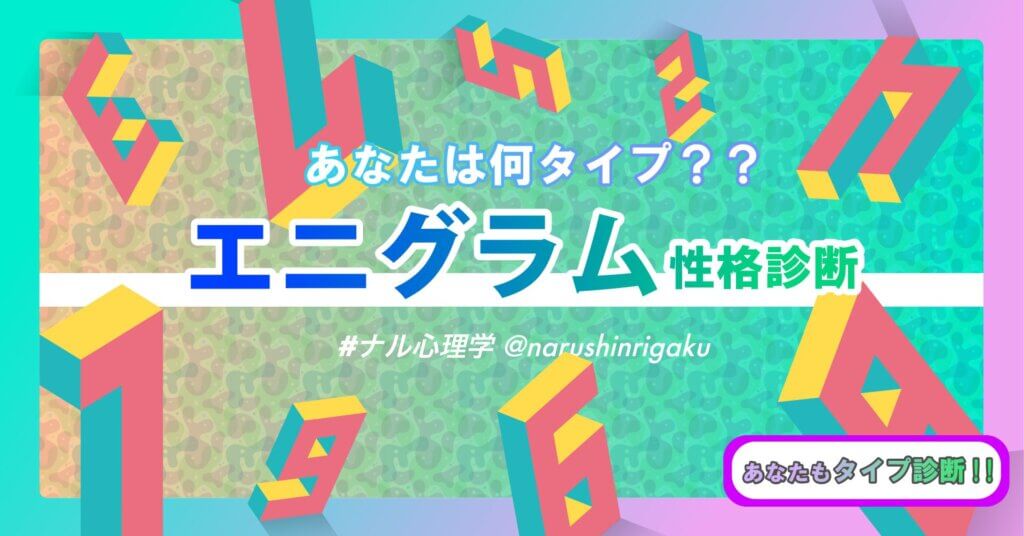
- What is the Enneagram?
- List of the 9 Enneagram types
- The relationship between the 16 Personality Types personality test and the Enneagram
- The correlation between the 16 personality types and the Enneagram.
- The relationship and integration of the 16 personality types and the Enneagram.
- When the mind is preoccupied with something, the psychological functions of the 16 personality types used by each Enneagram type are utilized.
- Practical Use of the Enneagram (Relationship between psychological functions and useful truths)
Study psychology
- Understanding your personality through psychology
- Introduction to Typology – The Significance of Using Typology in the First Place
- Take the results of the personality test lightly.
- The human heart is colorful (it cannot be expressed in a single color).
- Problems in studying psychology and solutions in narcissistic psychology
- Psychological personality type determination mechanisms (MBTI, Enneagram, StrengthsFinder)
- Reversal of cause and effect (recognizing cause and effect in reverse)
- The true nature of courage and how to find it
- The necessity of courage
- The necessity of anger
- How to deal with psychology effectively
- The purpose of narcissistic psychology
- Acknowledging one's own (unchangeable) nature.
- People who yearn for introversion
- Affirming and denying oneself
- How to make the most of feelings of anxiety
- Heart and mind – their respective roles –
- Individuality and Overall Optimization
- The contradictions and merits and demerits of diversity



A suitable occupation or job for you (ideal job)
- A suitable occupation or job for you (ideal job)
- Introduction
- Motivation: The importance of the "why"
- How to find your motivation (WHY)
- How to find the right job (job search methods) - 01
- How to find the right job (job search methods) - 02
- The "field/role (WHAT)" of work
- Derive your motivation from the occupations that interest you.
- Analyzing careers you're interested in – fields and the people who excel in those fields –
- 「The flow of energy in workDecomposition of "
- The importance of "how you feel while doing it (FEEL)"
- Points to Note When Analyzing Occupations and Jobs – Common Mistakes –
Cultural comparisons of various countries around the world
- Cultural comparisons of various countries around the world
Recommended books on the 16 personality types
・The "8 Personality Types" as Understood Through Jungian Psychology
16-Type Personality Testteeth,The theory of psychologist JungThis is the basis. Jung said,8 psychological functionsI came up with this idea (see image), and classified people's personalities into eight categories based on which function they excel at.
16-Type Personality TestThat8 psychological functionsThis is a combination and further development of those ideas. First, read this book to find out which psychological function you are best at.16-Type Personality TestIt is highly recommended because it allows you to understand the diagnostic results more deeply.
belowYou can read a sample by clicking the "View on Amazon" link.So, it might be worth taking a look.
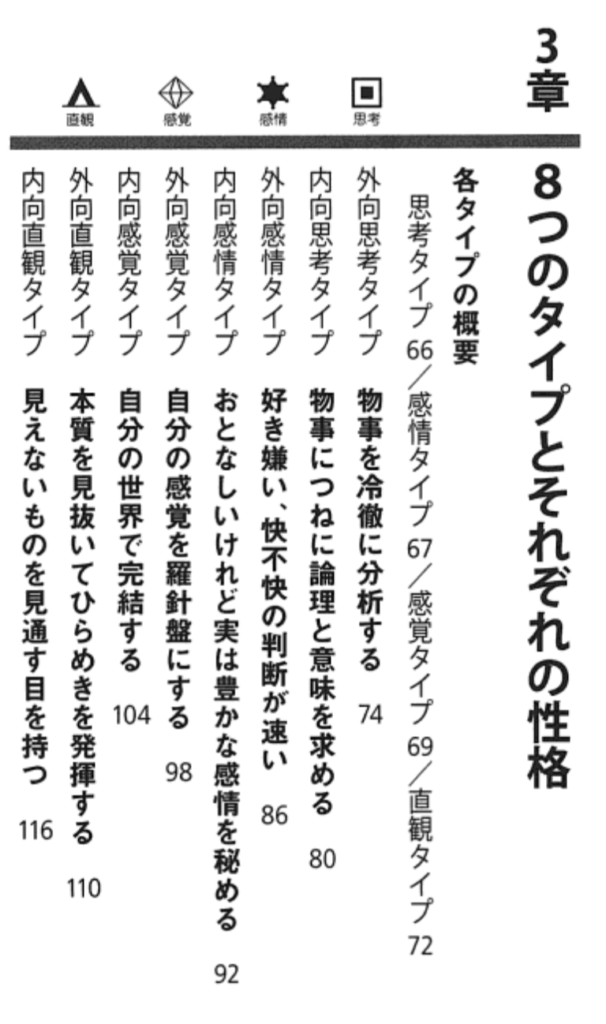
・"Illustrated Guide to 16 Personality Traits That Reveal Your Ideal Career"
Not only can you find out which of the 16 personality types is suitable for you,16This provides a concise summary of the important psychological functions (cognitive functions) needed to understand personality types.Therefore, it is also recommended for those who are learning about the 16 personality types for the first time.
The right job is determined by one's psychological function (cognitive function).Therefore, a correct understanding is necessary.
below"on AmazonlookYou can read a sample from the link provided.So, it might be worth taking a look.
* Regarding diagnosis
This personality assessment uses a format similar to that of "MBTI®" and "16Personalities," but it is not affiliated with these official organizations.
MBTI® is a registered trademark of The Myers-Briggs Company, and this site is an unofficial reference tool unrelated to them. Please enjoy it as a reference tool only.